As cyberattacks against schools continue to rise, school districts are being forced to confront a difficult reality:
Student health data may be among the most sensitive and legally vulnerable information a district possesses.
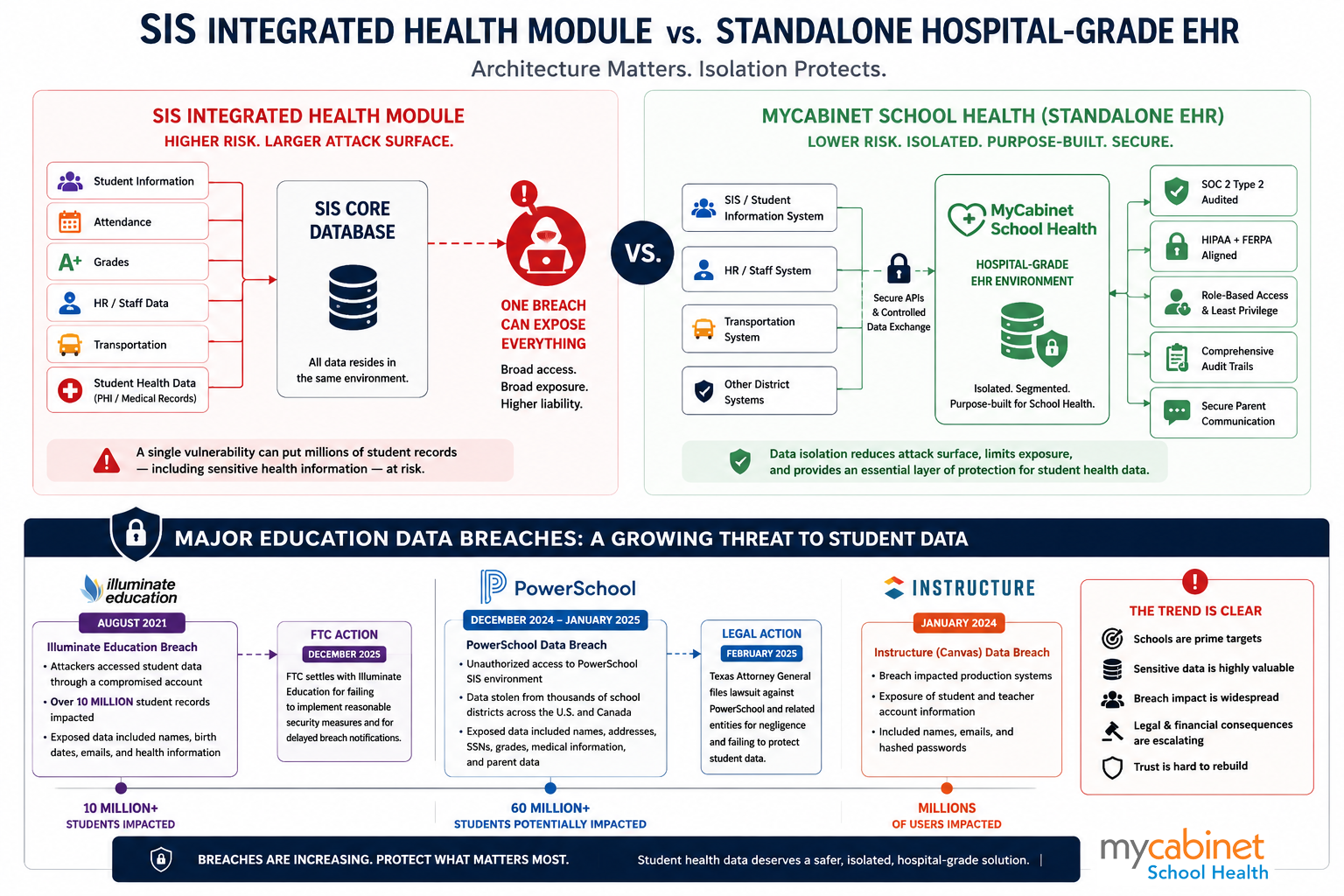
Yet many districts still store student medical information inside broad Student Information Systems (SIS) originally designed for scheduling, attendance, and administrative operations — not as hospital-grade healthcare environments.
At MyCabinet School Health, we believe one of the best ways to protect student health data is to isolate it from broader SIS ecosystems entirely.
Why Separation Matters
When highly sensitive student health information is stored inside centralized SIS platforms, educational environments such as Canvas, or outdated school health EHR systems, the potential attack surface expands dramatically. A single compromised credential, third-party vulnerability, or administrative access point can place enormous volumes of sensitive student data at risk across multiple systems and institutions.
Recent cyberattacks against major education technology providers have demonstrated exactly how devastating these breaches can become.
In late 2024, hackers gained unauthorized access to PowerSchool systems, reportedly exposing sensitive student and educator information across thousands of school districts. Reports indicated compromised information included names, addresses, Social Security numbers, medical information, grades, disciplinary records, and parent data.
Also, in May 2026, the massive cyberattack targeting Canvas by Instructure has further exposed the growing vulnerability of centralized educational platforms. Reports indicate the breach may impact thousands of schools and universities worldwide, with attackers claiming access to names, email addresses, student ID numbers, and private user communications tied to millions of students and educators. The incident disrupted access to coursework and educational systems during critical academic periods and highlighted how deeply interconnected educational data environments have become.
According to Education Week, K–12 schools have become “top targets of hackers” due to the enormous volume of sensitive student information stored within school systems.
The Illuminate Education breach provided another alarming example. Investigations and FTC actions alleged failures involving access controls, monitoring, encryption practices, and delayed breach notifications impacting millions of students. Reports indicated exposure of student records and health-related information.
Even cybersecurity discussions published by education technology providers themselves acknowledge the escalating risks facing districts. Frontline Education warned districts that cyber threats targeting schools continue to intensify as more sensitive information moves online.
These incidents reinforce a critical cybersecurity reality for K–12 districts: highly sensitive student health records should not live inside broad administrative ecosystems originally designed for scheduling, attendance, and operational management. The more centralized the platform, the greater the potential impact when a breach occurs.
Student Health Data Carries Greater Liability
Student health information is fundamentally different from general student records.
Health records may contain:
- Medication administration history
- Chronic conditions
- Mental health information
- Allergies and emergency care plans
- Medicaid-related data
- Physician documentation
- Immunization records
When breached, this data can create not only reputational damage, but significant legal, regulatory, and financial exposure.
Cybersecurity experts increasingly emphasize the importance of limiting access, reducing centralized exposure, and implementing stronger segmentation for sensitive healthcare information.
As privacy attorneys analyzing the PowerSchool breach noted, the incident highlighted the urgent need for stronger third-party oversight and security controls surrounding sensitive student information. (Proskauer on Privacy)
Why MyCabinet School Health Was Built Differently
MyCabinet School Health was purpose-built as a standalone, hospital-grade EHR designed specifically for K–12 school health services.
Unlike SIS health modules or legacy systems built decades ago, our platform was designed around healthcare-grade protections from day one.
Our approach includes:
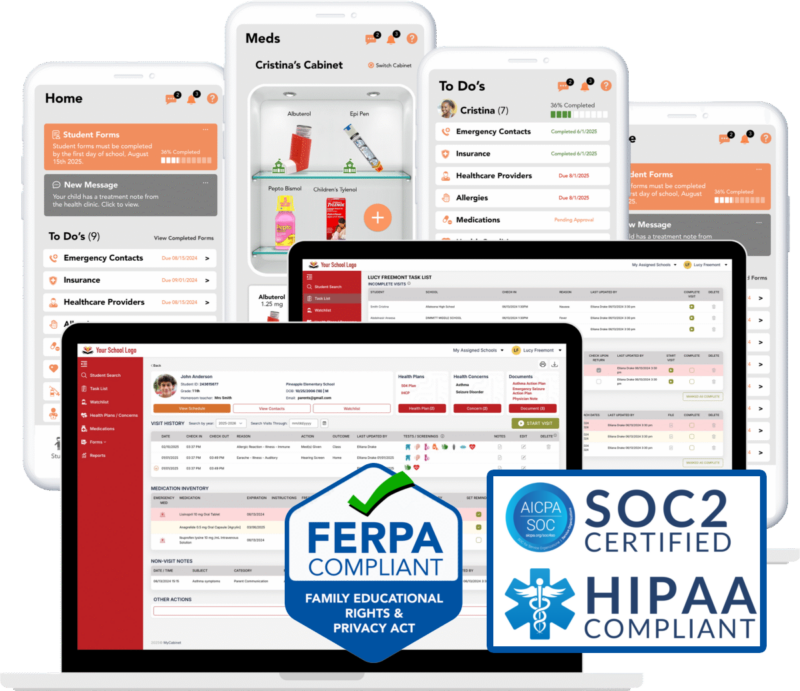
- SOC 2 Type 2 audited infrastructure
- HIPAA + FERPA aligned architecture
- Medical-grade permissions and audit trails
- Isolation of sensitive health data from broader SIS ecosystems
- Secure parent communication tools
- Real-time monitoring and controlled access workflows
- Purpose-built workflows designed specifically for school nurses
Separating student health records from a district’s broader SIS environment creates an additional layer of protection that can help reduce exposure during a cyber event.
In healthcare, hospitals do not store patient records inside scheduling software for a reason.
Schools should begin viewing student health data through the same lens.
The Future of School Health Technology
 District leaders today are no longer simply choosing software.
They are making decisions about:
- Cybersecurity exposure
- Legal liability
- Parent trust
- Student privacy
- Operational resilience
The question is no longer whether schools will face cyber threats.
The question is whether districts are using technology designed to withstand them.
At MyCabinet School Health, we believe student health information deserves the same level of protection expected in modern healthcare environments.
Because protecting students means protecting their data too.
At MyCabinet School Health, we believe student health information deserves the same level of protection expected in modern healthcare environments.
Because protecting students means protecting their data too.
Architecture matters. Isolation protects. Student health data deserves more than a basic SIS health module.