
This shift extends to school health, too. When a nurse manages medication schedules for hundreds of students across a district, a manila folder just doesn't cut it. EHR benefits are often discussed in abstract terms, but the real value shows up in daily workflows: tracking medications correctly, documenting visits accurately, and keeping parents informed.
This article breaks down what EHRs are and the practical advantages they deliver, using school health as a lens where it's most useful.
Key Takeaways
- Centralized digital records replace paper charts and cut time spent hunting for files
- 95% of U.S. office-based physicians now use an EHR, per 2024 CDC data
- Safer care, faster workflows, tighter care coordination, and clearer compliance trails
- Benefits compound when EHRs are used consistently, not just adopted and forgotten
What Is an Electronic Health Record?
An EHR is a secure digital record of a person's health history, visits, medications, and documentation. It replaces paper charts, binders, and scattered folders with one accessible system.
EHRs show up in:
- Hospitals and physician offices
- Specialty clinics
- School health offices in K–12, higher education, and boarding schools
Storage is only the starting point. An EHR exists to make care safer, faster, and better coordinated across every place a student receives care.
Key Advantages of Electronic Health Records in Schools
The advantages below focus on measurable operational impact, not vague claims about "modernization."
Advantage 1: Improved Student Safety
Paper charts rely on legible handwriting and someone remembering to check for allergies or drug interactions. EHRs centralize that information and surface it automatically. According to AHRQ's review of medication safety research, switching from paper records to EHRs has been linked to fewer medication errors and better adherence to care guidelines. Structured, auditable digital entries replace scattered paper forms that are easy to lose or misread. KPIs impacted:
- Medication error rate
- Documentation accuracy
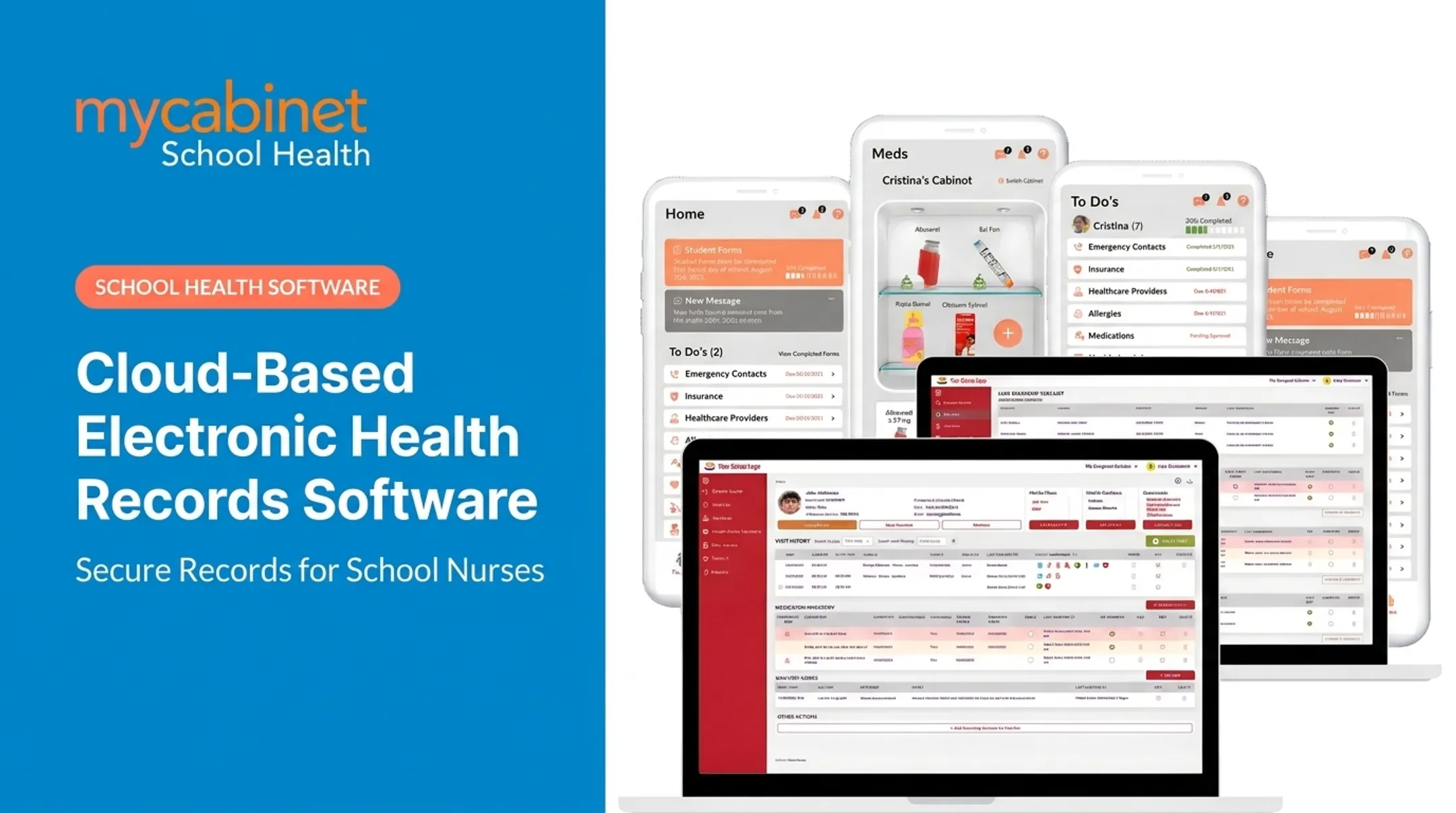
- Incident and adverse-event frequency This advantage matters most in high-volume settings, such as school nurses managing medication schedules for dozens or hundreds of students. More than 40% of U.S. school-aged children have at least one chronic health condition, according to CDC data. Daily medication management isn't the exception in schools. It's the norm. MyCabinet School Health tracks medication expiration dates directly and alerts parents when a stored medication is nearing expiration. That closes a gap paper charts miss easily: a rescue inhaler expiring unnoticed until it's needed.

Advantage 2: Increased Efficiency and Reduced Administrative Burden
Manual documentation eats time that should go toward direct care. Automated scheduling, structured visit types, and task-based workflows cut that burden significantly. The National Association of School Nurses points out that an effective EHR supports organized recordkeeping, error prevention, and faster information retrieval — all of which free up nursing time for actual student care. Consider what a single school nurse juggles:
- Incomplete visit documentation waiting on follow-through
- Follow-up rechecks that slip without a prompt
- Required screenings (vision, hearing, scoliosis)
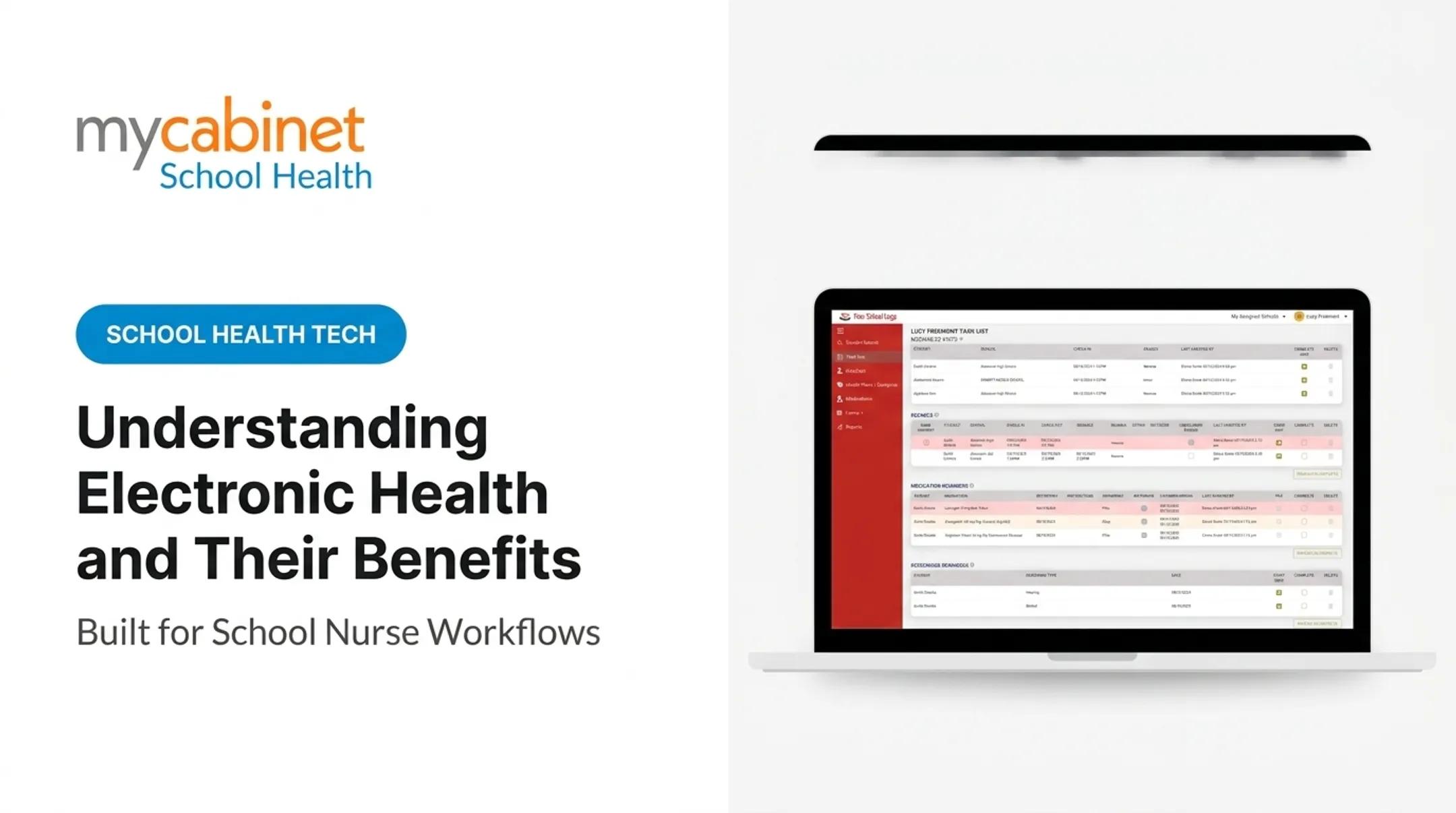
- Medication administration logs MyCabinet surfaces all of this automatically. Instead of relying on memory for rechecks or overdue screenings, the Nurse Portal shows a color-coded task list with dates and student info. One-click actions and predefined visit types mean less time in screens and more time with students. KPIs impacted:
- Time spent on documentation
- Visit throughput
- Administrative cost per record This matters most for understaffed teams. NASN's 2025 workload position notes that one-third of students don't have full-time access to a school nurse every day, all day. When one nurse covers multiple buildings, every minute saved on paperwork is a minute returned to care.

Advantage 3: Better Coordination and Communication
Fragmented communication (phone tag, email threads, faxed forms) breeds duplicate work and missed follow-ups. EHRs fix this by giving authorized parties consistent, up-to-date access to the same information. Consider the coordination gap without digital access. A 2022 study of school nurses given view-only hospital-EHR access across three Denver-area districts saw emergency department visits drop from 190 to 126, a 34% decrease. Role-based, controlled sharing improves transparency without compromising privacy. MyCabinet's parent notifications work this way:
- Push or email alerts when a child is seen in the clinic
- Advance notice when stored medication is nearing expiration Communication stays one-way by design: focused updates, no open chat thread to manage. Nurses avoid message overload while parents stay informed. KPIs impacted:
- Communication response time
- Follow-up completion rate
- Family engagement This matters most when specialists, parents, and district administrators all need the same current record, especially across multi-campus districts.

What Happens When EHRs Are Missing or Ignored
Staying paper-based, or patching things together with spreadsheets and email threads, has predictable consequences:
- Lost or inconsistent records — information scattered across binders, spreadsheets, and sticky notes
- Missed medication doses — no automated reminders means relying on memory
- Reactive compliance scrambling — missing immunization or screening deadlines because nothing flagged them in advance
- Rising administrative costs — manual follow-up calls and emails pile up over time
- Difficulty scaling — what works for one school breaks down fast across a growing district
A duplicate-testing study found that when patient records weren't shared between two institutions, 32% of transferred patients had repeat testing within 12 hours, and 20% of that testing was judged clinically unnecessary. The same fragmentation shows up in schools as wasted nurse time, duplicate paperwork, and avoidable parent outreach—real, measurable cost.
How to Get the Most Value from an EHR
An EHR isn't a "set it and forget it" tool. Value comes from how it's used, not just whether it's adopted.
- Drive consistent adoption across all staff — partial or ad hoc use undermines the whole system
- Actively review built-in task lists and alerts — logging data means nothing if nobody checks it
- Choose a platform built for the specific workflow — a generic clinical EHR retrofitted for schools rarely matches how school nurses work

That last point matters more than it sounds. A school health EHR like MyCabinet is designed around nurse tasks, medication oversight, and parent communication from the start, rather than adapted from a hospital system.
As Cobb County School District Superintendent Chris Ragsdale put it, the platform "digitized and makes documentation easier." Parents can submit paperwork electronically and see when their child was seen and given medication.
Conclusion
The value of EHRs comes down to safety, efficiency, and clearer communication across care teams. These advantages aren't static. They compound over time with consistent use and regular workflow review.
Choosing the right EHR, one matched to the specific care setting, is what makes those gains show up in daily workflows—not just on a feature list.
Frequently Asked Questions
What are the advantages of electronic health records?
EHRs improve student safety through centralized alerts, reduce administrative burden through automated workflows, and strengthen coordination between care teams and families. They also support compliance with regulations like HIPAA and FERPA.
Why are electronic health records important?
EHRs reduce reliance on manual double-checking, which lowers the risk of errors like missed medications or lost records. They also give care teams timely, accurate information to make better decisions faster.
What is the main purpose of an electronic health record?
The core purpose is maintaining an accurate, accessible, and shareable health history that supports care decisions. It functions as a working tool for coordinated care across nurses, administrators, and families.
What does an electronic health record include?
A typical EHR includes medical history, medications, visit notes, immunization records, screening results, allergy information, and care plans. In school settings, it also includes parent communication logs and compliance documentation.
What are 5 common functions of EHR systems?
Common functions include:
- Record-keeping
- Medication management
- Scheduling
- Secure communication, such as parent notifications
- Reporting and analytics for compliance and district oversight