
Introduction
Ask any school nurse where a student's health information actually lives, and the answer is rarely simple. It's scattered across paper forms in a filing cabinet, emails from parents, a spreadsheet someone built years ago, provider notes faxed in last spring, and whatever the previous school sent along.
A student care plan fixes that fragmentation for one student at a time. It gives nurses and authorized staff a shared, current roadmap: what this student needs, who's responsible for each action, and how the plan gets reviewed.
This article covers what belongs in a care plan, how to manage it through its full lifecycle, how districts can standardize documentation across schools without losing individual nuance, and where digital school health systems fit into that picture.
Key Takeaways
- A care plan turns health needs into specific school actions, named responsibilities, and set review dates
- Standardized fields plus individualized clinical content keep documentation consistent and safe
- Controlled access, documented approvals, and version history protect both students and staff
- Digital school health systems connect nurse documentation, medications, and parent communication in one place
What Is a Student Care Plan and What Should It Include?
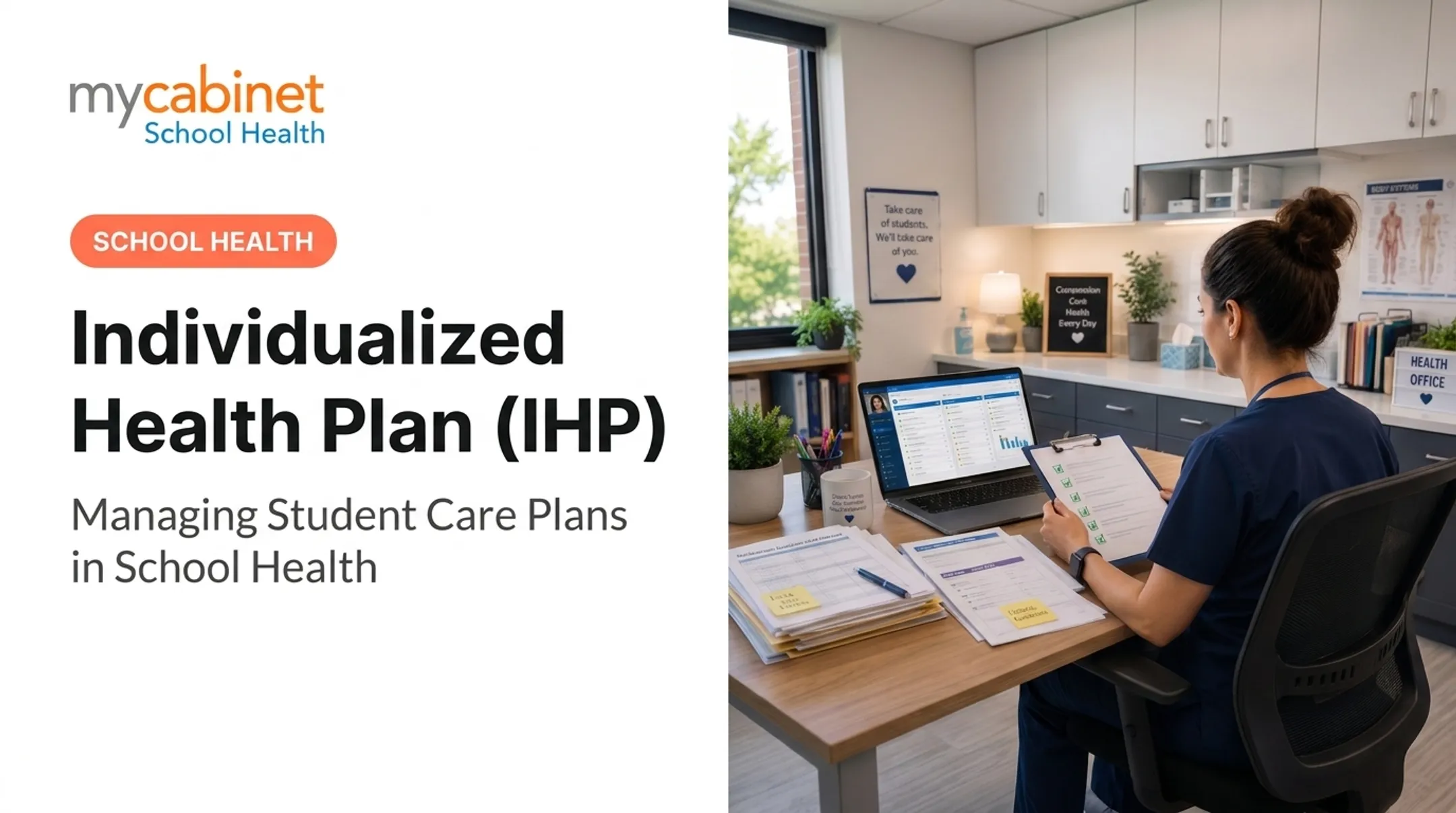
A student care plan turns a child's health information into a specific, school-based action plan. It names what needs to happen, who does it, and when to escalate, so any authorized staff member knows exactly how to respond, whether that's during a math class, a bus ride, or a track meet.
School nurses typically build this document as part of, or alongside, the nursing process. The National Association of School Nurses describes the related Individualized Healthcare Plan as a stand-alone, student-centered nursing document developed, implemented, and revised by school RNs for students with complex health needs.
How a Care Plan Differs From an IHP, IEP, 504 Plan, or EAP
These documents overlap, but each answers a different operational question:
| Document | Primary Purpose |
|---|---|
| Student Care Plan | Day-to-day school actions, responsibilities, and monitoring |
| IHP / IHCP | Nursing assessment, interventions, and care coordination |
| Emergency Action Plan (EAP) | Step-by-step crisis response, often drawn from the IHP |
| IEP | Special education services under IDEA |
| Section 504 Plan | Accommodations ensuring equal access under federal law |
A care plan and an IHP might live in the same file. Neither replaces an IEP or 504 plan, and none of these substitute for a provider's clinical orders.
Build It Around the Student, Not the Diagnosis
Two students with an identical diagnosis can need completely different support. Document:
- How the condition affects classroom participation, attendance, and learning
- Safety considerations for transportation, PE, and off-campus activities
- The student's ability to self-manage symptoms or medication
- Barriers to accessing care during the school day
Core Components Districts Should Capture
- Identifiers, condition summary, triggers, symptoms, and baseline status
- Goals, accommodations, routine interventions, medication instructions, monitoring steps, and emergency actions
- Assigned staff, backup coverage, authorized recipients, parent contacts, consent records, and review date
- Visit notes, medication administration, follow-up, incident reports, and plan changes
Keep clinical source documents, like provider orders and diagnostic notes, separate from the school-facing plan. Staff need clear instructions, not a full medical chart. Every plan should be developed or approved by the school nurse or another qualified professional under district policy—templates support consistency, but they are not medical guidance on their own.
How to Manage the Student Care Plan Documentation Lifecycle
A care plan isn't a form you file once and forget. It moves through distinct stages, and skipping any of them opens gaps in student safety.
Intake and Assessment
Health information arrives from enrollment forms, parent submissions, provider orders, nurse assessments, prior school records, and new diagnoses or medication changes. At this stage, the nurse verifies:
- Missing signatures or incomplete provider orders
- Conflicting instructions between sources
- Clinical details that need clarification before the plan moves forward
Plan Development and Individualization
Once verified, translate the information into staff-ready actions:
- What staff should observe
- What they should do in response
- When to escalate
- How to document what happened
Review timeframes should follow district policy and provider instructions, not a universal clinical threshold.
Approval and Controlled Distribution
Plans typically need sign-off from the school nurse, the parent or caregiver, and a provider when clinical orders apply. Distribution should stay selective:
- Teachers get classroom-relevant instructions
- Transportation staff get transport-specific precautions
- Coaches get what applies to practices and events
- Substitutes get a condensed, actionable summary
Nobody outside the health office needs the full record to do their job.
Implementation and Daily Documentation
Staff put the plan into practice through daily documentation:
- Routine visit notes
- Medication administration records
- Symptom observations and rechecks
- Parent notifications and referrals
Task lists help surface incomplete visits, expiring medications, missing forms, or overdue reviews before they become a safety problem.

Review, Revision, Transfer, and Closure
Update triggers include a change in diagnosis, medication, dosage, provider order, emergency protocol, or family contact information. When any of these shift, districts should:
- Preserve the prior version instead of overwriting it
- Document who made the change and when
- Transfer relevant records when a student changes schools
- Archive closed plans per district retention requirements
How Districts Can Standardize Care Documentation Across Multiple Schools
Standardization works best when it targets structure, not content. Lock down terminology, required fields, approval workflow, and review cadence. Leave clinical content and accommodations flexible enough to match each student.
Establish District Governance
Assign clear ownership for:
- Template design and local implementation
- Nurse review and policy updates
- Access approvals, training, and quality checks
Document an escalation path for incomplete provider orders, conflicting instructions, an unavailable nurse, or an emergency.
Set a Minimum Documentation Standard
Every plan, regardless of school, should identify:
- Student needs and school-based interventions
- Responsible roles and emergency response expectations
- Family communication preferences and review date
- Metadata: creation date, effective date, author, approver, version number
Coordinate Across the Student's Full School Experience
A plan covering only the classroom misses half the risk. Account for care needs in:
- Transportation and athletics
- Field trips and before- and after-school programs
- Substitute coverage and school-to-school transitions
Staff in each setting need concise, actionable instructions—not open access to a full health record.
Protect Privacy and Maintain Accountability
Federal guidance shapes what districts can do here. FERPA generally treats student health records maintained by a school as education records, and disclosure requires prior written consent unless an exception applies.
Joint guidance from the Departments of Education and Health and Human Services clarifies that HIPAA generally doesn't apply to a school that isn't a covered entity, or when health data lives only in FERPA education records.
In practice, that means:
- Role-based access tied to actual job responsibilities
- Secure sharing and authentication, not email attachments
- Audit trails showing who viewed or changed a record
- A clear process for correcting inaccurate information
Measure Documentation Quality
Track metrics your district can actually measure:
- Completed required fields and timely reviews
- Unresolved missing documentation
- Medication-expiration follow-up
- Family communication completion
What Does a Student Care Plan Look Like? A Practical Example and District Checklist
Below is a simplified sample care plan and a district checklist for putting the same structure in place. The example is illustrative only—not a clinical protocol for any real student.
Example: A Student With Asthma
- Need and impact: Diagnosed asthma; symptoms can affect PE participation and attendance during flare-ups
- Routine supports: Rescue inhaler stored in the health office; staff watch for coughing, wheezing, or shortness of breath during activity
- Medication documentation: Albuterol inhaler, dosage and frequency per provider order, administered by the nurse or trained designee, logged at each use
- Emergency actions: Steps for a severe episode, escalation contacts, transportation notes, immediate parent notification
- Review: Annually or after any medication change, signed off by nurse and parent, outcomes documented after each incident
One plan like this only holds up district-wide when every school uses the same fields, permissions, and review cadence. Use the checklist below to move from scattered forms to a repeatable process.

District Implementation Checklist
- Inventory what exists: forms, systems, paper files, spreadsheets, and every communication channel in use
- Define required fields and permissions: decide what every plan must contain and who accesses what
- Pilot before scaling: test the workflow with nurses and families at a few representative schools
- Train on the details that matter: documentation, escalation, privacy, and emergency access
- Review and refine: check adoption and documentation quality, then adjust from nurse and family feedback
How Digital School Health Documentation Supports Care-Plan Management
Paper, fax, spreadsheets, and email weren't built for this work. Fragmented workflows create duplicate data entry, unclear ownership, missed updates, and little visibility into what's outstanding.
NASN's position on electronic health records in school nursing calls for documentation that is timely, accurate, legible, complete, and securely protected. Those standards are hard to hit consistently across dozens of paper-based school offices.
What to Evaluate in a Digital System
- Structured student profiles with searchable records, version history, and role-based access
- Digital health-form collection with parent upload, nurse review, and record attachment
- Medication tracking with dosage visibility, expiration reminders, and documented follow-up
- Parent access via web or mobile, using controlled notifications instead of open records
- Reporting that flags incomplete visits, rechecks, screenings, and overdue reviews
One Example: MyCabinet School Health
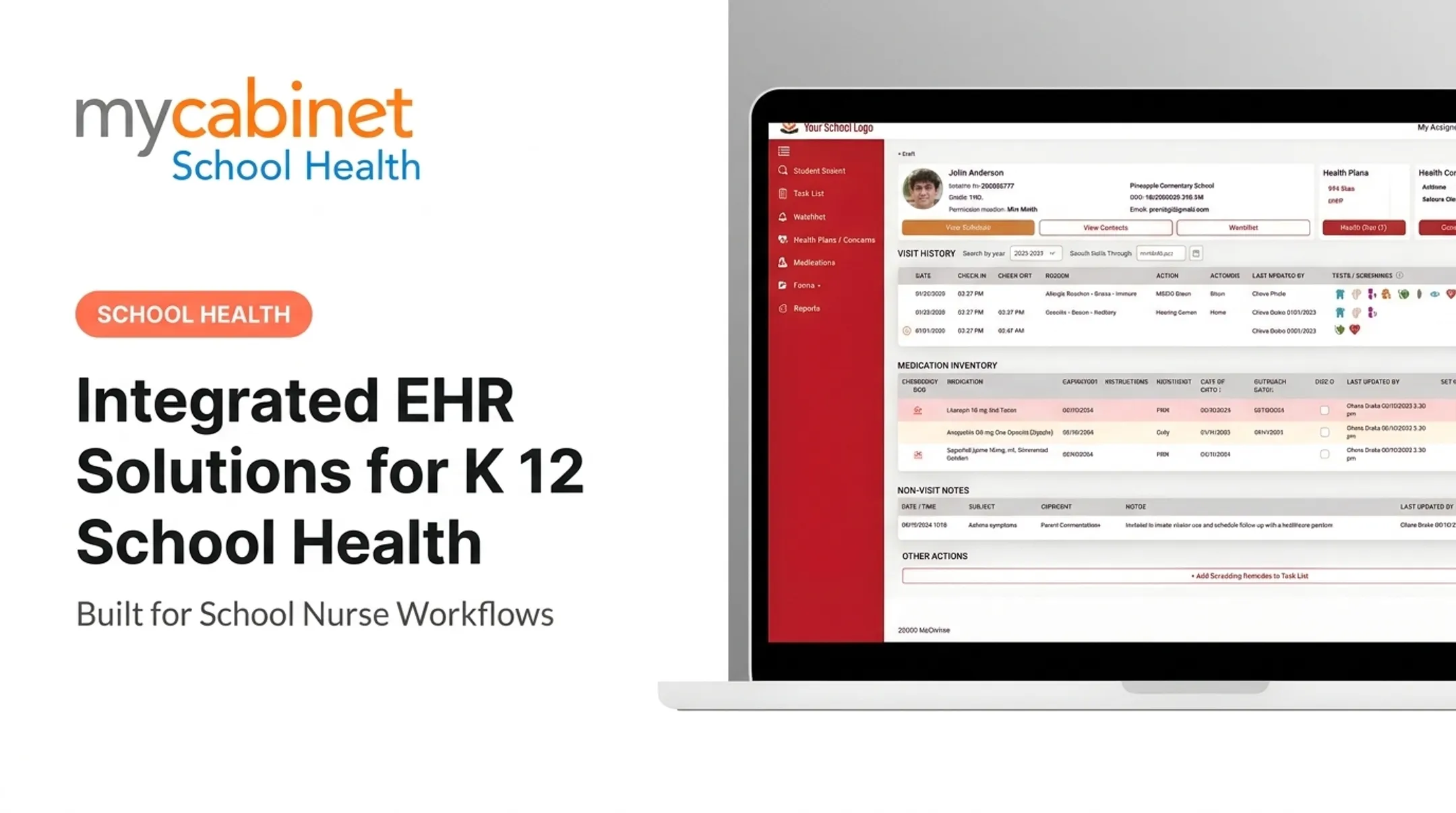
MyCabinet School Health is a nurse-centered school health EHR that connects a Nurse Portal, Parent App, and Parent Web Portal.
Parents upload required forms directly. Nurses review and approve them in the system, and approved documents attach to the student profile automatically—so care-plan files stay current without binders or disconnected tools.
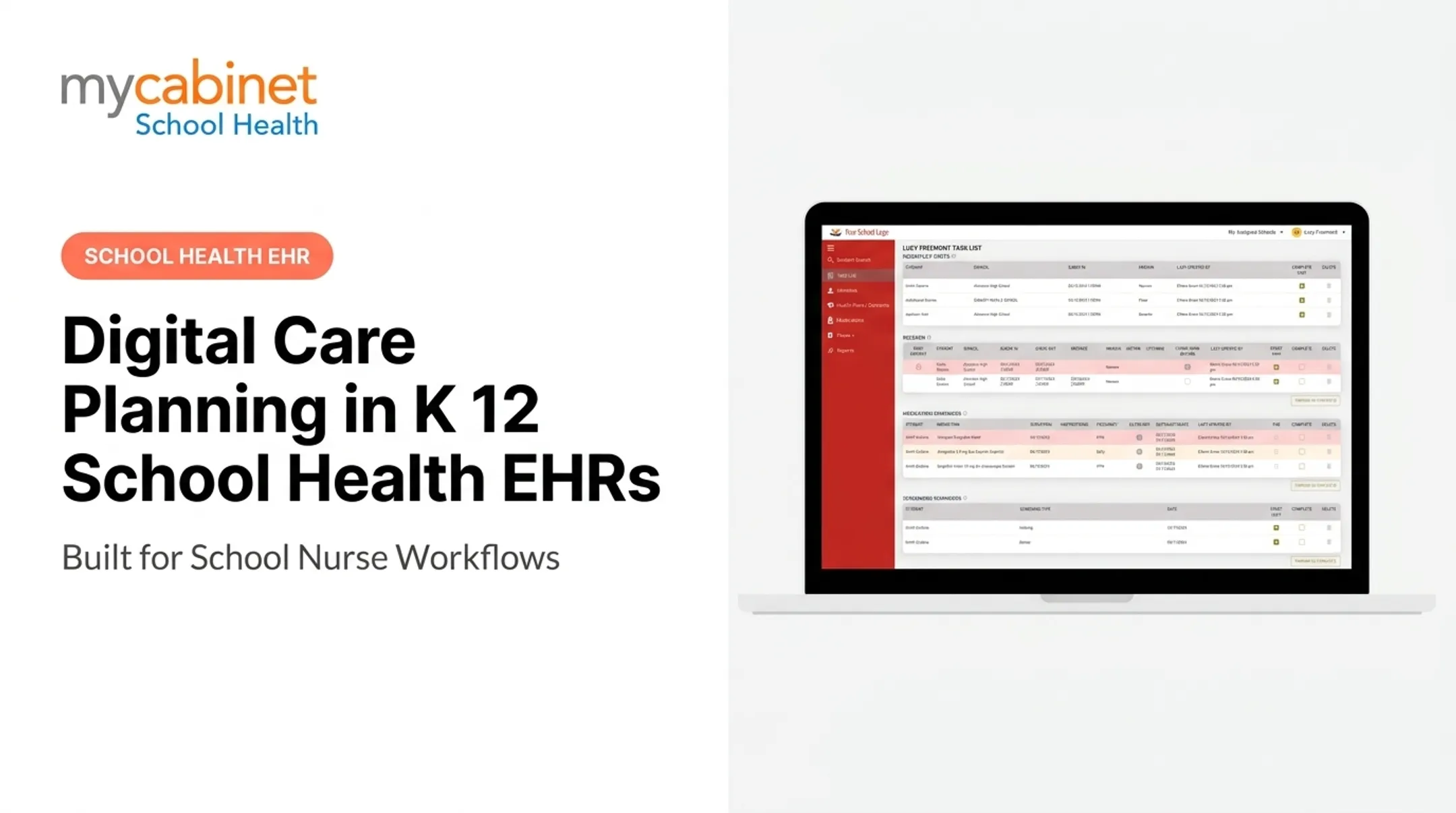
The platform's task list surfaces incomplete visits, medication expirations, and screening reminders so items don't slip through a busy week. At a 2025 board meeting, Cobb County School District Superintendent Chris Ragsdale described the shift: the platform digitized paperwork, let parents submit forms electronically, and showed when a child was seen and given medication.

MyCabinet states it maintains HIPAA compliance, FERPA compliance, and AICPA SOC 2 certification—verify these during procurement. When comparing any system for care-plan documentation, districts should also assess:
- Implementation timeline and SIS integration
- Accessibility for staff and families
- Data ownership and retention terms
- Incident response procedures and support responsiveness
Frequently Asked Questions
What is a student care plan?
A student care plan is a school-based record of a student's health needs, the supports staff will provide during the school day, who is responsible for each action, and when the plan will be reviewed. It helps nurses, teachers, and administrators deliver consistent care across classrooms and campuses.
How do districts manage student care plans across multiple schools?
Districts keep plans consistent with shared templates, role-based access, and clear review ownership at each school. Central oversight plus site-level updates helps nurses apply the same standards without losing student-specific detail.
What are the main components of a student care plan?
Most plans include assessment details, school-based needs, goals, interventions, medication instructions, emergency procedures, staff responsibilities, approvals, and review dates. Strong plans also note how changes are communicated to the people who work with the student each day.
What is an example of a student care plan?
For a student with asthma, the plan may list where the rescue inhaler is stored, warning signs staff should watch for, medication steps, who to call in an emergency, and the next review date. The same structure works for allergies, diabetes, seizure protocols, and other school-managed conditions.
How often should a student care plan be updated?
Update plans on the schedule required by district policy, and immediately when the student's condition, medication, provider orders, school setting, or emergency protocol changes. A quick revision after any clinical or placement change keeps classroom and clinic staff aligned.
Who should have access to a student care plan?
Only staff who need specific details to support the student—typically nurses, designated administrators, and relevant teachers or coaches—should have access. Use role-based permissions and secure sharing, and keep parents or caregivers appropriately informed.