
Digitization gets discussed as a generic IT upgrade: move files to the cloud, done. But for school nurses, the real value shows up in daily details. Does the medication log flag an expiring EpiPen before it becomes a problem? Can a parent upload an immunization record without three follow-up phone calls?
This article breaks down what data digitization actually means in a school health context, where it delivers measurable value, and what happens when districts skip it.
Key Takeaways
- Digitization converts paper health records, forms, and manual logs into structured, searchable digital data.
- Schools cut administrative burden, track medications more safely, and give parents clearer visibility.
- Nurses gain time back for direct student care instead of paperwork chasing.
- Results depend on consistent use and workflows built around how nurses actually work.
What Is Data Digitization, Really?
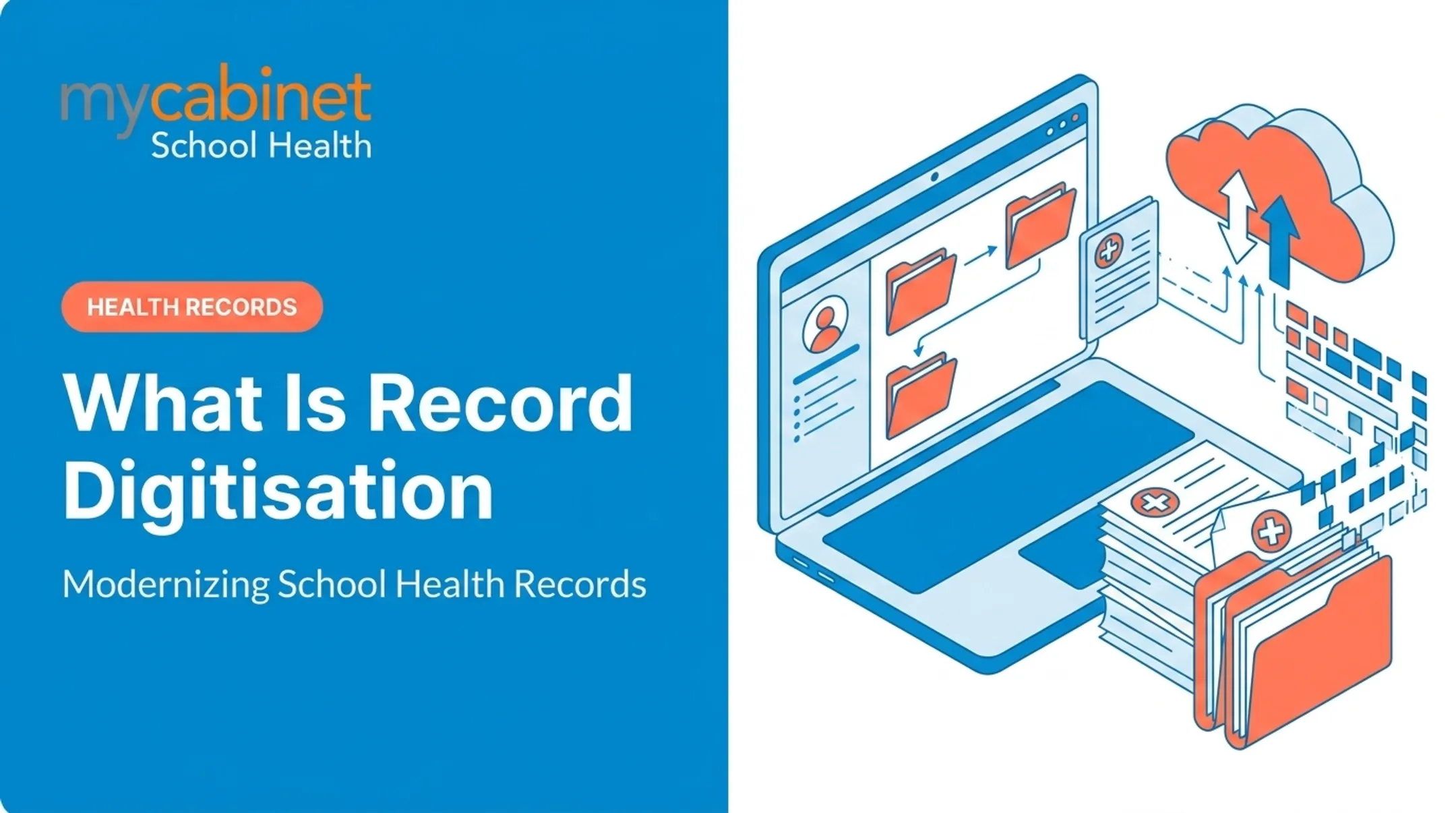
Data digitization means converting paper-based health records, forms, and logs into structured digital data. In a school setting, that covers:
- Immunization records
- Health history and screening forms
- Medication administration logs
- Clinic visit documentation
- Parent consent and authorization forms
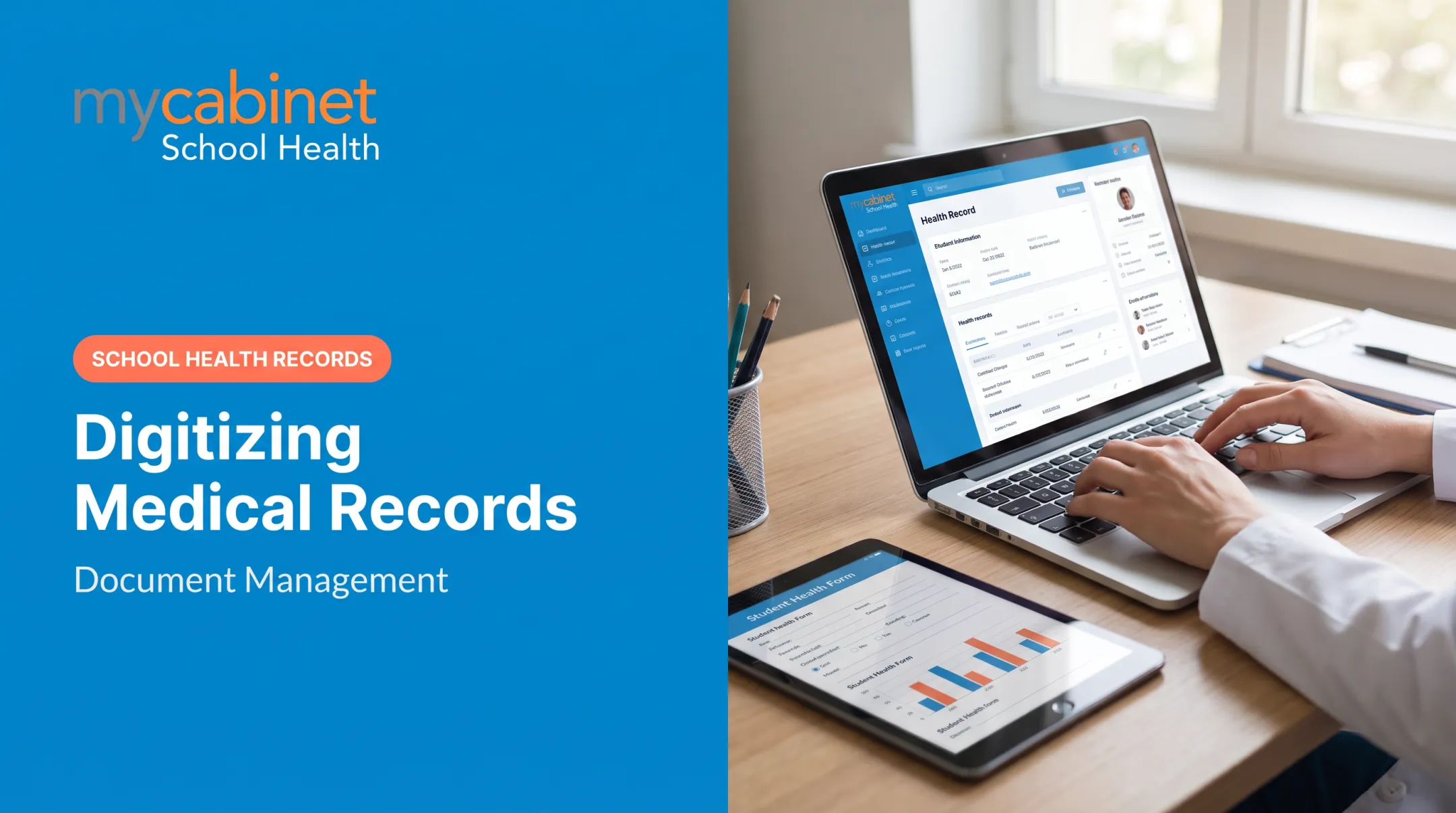
A scanned PDF sitting in a shared drive is technically "digital," but it is not structured or searchable. True digitization lets a nurse pull up a student's medication history, allergy alerts, and visit notes in seconds, not minutes spent flipping through a filing cabinet.
Digitization is the foundation. Nurse workflows and family communication tools built on top of it are where schools see the operational payoff.
Key Advantages of Data Digitization for School Health
These advantages aren't abstract. They map to what nurses and administrators track every day: time saved, errors avoided, and compliance maintained during audits.
Reduced Administrative Burden and Improved Nurse Efficiency
Manual paperwork eats into time that should go toward students. A single unreturned fax or a misplaced spreadsheet entry can send a nurse hunting through files while a student waits in the clinic.
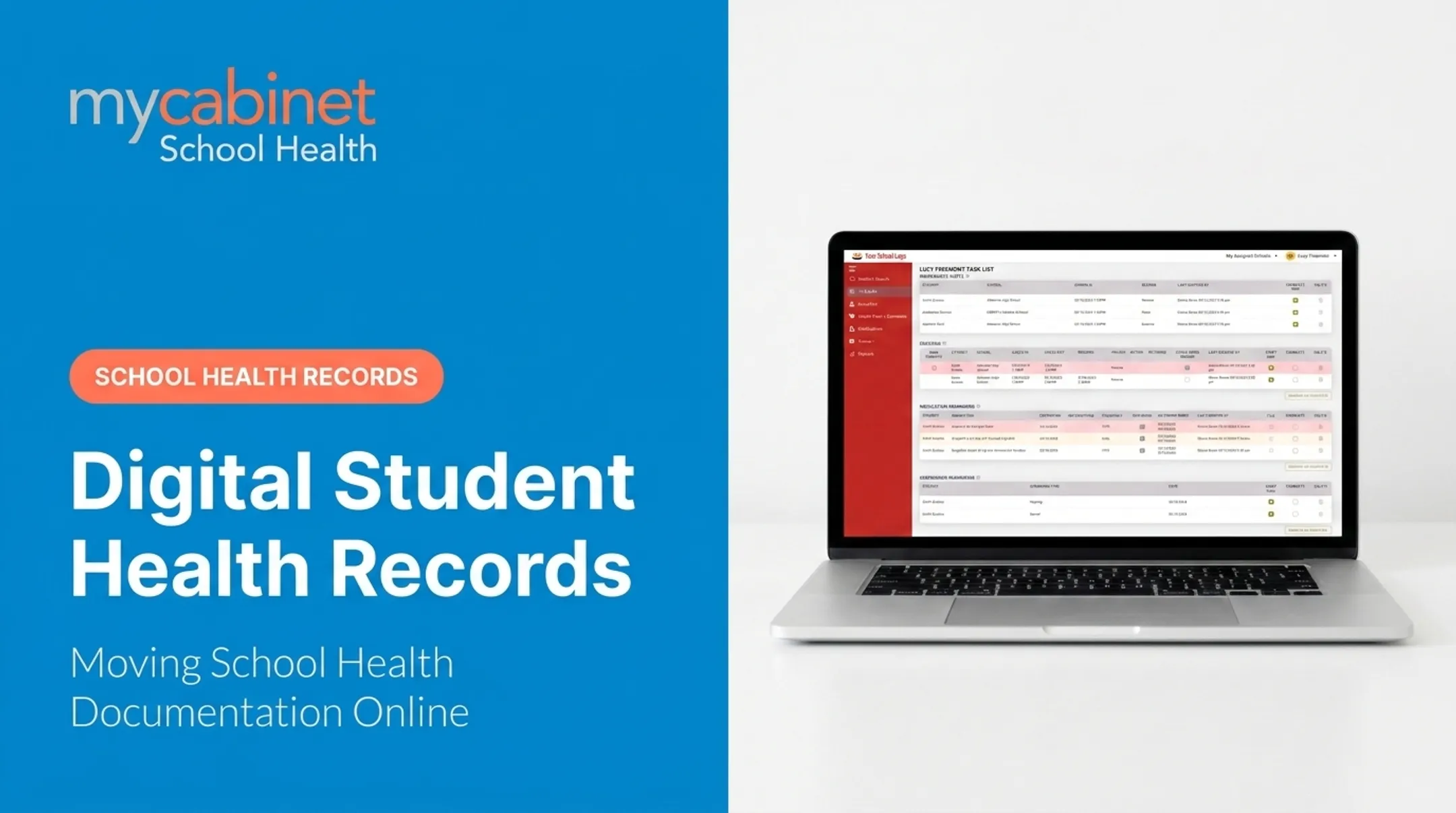
Digitized platforms fix this with automated task organization. MyCabinet's Nurse Portal uses an intelligent task list that surfaces:
- Incomplete visits still needing documentation
- Rechecks requiring follow-up attention
- Medication reminders and expiration alerts
Instead of relying on memory or paper notes, nurses see color-coded priorities in one place, with dates, student details, and completion checkboxes built in.

This matters because school nurse staffing is already stretched thin. According to NCES data, schools average 630 students per full-time-equivalent nurse nationally, and that ratio climbs even higher in larger schools, reaching 1,310 students per FTE nurse in schools with 1,000+ students (NCES, 2015-16). When one nurse covers multiple buildings, every minute spent searching for a record is a minute not spent on care.
KPIs impacted:
- Time per visit
- Task completion rate
- Backlog of incomplete health tasks
Districts with one nurse split across several schools feel this most: caseload pressure makes manual tracking nearly unmanageable.
Improved Medication Oversight and Safety
Medication errors in schools aren't rare. A study of all 115 North Carolina public school districts found an average of 78 medication errors requiring medical intervention annually, with year-to-year counts ranging from 37 to 160 (Journal of School Nursing, 2022). The researchers noted this likely understates the real number, since reporting wasn't mandatory.
Digitized medication logs address the gaps that manual tracking leaves open. MyCabinet's system captures dosage and frequency visibility, tracks expiration dates, and logs outreach details like contact date and method, all tied directly to the student's profile.
Why this reduces risk:
- Automated expiration tracking flags medications before they lapse, not after.
- Parents get notified with an approximate expiration day so replacements happen on time.
- Nurses can see whether an alert was delivered and viewed, closing the loop on follow-up.

KPIs impacted:
- Medication error rate
- Expiration-related incidents
- Outreach response time
CDC estimates put current asthma prevalence in children under 18 at 6.7%, or roughly 4.8 million kids nationally (CDC, 2023 data). For students managing chronic conditions daily, a missed dose or an expired inhaler isn't a paperwork issue—it's a safety issue.
Improved Parent Engagement and Transparent Communication
Paper permission slips get lost in backpacks. Phone tag with working parents drags consent forms out for weeks. A qualitative study of school nurses in Pennsylvania found that nurses regularly struggled with parents not returning required forms and being difficult to reach, especially when structured digital channels weren't available (PMC, 2023).
A connected system changes that dynamic. MyCabinet's Parent App and Parent Web Portal give families direct visibility into:
- When their child was seen in the clinic
- Active medications on file at school
- Medication expiration alerts
- Required health forms, which can be uploaded directly in-system
Once a parent uploads a form, the nurse reviews it inside the Nurse Portal and attaches it to the student's record automatically. No printing, no scanning, no chasing down a missing fax.

Communication stays intentionally one-way. Parents receive notifications, but they can't open a chat with the nurse directly. That design choice keeps clinical communication structured while still giving families the visibility they've been asking for.
The practical payoff shows up in form completion turnaround, parent response rate, and fewer missed-consent incidents—especially during back-to-school collection and annual screening season, when hundreds of forms need to move quickly.
What Happens When Data Digitization Is Missing or Ignored
Skipping digitization creates specific, recurring problems—not just more paperwork:
- Lost or inconsistent records during nurse transitions, staff turnover, or emergencies
- Higher error rates in medication administration and expiration tracking, as seen in the North Carolina data
- Reactive scrambling during compliance audits or district-wide screenings
- Rising costs tied to paper, printing, and fax maintenance
- Scaling problems as districts grow or add schools, since manual processes don't scale linearly
None of these issues are hypothetical. A 2022 study of Denver-area school districts described nurse-to-provider information exchange as still relying on fax, phone, and traditional mail as a baseline condition (PMC, 2022).
That same study found that structured, view-only nurse access to hospital EHR data for students with chronic conditions cut ED visits 34% and hospitalizations 44% over six months. The authors noted this is one study and may not generalize, but it's a strong signal for what better data access can do.

How to Get the Most Value from Data Digitization
Buying software isn't the finish line. Districts see the most value when digitization is treated as an ongoing practice, not a one-time purchase.
Three things matter most:
- Consistency across workflows. Digitizing medication logs but leaving consent forms on paper creates a half-measure that doesn't solve the underlying problem.
- Nurse-informed design. Systems built around real clinic workflows—task prioritization, minimal clicks, and centralized records—earn higher adoption than generic tools retrofitted for schools.
- Compliance built in from day one. FERPA covers most school nurse health records as education records; HIPAA applies only in narrower cases. Platforms need role-based access and audit trails from day one, not bolted on later.
Cobb County Schools offers a real-world example. Superintendent Chris Ragsdale described MyCabinet's impact directly, noting that it "digitized and makes documentation easier," and specifically highlighted that parents can submit paperwork electronically and see when their child was seen and given medication. As he put it, that's "a win for the parents and a win for the district."
That kind of sustained use is what purpose-built school nurse platforms deliver—generic EHR tools adapted after the fact rarely match it.
Conclusion
The value of digitizing school health records shows up in less time spent chasing paperwork, safer medication tracking, and parents who finally have visibility into their child's care without playing phone tag.
These benefits compound. A nurse who spends less time on administrative backlog has more time for the recheck that catches a problem early. A parent who gets a timely expiration alert replaces medication before a gap occurs.
Digitization works as an ongoing practice, not a one-time software purchase. It delivers full value only when built around how school health offices actually operate—nurse workflows, medication safety, and clear parent visibility included.
Frequently Asked Questions
What is data digitization?
Data digitization means converting physical records, like paper health forms, immunization cards, and medication logs, into structured digital data. In schools, this replaces filing cabinets with searchable, centralized student health records.
What is digitization vs digitalization?
Digitization is format conversion—turning a paper form into a digital file. Digitalization redesigns the workflow itself, such as replacing faxed consent forms with in-app parent uploads and nurse approvals.
How does digitizing student health records improve compliance?
Digitized systems create audit trails, role-based access controls, and structured documentation that align with FERPA requirements for education records. This makes it easier to demonstrate compliance during audits rather than reconstructing paper trails after the fact.
Is digitized student health data secure?
Reputable platforms use role-based permissions, audit trails, and isolated environments for student health data. Treat SOC 2 Type II and HIPAA compliance as baseline indicators of security practice.
How long does it take a school to digitize health records?
Timelines depend on district size and how records sync with the Student Information System. Most schools move faster with a structured onboarding plan than with an ad-hoc, school-by-school rollout.
Can parents access digitized health records directly?
Parents usually get controlled, one-way access through an app or web portal to view clinic visits, medications, and expiration alerts. Messaging nurses still happens through the school clinic, not unrestricted in-app chat.