
Parents, educators, and administrators keep asking the same question: what can help mental health in schools? The answer isn't one program or app. It's a combination of tiered support systems, trained staff, and consistent tracking that keeps kids from falling through the cracks.
This guide covers the strategies, staffing models, technology, and funding realities schools need to build mental health support that actually works.
Key Takeaways
- 18% of students now use school-based mental health services, making schools a primary access point for care
- Effective programs combine tiered support (MTSS), trained staff, and consistent documentation to catch needs earlier
- Digital health records cut admin burden and improve visibility into student well-being
- Funding and staffing shortages remain the top barriers, with 56% of schools citing inadequate funding
Understanding the Youth Mental Health Crisis in Schools
According to the CDC, 29% of high schoolers reported poor mental health in the past 30 days, and 9% attempted suicide. Female and LGBTQ+ students report higher rates of persistent sadness (53% and 65%, respectively) than male students (28%).
What's Driving the Crisis
Several overlapping factors contribute:
- Social media exposure and early adverse digital experiences
- Post-pandemic academic and social disruption
- Family financial stress
- Reduced access to structured social time
Access isn't equal, either. A 2024 KFF survey found White parents were more likely than Black, Hispanic, and Asian parents to report their children received mental health services in the prior three years.
Left unaddressed, these issues don't stay contained to a student's personal life. The CDC notes that untreated childhood mental health conditions interfere with academic performance, attendance, and behavior. Schools see it firsthand, through disciplinary referrals, absenteeism, and dropping grades.
Yet capacity hasn't kept pace with need. In the 2024-25 school year, 56% of schools cited inadequate funding as a limitation, up from 47% just two years earlier, per KFF's analysis.
Core Components of a School-Based Mental Health Program
What Is a School-Based Mental Health Program?
A school-based mental health program is a coordinated system that delivers prevention, identification, and treatment services within the school setting. It brings together practices, staff roles, and referral pathways so support reaches students where they already spend their day.
The MTSS Framework
Most comprehensive programs use a Multi-Tiered System of Supports:
- Tier 1 (Universal): School-wide practices like SEL curricula, positive behavior support, and classroom belonging strategies for all students
- Tier 2 (Targeted): Small-group interventions for students showing early signs of risk
- Tier 3 (Intensive): Individualized support, often involving outside providers, for students with significant needs

Common service types include:
- Individual counseling
- Group interventions
- Case management
- Referrals to community providers
- Crisis response
A 2011 meta-analysis of 213 school-based SEL programs covering over 270,000 students found clear academic gains. Participants improved by an average of 11 percentile points in achievement, with better behavior and attitudes as well.
Trauma-informed care and PBIS (Positive Behavioral Interventions and Supports) anchor school-wide culture so every tier has a consistent foundation.
Staffing typically includes school counselors, psychologists, social workers, and nurses. Each role owns a distinct step in the referral chain, from first concern to ongoing support.

Everyday Strategies to Promote Student Mental Health
How Do School Counselors Help Students With Anxiety?
School counselors aren't therapists, and they're not meant to be. Per ASCA guidance, they don't diagnose or provide long-term treatment. Instead, they:
- Teach coping skills and stress management techniques
- Provide short-term, culturally responsive counseling
- Coordinate referrals to outside clinical providers when needed
- Respond during crisis moments
Classroom-Level Strategies
Beyond formal counseling, everyday classroom practices reinforce student mental health:
- Fostering belonging through consistent, predictable relationships
- Unstructured play and movement — the CDC recommends 60 minutes of daily physical activity, tied to better focus and grades
- Brief mindfulness practices linked to improved psychological outcomes in school settings
Many districts also designate a Mental Health Day or participate in Mental Health Awareness Month each May, using the occasion to normalize conversations and point families toward resources.
The Role of Technology in Mental Health Tracking and Nurse Coordination
Here's a problem most people outside the school building never see: mental-health-related visits often get logged on paper, buried in email threads, or tracked in disconnected spreadsheets. A student who visits the nurse three times in two weeks with vague physical complaints (a common indicator of anxiety) might not get flagged if nobody is connecting the dots.
Legacy clinic tools often leave nurses managing follow-ups by hand. Recurring concerns slip through when visit history, rechecks, and outreach live in separate places.
How a Connected Platform Changes This
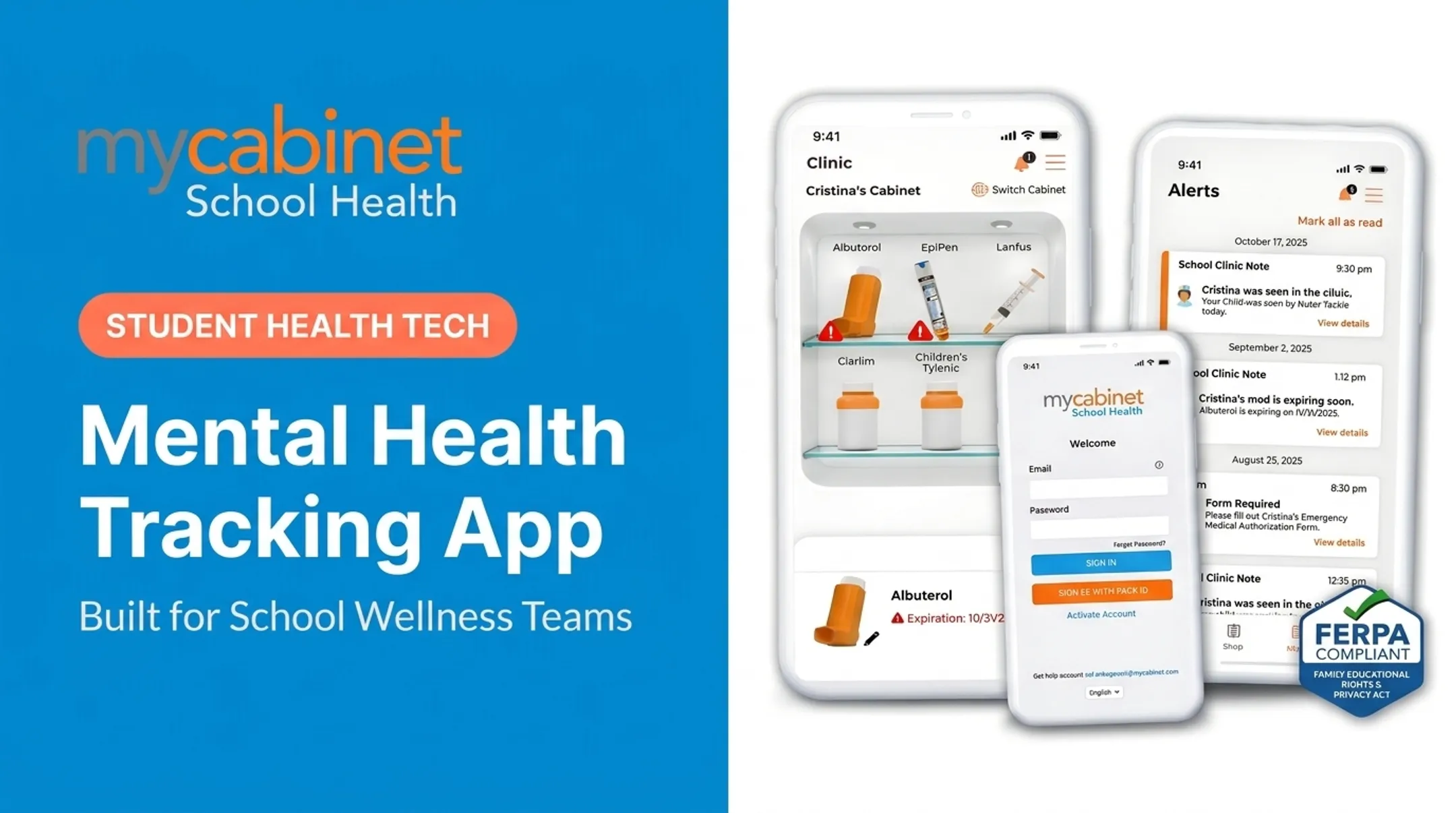
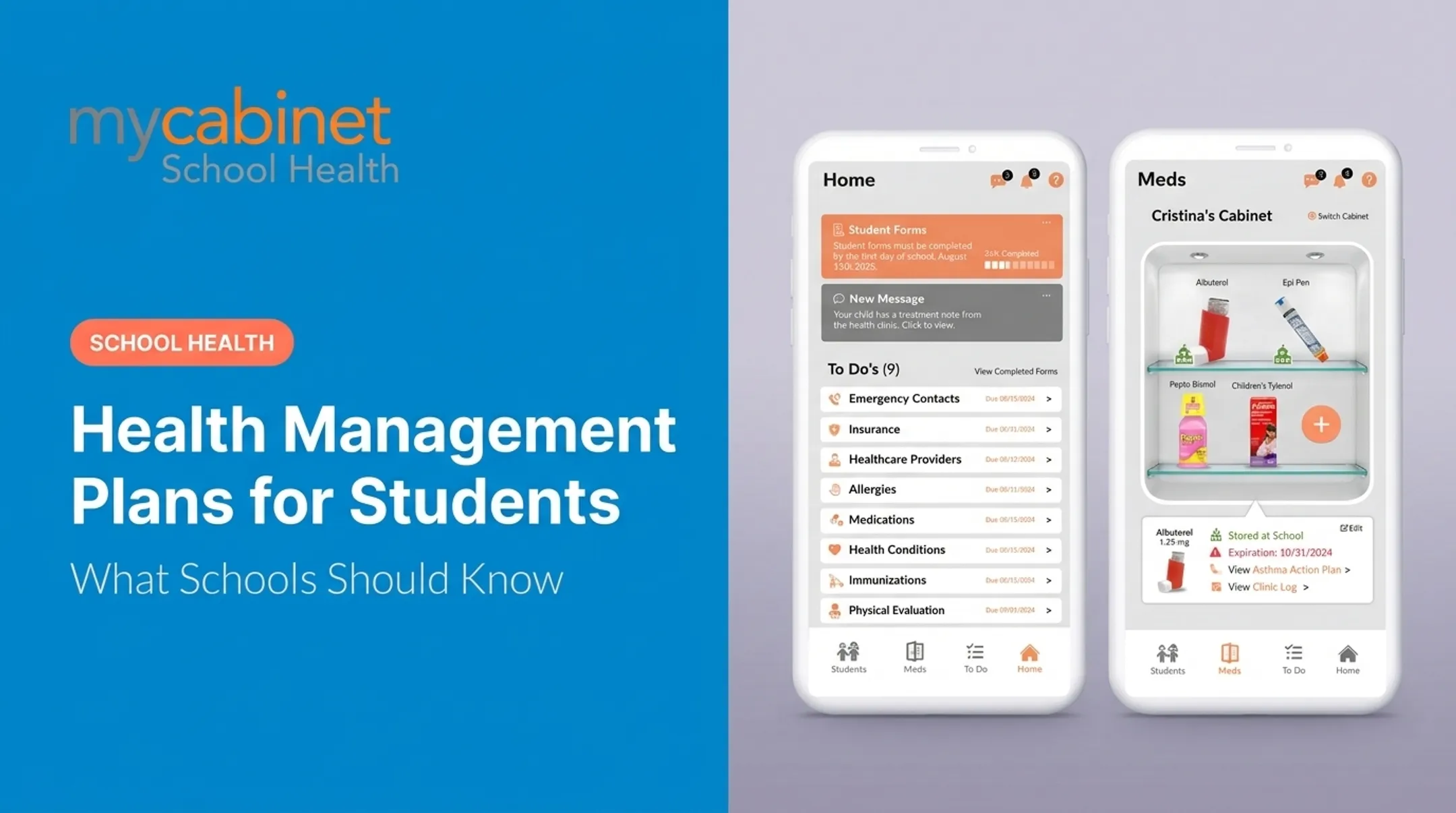
A dedicated school health platform organizes visit documentation, rechecks, and outreach logs in one place, so nothing falls out of view. MyCabinet School Health is built around this workflow. Its Mental & Emotional Health Tracking feature logs visits tied to mental and emotional concerns and generates real-time alerts so nurses can spot patterns before they escalate.
Key workflow features include:
- Organize incomplete visits, rechecks, medication reminders, and screening follow-ups in task lists
- Capture outreach date, method, and notes directly on the student record
- Document visits with predefined types so charting stays consistent and faster

Parent Communication and Compliance
Once patterns and follow-ups are visible to the care team, families still need timely notice without turning the clinic into an open inbox. The Parent App and Web Portal share clinic-visit updates through one-way, controlled notifications rather than open-ended messaging. That keeps communication transparent without creating a compliance risk.
MyCabinet runs on HIPAA- and FERPA-aligned architecture, with SOC 2 Type II certification and role-based permissions.
That matters because health records tied to a covered school provider are education records under FERPA, and sharing them requires proper consent or a documented exception. Clear audit trails also support cleaner handoffs between nurses, counselors, and outside providers, which is often where information gets lost.
Funding, Staffing, and Compliance Considerations
Where the Money Comes From
Most schools rely on a mix of funding sources:
| Funding Source | % of Schools Using (2024-25) |
|---|---|
| District/school budgets | 65% |
| Organizational partnerships | 44% |
| Federal grants | 33% (down from 53% in 2021-22) |
Medicaid can also reimburse medically necessary services listed in a student's IEP. Federal grant funding has been volatile. In late 2025, the Department of Education awarded over $208 million in new mental health grants after more than 200 prior school-based grants were not continued earlier that year. Schools that blend district funds, partnerships, and reimbursable services are better positioned when any single stream shifts.

Staffing and Training
Nearly a third of schools with vacancies report too few mental health providers on staff. Ongoing training helps teachers and nurses spot warning signs early, use clear referral pathways, and document concerns consistently so students reach the right support faster.
Compliance Non-Negotiables
- FERPA: written parental consent is generally required before sharing student mental health records, with limited exceptions
- HIPAA: applies only when specific covered-entity conditions are met
- Systems: role-based access and audit trails are required to stay compliant during staff handoffs
Frequently Asked Questions
What can help mental health in schools?
Tiered support systems (MTSS), SEL programs, trained counseling staff, and consistent tracking tools work best together. Schools get stronger results when these pieces run in sync rather than as one-off fixes.
What is a school-based mental health program?
A school-based mental health program is a coordinated system that delivers prevention, identification, and treatment services on or near campus. It typically involves counselors, psychologists, social workers, and nurses working through defined referral pathways.
How do school counselors help students with anxiety?
Counselors teach coping strategies, provide short-term counseling, and coordinate referrals to outside providers. They don't diagnose or provide long-term therapy; that falls outside their scope.
How many U.S. schools offer mental health services?
97% of U.S. public schools offered at least one mental health service in 2024-25, and about 18% of students used school-based services, according to KFF's analysis of NCES data.
What are common barriers to school mental health programs?
Inadequate funding (56% of schools) and provider shortages are the top two barriers. About a third of schools say they can't effectively serve all students who need help.
How can schools improve mental health tracking and follow-up?
Digital documentation tools organize incomplete visits, rechecks, and outreach logs in one place instead of scattered emails and paper notes. This makes it easier for nurses and counselors to spot patterns and follow up consistently.