
This scene plays out in schools across the country every day. Roughly 1 in 4 children in the U.S. lives with a chronic health condition, and many need medication during school hours. Parent consent rules exist to protect everyone in this equation: the student, the nurse, and the school itself. But these rules aren't uniform. They vary by state, and often by district policy on top of that.
This article breaks down what the law actually requires, what a proper consent form needs to include, and how digital tools are replacing the backpack-shuffle approach entirely.
Key Takeaways
- Written parental consent is required before schools give any medication, prescription or OTC
- Prescription meds usually need parent consent plus a physician’s signed order
- Consent forms are legal records that protect schools and usually need annual renewal
- Digital consent and medication tracking reduce errors, missed doses, and paperwork burden
What Are the Legal Requirements for Parental Consent for Medication Administration?
Most states require written parental or guardian consent before school staff can give a student any medication, whether it's prescribed or bought off a pharmacy shelf. This isn't optional guidance. It's typically written into state education or health codes.
A standard consent form usually needs to include:
- Student's full name
- Medication name and dosage
- Timing and frequency of administration
- Method of administration
- Start and end dates
- Emergency contact information
For prescription medications, a parent's signature alone usually isn't enough. Most states also require a licensed physician's or prescriber's order confirming the medication, dose, and schedule.
How State Rules Differ
State rules vary widely. Florida and California show how different the paperwork can look in practice.
Florida (under Florida Statutes section 1006.062):
- Written parent statement authorizing the principal or a designee to help with medication
- Explanation of why the medication is needed during the school day
- Medication in its original labeled container, locked when not in use
California (under Education Code section 49423):
- Physician statement specifying the medication, dose, and schedule
- Separate parent statement requesting assistance
- Both renewed at least annually, or sooner if the medication changes

Self-administration is its own category. Inhalers and EpiPens often fall under separate rules. Both Florida and California allow students to carry these devices, but only with combined parent and physician sign-off on file with the school.
Is a Child's Medication Administration Record (MAR) a Legal Document?
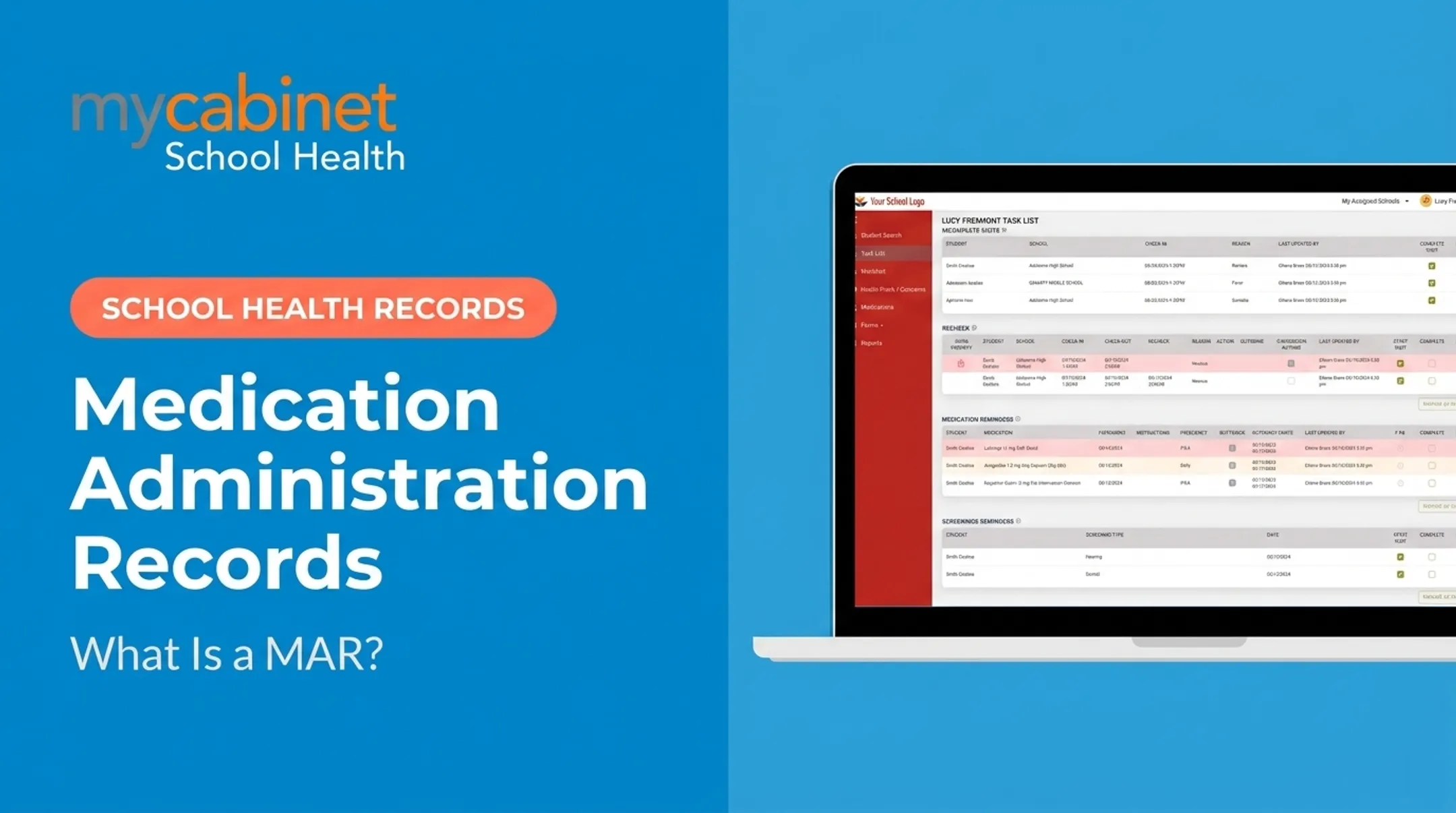
Yes. A Medication Administration Record, or MAR, documents every dose given, who gave it, and when. It's treated as a legal health record, not just an internal note.
That matters because a MAR can be pulled into audits, investigations, or legal disputes. If a parent questions whether their child received a dose, or a district faces a compliance review, the MAR is often the first document requested.
A complete MAR typically tracks:
- Student name and the prescribing provider's contact information
- Medication name, dose, and administration time
- Staff member who administered it
- Any errors (wrong dose, wrong time, missed dose) and how they were resolved
States and districts set their own retention requirements for these records. Incomplete or missing MARs create real exposure for schools, which is one reason digital record-keeping has become the standard.
A cloud-based system, like the one MyCabinet School Health provides, digitizes medication tracking into a single secure hub. That replaces binders and handwritten logs that can go missing or get filled in inconsistently.
Does a Medical Consent Form Need to Be Notarized?
No — generally not. Standard school medication consent forms in most states, including Florida, don't require a notary. A parent or guardian signature is typically sufficient, and prescription medications additionally require the prescriber's signature.
Some districts ask for a witness signature from staff as an added layer, but that's a district-level practice, not a statutory requirement.
Always check with your specific school or district. Private schools in particular sometimes add their own requirements beyond state minimums.
Notarization tends to show up in a different context, such as medical power of attorney or guardianship paperwork. Routine daily medication consent doesn't fall into that category.
What Happens Without Proper Parental Consent?
Without documented consent, schools face real liability exposure. Most school nurses won't administer any medication — even a single dose of children's ibuprofen — until the proper consent form and any required physician order are on file. That stance is a practical response to genuine legal risk.
Missing health documentation also complicates compliance oversight for districts. Those gaps can intersect with disability-rights and due-process obligations, especially for students with individualized health or education plans.
The practical result? Missing paperwork leads to:
- Delayed treatment for the student
- Frustrated parents making repeated calls
- Nurses and office staff stuck chasing down faxes and signatures
Delayed care, extra phone tag, and incomplete records help no one. Clear consent requirements exist to prevent those breakdowns before they start.
Common Challenges Schools and Parents Face with Paper-Based Consent
Paper consent systems create friction at every step. A form goes home in a backpack, gets signed, then needs to make it back to school intact and legible. Multiply that by hundreds of students, and school nurses spend hours tracking down paperwork.
Common pain points include:
- Lost forms that never make it back from home
- Handwriting that's difficult to read on physician orders
- No system to flag when a medication or consent form is about to expire
- Parents left wondering whether their form was even received

Those gaps get worse once the form leaves the backpack. Parent communication in a paper-based system isn't time-stamped or integrated anywhere. If a form was faxed on a Tuesday, there's often no confirmation trail showing it arrived, was reviewed, or was approved. Medication-status notices can be delayed or undocumented entirely, leaving nurses and parents guessing.
How Digital Platforms Simplify Parent Consent and Medication Management
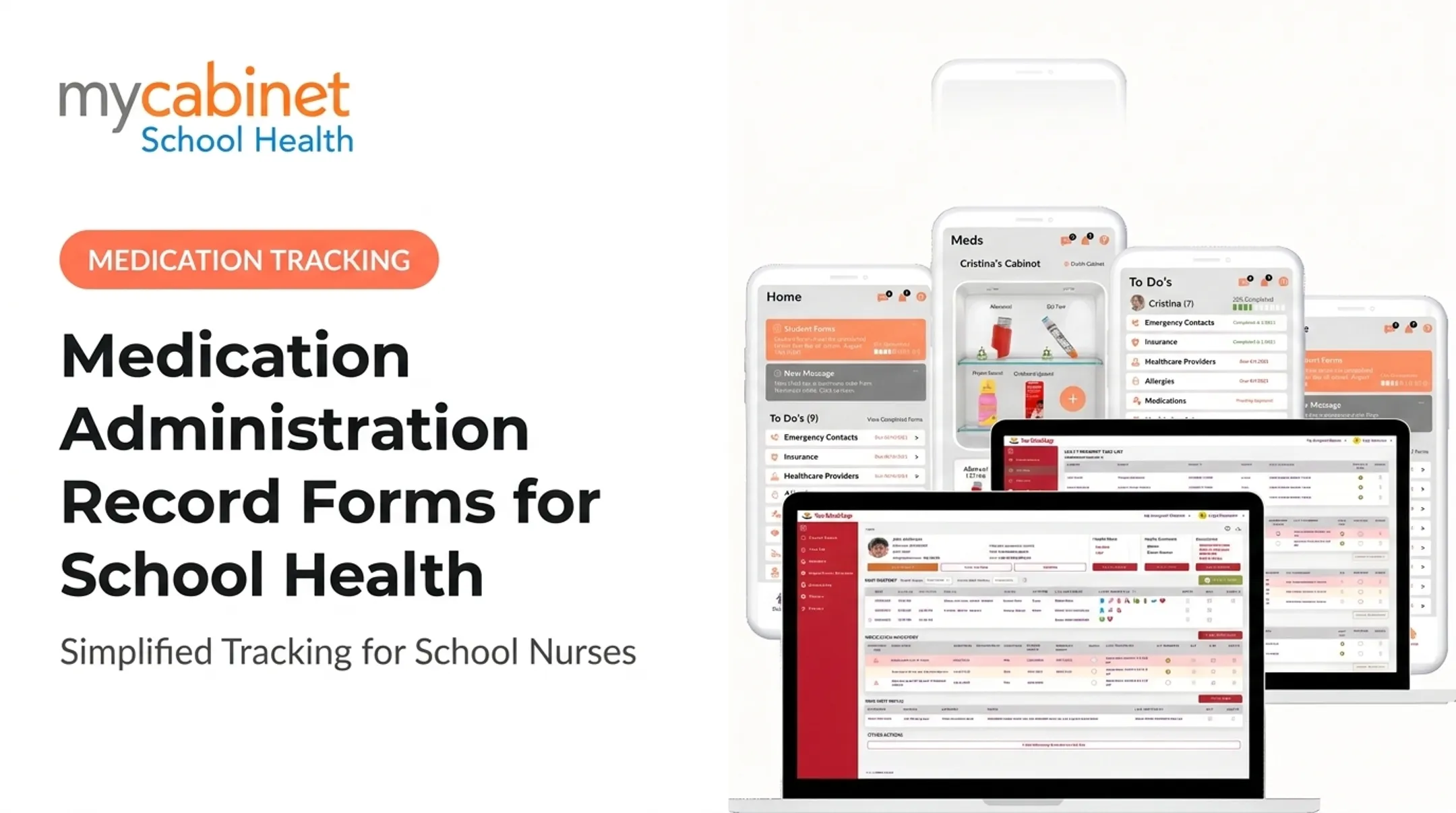
MyCabinet School Health was built around this exact problem. It connects nurses, students, and parents through three linked pieces: the Nurse Portal, Parent App, and Parent Web Portal.
Here's how it changes the workflow:
- Digital submission replaces paper and fax. Parents submit medication consent forms and physician orders directly through the app or web portal.
- Nurses review and approve in-system. Once approved, documentation attaches directly to the student's health record. No printing, no filing cabinets.
- Expiration tracking runs in the background. The platform flags dosage, frequency, and medication expiration dates before consent or supply lapses, so nurses aren't caught off guard.
- Parents get controlled notifications. One-way alerts inform families about clinic visits or expiring medications without opening up unrestricted messaging that could compromise student privacy.
Nurse task lists organize these medication reminders and expirations with visual cues, so nothing gets buried in a stack of paper forms. Parents can check the Parent App to see active medications on file and get reminders before a prescription runs out.

The platform is FERPA and HIPAA compliant and AICPA SOC 2 Certified, so sensitive student health data stays protected on both the school and family side.
Frequently Asked Questions
What are the requirements for parental consent for medication administration?
Most states require written parental consent along with medication details: name, dose, timing, and administration method. Prescription medications also generally need a physician's order. Exact requirements vary by state.
Does a child medical consent form need to be notarized in Florida?
No. Florida law doesn't require notarization for standard school medication consent forms. A parent signature is typically enough; prescription medications also need a physician's signature.
Is a child's medication administration record a legal document?
Yes. A MAR is a legal health record documenting each dose given, when, and by whom. It's subject to state and district retention policies and can be reviewed during audits or disputes.
How long is a parent medication consent form valid at school?
Most forms need renewal annually, or sooner if the medication, dosage, or schedule changes. Check your district's specific policy, since renewal timelines aren't identical everywhere.
Can a school refuse to give medication without parental consent?
Yes. Schools and nurses are generally required to withhold medication until proper written consent and any necessary physician orders are documented on file.
What information should be included on a school medication consent form?
Include:
- Student name
- Medication name and dosage
- Timing and administration method
- Start and end dates
- Physician signature for prescriptions
- Emergency contact information