
That gap kills time schools don't have. Anaphylaxis can escalate in minutes, and staff who don't have quick access to allergy instructions often hesitate, improvise, or wait for someone else to find the right information.
An allergy management plan in a school health record isn't the same as the clinician's action plan. The clinician's plan is the medical order: symptoms, medication, dosing. The school's record wraps around that document with contacts, accommodations, staff training, consent forms, and version history, everything needed to act on the plan safely.
This article covers what belongs in that record, how to organize it, and how to keep it current, accessible, and legally sound for U.S. schools.
Key Takeaways
- Keep the clinician-approved action plan, medication orders, contacts, and training records in one identified student health record.
- Capture allergy data as structured, searchable fields while preserving the signed clinical document itself.
- Give each staff role only the access it needs, without slowing down emergency response.
- Review plans whenever diagnosis, medication, schedule, or permissions change, and confirm current district requirements.
What an Allergy Management Plan Should Include
Clinical Profile, Symptoms, and Emergency Response
Every record should capture a clear clinical profile:
- Confirmed allergen and reaction history
- Severity and related conditions (such as asthma)
- Diagnosing clinician
- Plan date and next review date
The CDC's food allergy guidelines call for physician or nurse documentation supporting the diagnosis and anaphylaxis risk. That documentation should come directly from the student's healthcare provider, not secondhand from a parent conversation. Confirmed medical information and parent-reported concerns are not the same thing. Treating them as equivalent forces staff to guess during a real emergency. The record should also link each allergen to observable symptoms and the clinician-directed response. AAAAI's emergency action plan format captures:
- Symptoms by body system (mouth, throat, skin, gut, lungs/heart)
- When epinephrine is authorized and when to call 911
- Physician and parent/guardian signatures Many state education rules follow the same pattern. New York's guidance, for example, requires a signed provider order and signed parent permission before any student-specific medication is given at school, plus written authorization for self-carry. Medication fields should include:
- Dose and route
- Storage location and expiration
- Backup supply
- Self-administration status Staff should never improvise. The record exists to remove guesswork, not add discretion.

Prevention, Accommodations, and Care Team
A single blanket policy rarely fits a real student's needs. The record should specify:
- Classroom and cafeteria food-sharing rules
- Field trip, transportation, and athletics protocols
- Insect-sting or environmental-allergen precautions where relevant
- Lab or classroom material restrictions tied to specific allergens Food, medication, insect, and environmental allergies each call for different setting-specific responses, not one interchangeable template. Name people by responsibility, not by default access to the full record:
- Parents/guardians and the clinician
- School nurse, teachers, and cafeteria staff
- Transportation, coaches, substitutes, and after-school staff Include communication preferences, language needs, and escalation contacts. Limit sensitive health details to people who genuinely need them.
Use a Standardized, Scannable Format
Two views work better than one dense file:
- Emergency-facing view: symptoms, medication, and contacts at a glance
- Full record: clinical documents, accommodations, training acknowledgments, and incident history Each plan should show its source, signature, effective date, review date, and version so staff never act on an outdated copy.
How to Organize Allergy Plans in School Health Records
Build a Structured Record, Not Just an Uploaded File
A PDF buried in a folder doesn't help a nurse tracking expiring EpiPens across 400 students. Structured fields let nurses search, filter, and flag gaps a scanned document can't:
- Allergen
- Symptoms
- Medication
- Expiration
- Consent
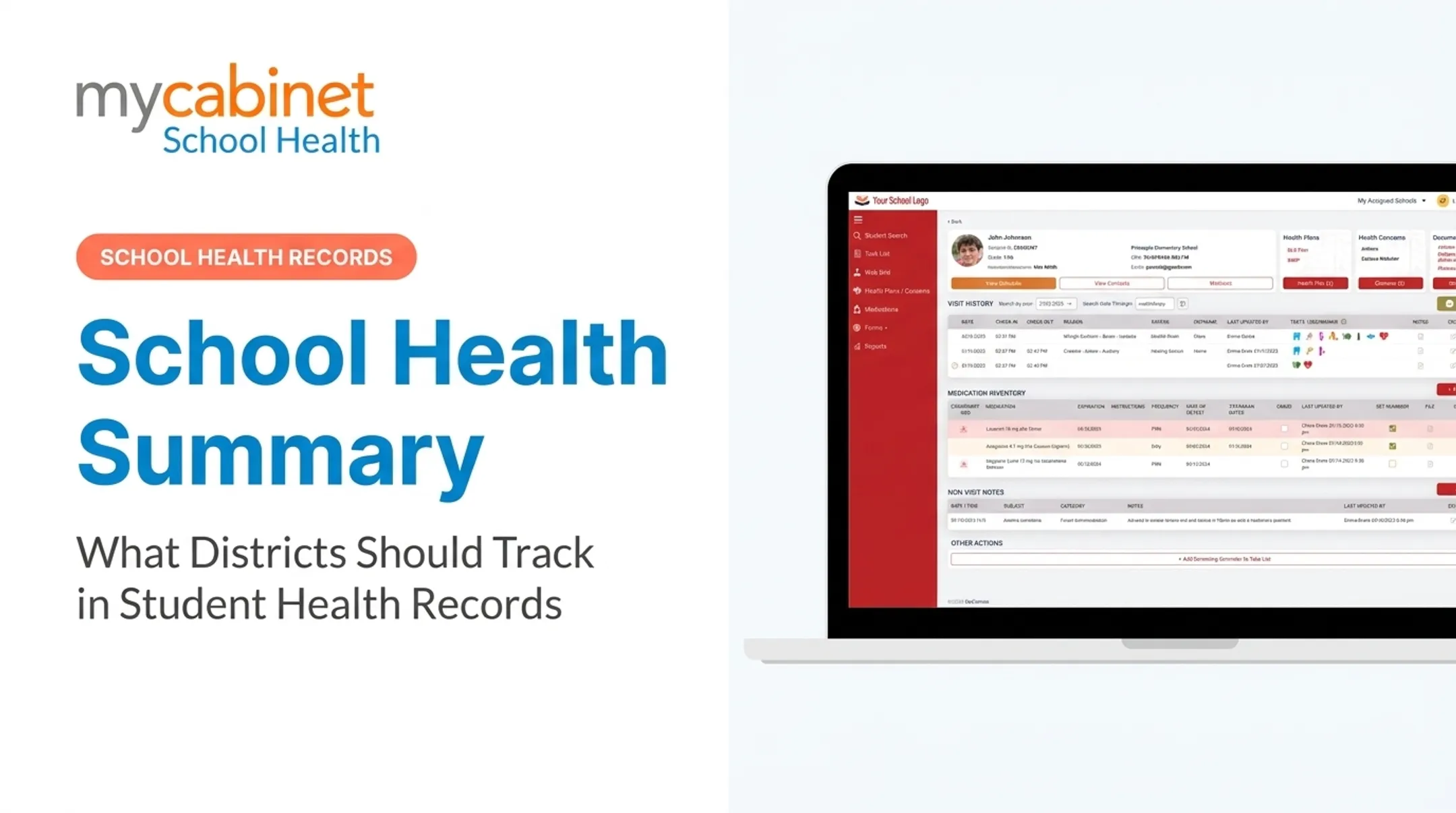
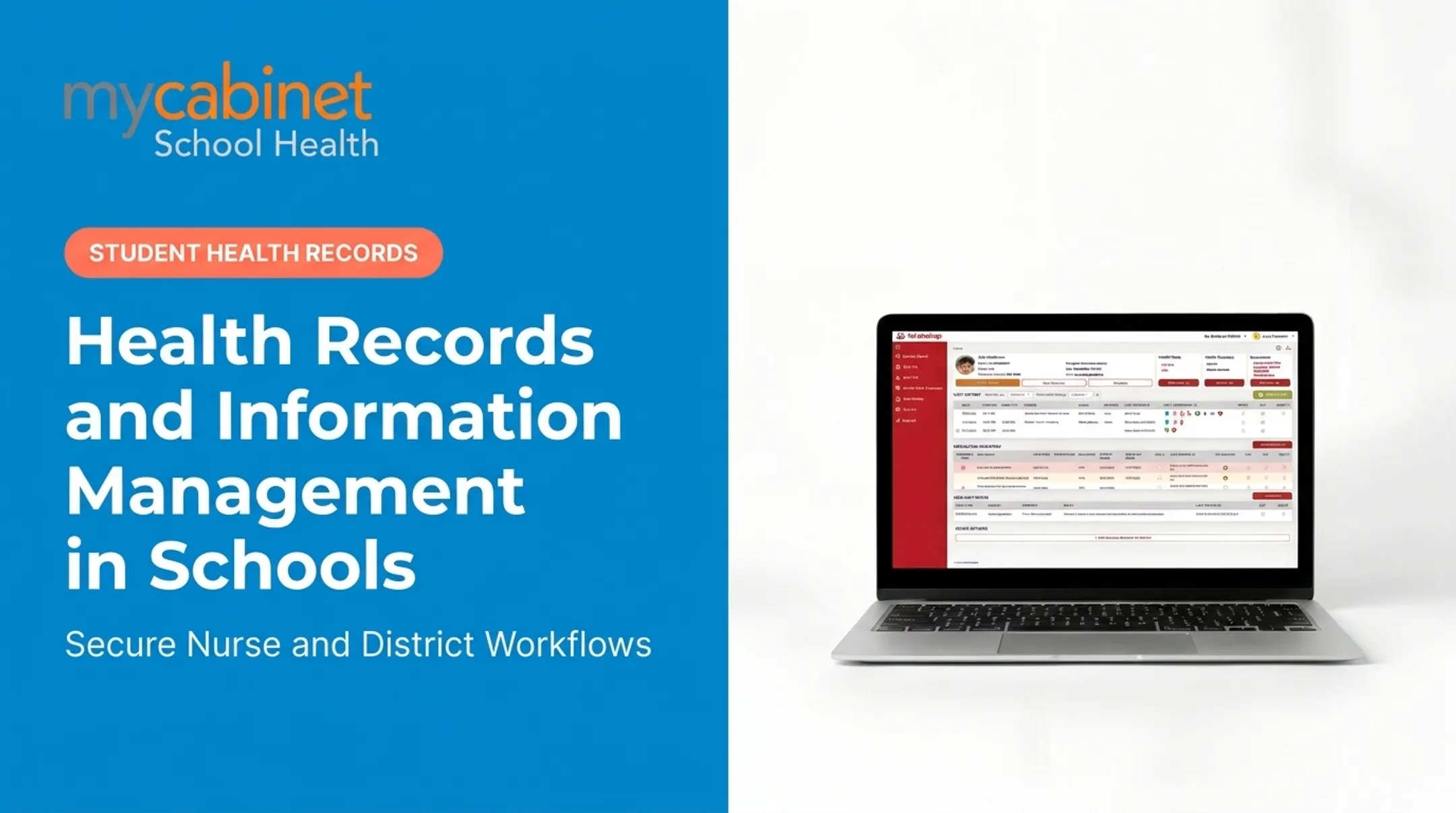
- Accommodations That structure works best when the allergy action plan sits with the rest of the student record. MyCabinet School Health keeps the plan alongside health plans, medications, visit history, and notes in one profile, so nurses aren't toggling between a binder and a spreadsheet.

Preserve the Authoritative Document and Its Version History
The signed clinician plan still needs to live somewhere, attached to the profile, with the effective date and approving provider recorded. When it's updated, the old version should be archived, not deleted, and clearly marked as inactive. Without version control, a classroom copy might still show a dose that's since changed. Reconciling paper copies in the nurse's office, the classroom, and the cafeteria after every update keeps conflicting instructions from circulating at once.
Control Access While Keeping Emergency Information Usable
Role-based access means a cafeteria worker sees allergen and avoidance details, not the student's full health history. A nurse sees everything relevant to care. Audit trails track who viewed what. Federal guidance published by the Department of Education in 2023 clarifies that FERPA generally governs student health records maintained by K-12 schools. Disclosure is permitted to school officials with legitimate educational interest, or during a health-or-safety emergency. HIPAA typically doesn't apply separately, since school-held records usually fall under FERPA instead. Confirm which framework applies to your district and vendor arrangement rather than assuming blanket coverage. MyCabinet limits parent access to their own child's data and gives staff only what's needed for care, aligned with least-privilege access principles districts are expected to follow.
Show How Digital Intake Reduces Missing Information
A typical gap: a parent submits a paper allergy form in August, it sits in an inbox, and the nurse doesn't catch a missing physician signature until October. Digital intake changes the sequence:
- Parent submits forms and documents through a portal
- Nurse reviews and flags anything incomplete
- Nurse requests missing clinician information directly
- Approved plan attaches to the student profile MyCabinet School Health supports this workflow:

- Digital form collection
- Nurse review and approval
- Medication tracking
- Role-based access tied to parent communication It doesn't diagnose allergies or generate clinical orders. It organizes what the clinician and family provide.
Create Task-Based Follow-Up, Not Passive Storage
A record that just sits there doesn't catch an expiring EpiPen. Useful tasks include:
- Flag incomplete plans missing a signature
- Log outstanding staff acknowledgments
- Alert on medication expiring within 30 days
- Close post-reaction follow-up A nurse-centered task list turns a static file into an active safety check, cutting reliance on spreadsheets and sticky notes.
How Schools Should Use the Plan Before, During, and After a Reaction
Prepare Before Enrollment or the School Year Starts
Before the student's first day, intake should collect the current clinician plan, medication authorization, contacts, consent, and accommodation details. Verify:
- Signatures and dates are current
- Medication expiration dates are valid
- Staff assignments and substitute coverage are documented
Staff training, including for substitutes, coaches, and after-school providers, should be acknowledged in writing before the record is marked active.
Respond During a Suspected Reaction
When a reaction is suspected, staff should:
- Recognize documented symptoms
- Follow the clinician-approved steps
- Administer medication only as authorized
- Contact emergency services and caregivers per the plan
This is not the moment to improvise treatment.
The incident record should capture:
- Symptoms and timing
- Suspected exposure
- Actions taken and medication given
- Who responded
- How care was transferred to EMS or caregivers
Close the Loop After the Event
Follow-up should include:
- Family notification
- Medication replacement
- Clinician follow-up and possible plan revision
- Staff debriefing on what worked and what didn't

New York's state guidance directs schools to report epinephrine administration to administration, health staff, and the parent, and to hold a post-intervention review with the medical director. Confirm your own state and district requirements rather than assuming one universal process applies.
How to Coordinate Allergy Care Across the School Community
Assign Clear Responsibilities Across Roles
Not everyone needs the same information.
- Cafeteria staff: allergen list and avoidance plan
- Coaches: where the EpiPen is stored during practice
- Substitutes: emergency steps, available immediately
Record staff acknowledgment and training completion so coverage doesn't depend on one person being present that day.
Involve Families and Students Appropriately
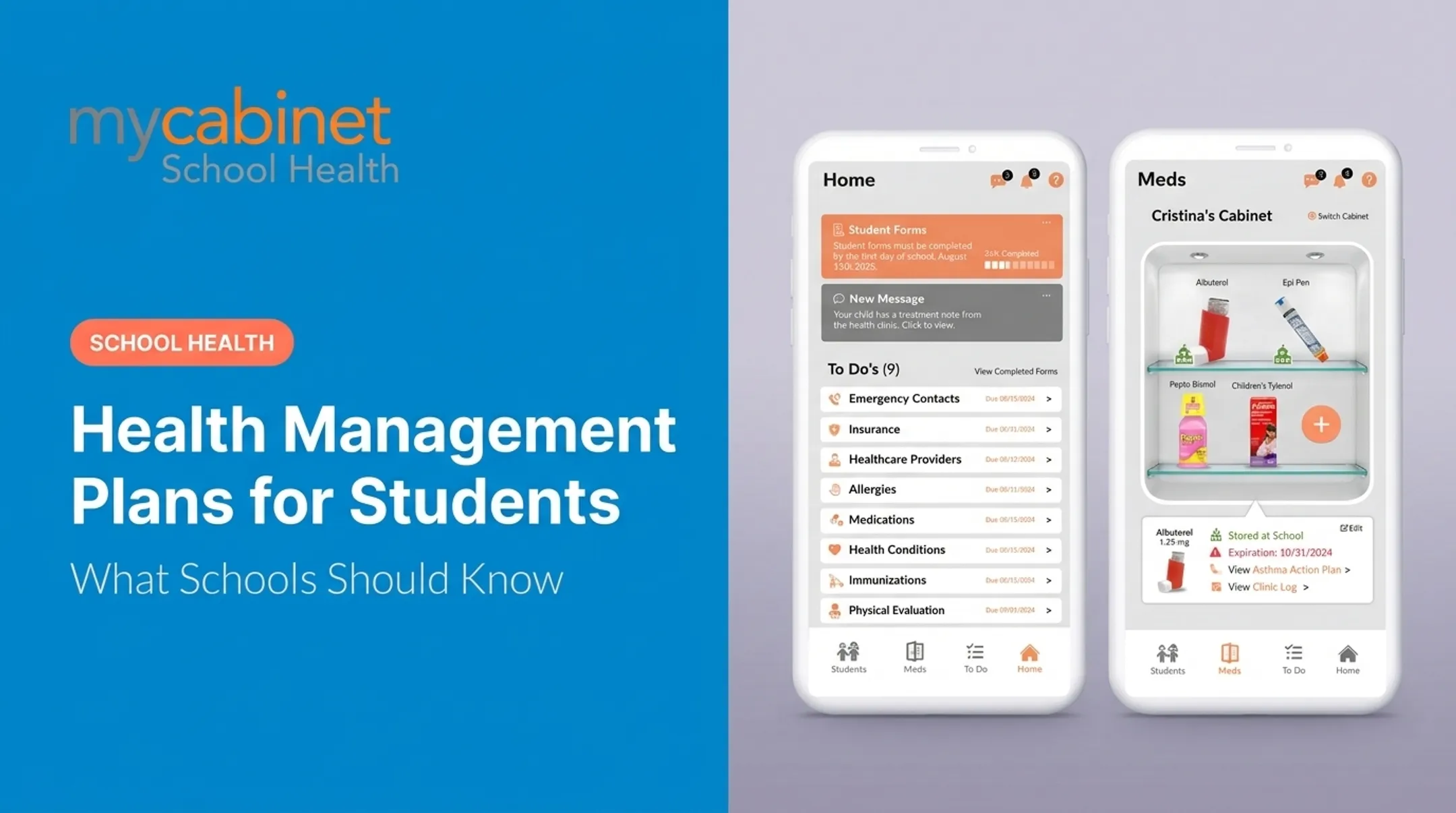
Parents should be able to submit updates, review approved information, and get notified about missing forms or expiring medication. That access should not require an open messaging thread that creates liability or noise.
Self-carry or self-administration should only happen when the clinician, family, and school policy all support it—not by default—and only with age-appropriate student self-advocacy built in.
Connect the Record to Education and Accommodation Processes
The health record supports, but doesn't replace, a Section 504 plan or IEP. The Department of Education's 2024 guidance confirms food allergies may qualify as a Section 504 disability when they substantially limit a major life activity. Medical testing isn't always required to establish that.
Coordination between the nurse, family, clinician, and accommodation team should avoid duplicating or contradicting the medical plan. MyCabinet's school portal shows 504 and IHCP indicators alongside the health record, keeping those references visible without merging separate legal documents into one file.
How to Keep Allergy Records Current, Secure, and Actionable
Define Events That Trigger a Review
Update the plan when any of these occur:
- New diagnosis or suspected reaction
- Medication or dose change
- School transfer
- Change in emergency contacts
Add pre-school-year checks and medication-expiration checks as standing routines, not one-time events.
Protect Privacy Throughout the Record's Lifecycle
Build the record around secure storage, role-based access, audit logs, and access revocation when staff change roles. Confirm your legal responsibilities directly. Don't assume HIPAA or FERPA coverage applies the same way to every vendor and every record type. Vendor agreements and state rules vary.
Measure Readiness and Improve the Process
Use this readiness check for every active record:
- Current clinician source on file
- Clear emergency instructions
- Authorized, unexpired medication
- Defined staff responsibilities
- Accessible emergency details
- Documented review status
- Secure channel to update families and staff

Frequently Asked Questions
Can a primary care doctor write an allergy action plan?
A primary care clinician or allergy specialist may write or update a plan, depending on the student's condition and local requirements. Schools should verify the required signatures and medication orders before accepting it.
What is a good care plan for allergies?
It identifies allergens, symptoms, emergency steps, medications, avoidance measures, contacts, accommodations, staff responsibilities, and review dates. The clinical instructions must be individualized to the student, not generic.
What are the new guidelines for treating anaphylaxis?
AAAAI's 2024 practice parameter update states epinephrine is first-line treatment and should be given at the first sign of suspected anaphylaxis, without waiting for full diagnostic criteria. It also recommends a second auto-injector for students with a history of biphasic reactions.
What is the 14 allergen checklist?
That phrase usually refers to EU food-labeling rules, not U.S. requirements. American schools should follow FDA's major allergen list, which now includes sesame, and rely on the student's individualized clinician-approved allergen list instead.
What should be included in an allergy management plan at school?
The clinical action plan covers medical orders. The broader school record adds contacts, consent, accommodations, staff training, access rules, and review history around that clinical document.
How often should school allergy plans be updated?
Review plans whenever diagnosis, medication, reaction history, permissions, or school setting changes, plus routine checks before each school year and ahead of medication expiration dates.