
In 2015-16, only 52% of public schools had a full-time nurse, while 82% had at least one full- or part-time nurse on staff, according to federal data from the National Center for Education Statistics. That gap means many schools stretch one nurse across several sites and rely on delegated staff for medication tasks.
Paper logs, spreadsheets, and fragmented binders make this harder than it needs to be. Missed doses, undocumented administrations, and lost consent forms aren't rare edge cases — they're a documented pattern in school health research. This guide walks through how to build medication schedules that actually hold up, plus the tools that make it manageable.
Key Takeaways
- Organized schedules reduce missed or incorrect doses across large student caseloads
- Complete documentation requires dosage, route, timing, and special instructions for every order
- Digital platforms centralize tracking, flag expirations, and cut manual parent follow-up
- FERPA-aligned recordkeeping protects both students and school staff from liability gaps
What Is a Medication Schedule in a School Health Setting?
A school medication schedule is a structured record that translates a provider's order into daily action: which student, which medication, what dose, what time, and under what conditions during school hours.
This differs from a general medication schedule. School versions must also account for:
- Class periods and bell schedules — dosing windows built around actual attendance
- Field trips and off-site events — who carries medication and how it's documented
- Parental authorization forms — required alongside the prescriber's order, not instead of it
Every schedule also has to distinguish among three distinct medication categories.
Common Types of Student Medications Nurses Track
- Daily prescriptions — ADHD medications, asthma controllers, insulin and diabetes management
- PRN (as-needed) medications — pain relief, allergy relief, triggered by symptoms rather than a clock
- Emergency medications — EpiPens, rescue inhalers, seizure rescue medication
PRN orders need their own decision logic. State guidance from the Colorado Department of Education recommends that the prescriber spell out exactly what symptom or condition triggers a PRN dose, so an untrained delegatee isn't left making a clinical judgment call.
Why Organized Medication Information Matters in Schools
Disorganized medication systems create real safety risk in schools.
A 2022 review of US school medication research found that missed doses accounted for 55-80% of reported errors in the studies it examined. Errors were also 3.1 times more likely among unlicensed assistive personnel than school nurses, according to research published in the Journal of School Nursing.
A separate 2022 study tracking all 115 North Carolina school districts over six years found an average of 78 reported medication errors requiring medical intervention per year, with missed doses again the most common type, per research published in a peer-reviewed nursing journal.

The authors noted this likely undercounts actual events, since the state did not require formal error reporting.
Organized records help in three practical ways:
- Nurses covering multiple sites can see what is due without relying on memory or scattered notes
- Delegation to unlicensed staff carries lower risk when instructions are complete and unambiguous
- Clean logs create an audit trail if an incident or dispute arises later
How to Create a Medication Schedule for Students (Step-by-Step)
- Collect the complete authorization packet. Get a written provider order and signed parent/guardian consent. Both are required before any medication is administered.
- Verify against physician orders. Cross-check dose, route, frequency, purpose, and start/end dates against what the prescriber actually authorized. Resolve discrepancies before the medication schedule goes live, not after.
- Organize by time of day. Map doses to the actual school-day structure (before school, specific periods, after lunch, dismissal) rather than a generic timestamp.
- Document special instructions. Food requirements, refrigeration needs, activity restrictions: anything a substitute nurse would need to know without asking.
- Set reminders for key actions. Administration windows, recheck visits, and refill or expiration deadlines all need a trigger, not a mental note.
- Establish a review cadence. Update the schedule whenever a prescription changes, a student transfers, or a medication nears expiration. Annual review at the start of each school year is a reasonable floor. The American Academy of Pediatrics recommends reviewing school medication orders at annual visits.

Tools and Systems for Managing Student Medication Schedules
Paper binders and spreadsheets fail in predictable ways: forms get lost, handwriting gets misread, and nobody catches an expired EpiPen until it's needed. A purpose-built school health platform closes those gaps.
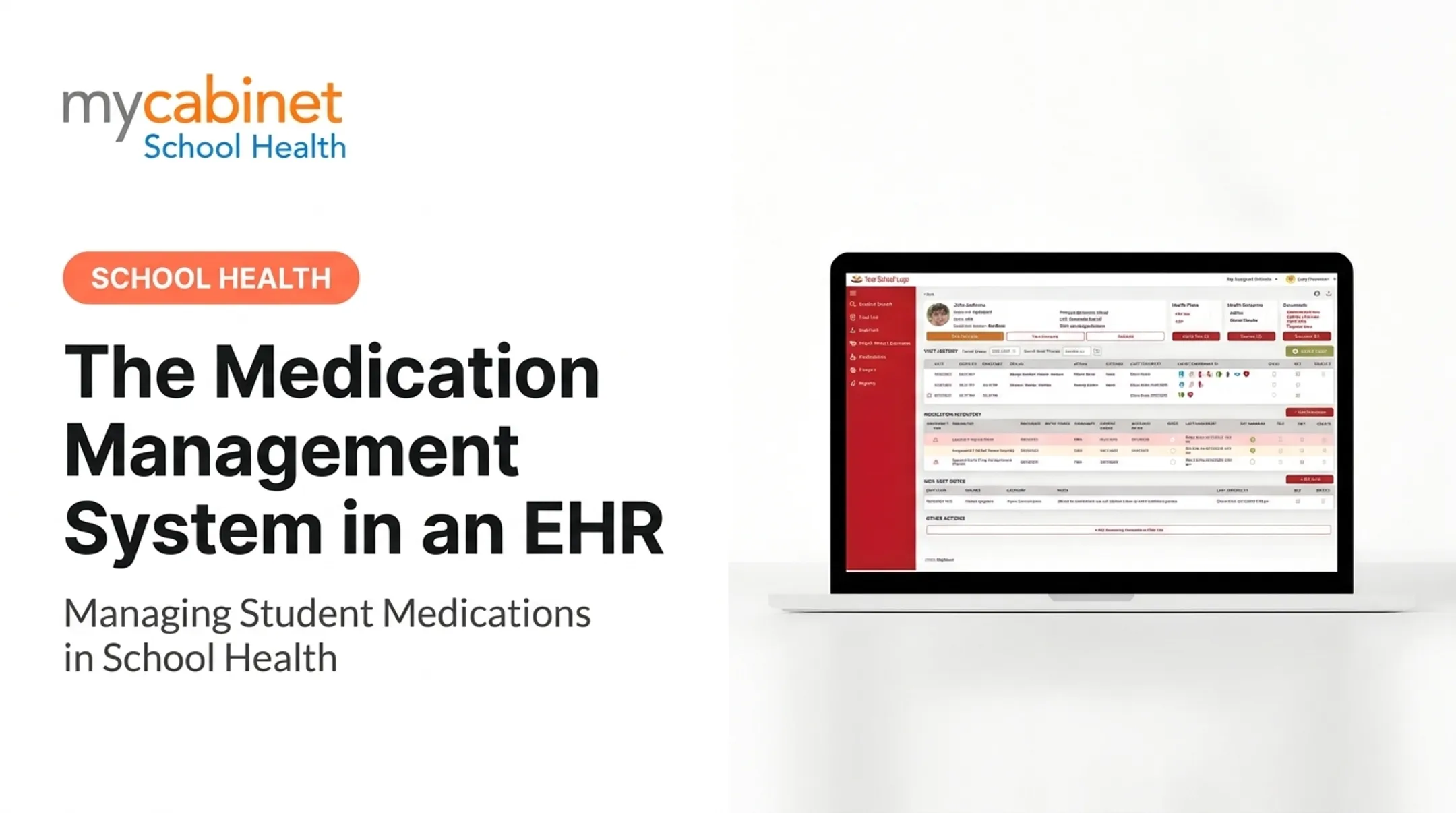
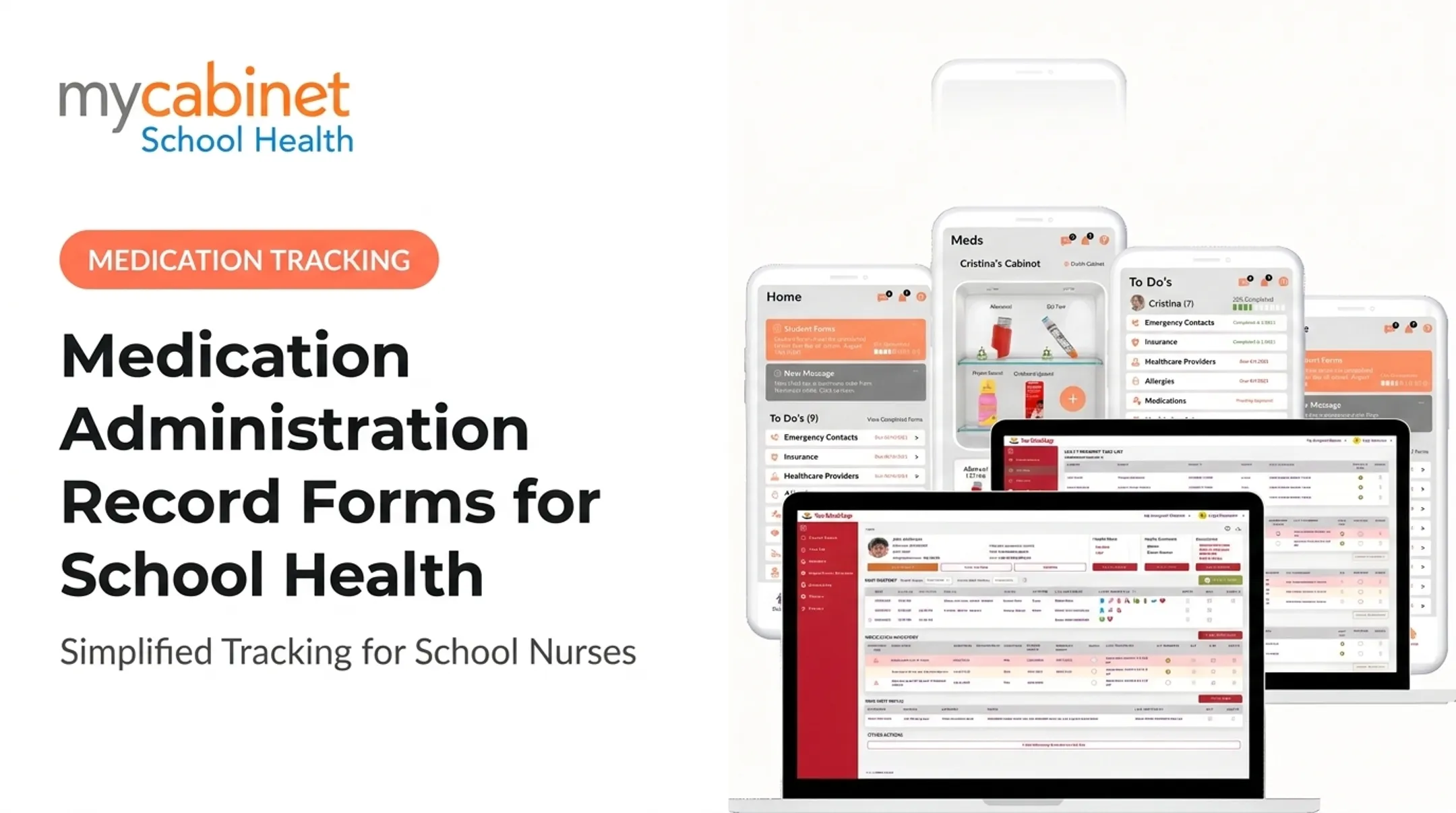
MyCabinet School Health, for example, organizes medication work through intelligent task lists that flag:
- Incomplete visits that still need documentation
- Recheck visits coming due
- Medications approaching expiration
Instead of scanning a binder, a nurse sees these as distinct, actionable categories with dates and student information attached — nothing falls through simply because it wasn't at the top of a stack.

Dosage Visibility and Documentation
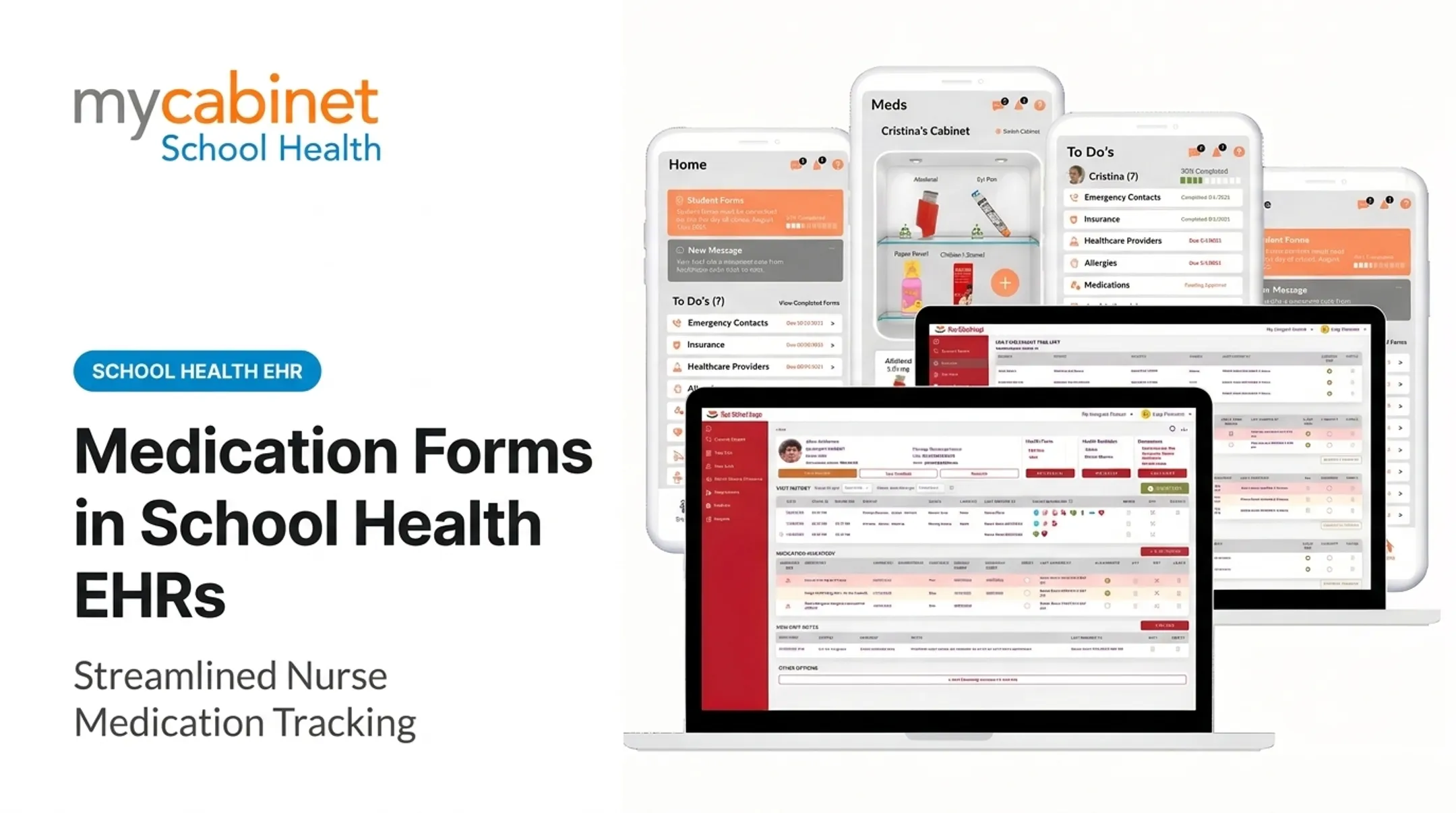
Dosage and frequency details live directly in the student's health profile, not in a separate spreadsheet. In the platform, a medication such as albuterol can appear as stored at school and linked to the student's asthma action plan. That keeps the medication record tied to the broader care picture instead of sitting apart from it.
Role-Based Access
Medication data isn't open to everyone with a login. Parents can view their child's active school-held medications but can't edit those records directly. Changes go through the school clinic under district policy. Nurses and approved staff see only what's needed for care, supported by role-based permissions and audit trails aligned with FERPA and HIPAA standards.
Keeping Parents and Staff Informed
Fragmented communication creates its own errors. Parents don't know a medication has expired until the school calls, usually after several missed reminder emails.
Controlled, one-way notifications solve part of this without opening an unrestricted messaging channel. MyCabinet sends parent alerts for:
- A documented clinic visit
- Medication approaching its expiration date
- Medication that has already expired
These arrive as push notifications or email, and parents can review the details inside the Parent App or Web Portal without messaging the nurse directly.
That same connected system keeps staff in the loop. Families upload updated medication authorization forms in the portal; each submission lands in the nurse's review queue in the Nurse Portal. After approval, the form attaches to the student's record and replaces the fax-and-follow-up cycle that eats into a nurse's day.

As Cobb County School District Superintendent Chris Ragsdale put it at a 2025 school board meeting, the platform "digitized and makes documentation easier," calling it "a win for the parents and a win for the district."
Frequently Asked Questions
How do you create a medication schedule?
Gather the provider order and parent consent, verify the details match, then organize doses by time of day and document any special instructions. A tracking system or platform helps keep it consistent as prescriptions change.
What is a medication schedule?
It's a structured plan outlining when, how, and in what dose a medication should be administered — including route, timing, and any conditions attached to the order.
What are Schedule IV medications?
Schedule IV drugs are controlled substances with accepted medical use and a low potential for abuse, such as alprazolam or clonazepam, according to the DEA's drug scheduling guidance. Schools still need a valid prescriber order and parent consent before administering any Schedule IV medication.
How often should a school medication schedule be reviewed?
Review at the start of each school year and immediately whenever a prescription, dose, or frequency changes. Periodic checks also catch medications nearing expiration before they lapse.
Who is responsible for maintaining student medication records at school?
School nurses typically own this responsibility, often supported by delegated staff for routine administration. Digital school health platforms reduce the administrative load by centralizing records and automating reminders.