
Introduction
Most school nurses aren't managing one system. They're managing five. A student information system, paper immunization records, a spreadsheet for medication tracking, a fax machine for consent forms, and an inbox full of parent emails they need to chase down.
That fragmentation isn't just inconvenient. NASN's own workload guidance flags incomplete immunization records, mandated screenings, and documentation demands as core drivers of school-nurse burden, separate from raw student-to-nurse ratios. That finding comes from NASN's 2025 workload position statement.
This article breaks down what EHR/EMR integration actually means for K-12 schools, what data types get connected, the real challenges districts face, and what to look for in a platform. We'll also show how a purpose-built tool like MyCabinet removes much of the integration burden nurses typically absorb.
Key Takeaways
- EHR/EMR integration links student health records with parent, nurse, and district systems for real-time data sharing.
- Integration cuts paperwork, duplicate entry, and communication gaps when planned around real nurse workflows.
- Data type, FERPA/HIPAA compliance, and workflow fit matter more than feature count.
- Purpose-built school health platforms reduce the need for complex third-party integrations entirely.
What Is EMR Integration?
EMR integration simply means connecting an electronic medical record with other software so data flows automatically: no manual re-entry required. Instead of a nurse typing the same immunization date into three different systems, one entry updates everywhere.
Here's where terminology gets confusing. An EMR is typically a single-provider record (think one doctor's office). An EHR, according to ONC's definition, is broader and built for interoperability across care settings and providers.
Schools need EHR-style thinking, not EMR thinking. A school nurse's system has to talk to:
- Parent-facing apps and portals
- District administrative systems (like the SIS)
- State immunization registries
What School Integration Usually Means
School "integration" rarely means clinical-grade data exchange between hospital systems. NASN's guidance calls for bidirectional exchange: nurses retrieving and sending information to health professionals. In practice, most school integration means connecting nurse recordkeeping with parent communication and district records.
When districts compare school platforms, EMR software is sometimes lumped in with CRM tools. It isn't. An EMR is a clinical health record system; parent notifications may overlap with communication features, but the core job is health documentation, not lead tracking.
What Types of Information Are Integrated?
A connected school health record typically pulls together several categories of student data:
- Demographics — name, grade, guardian contacts
- Immunization records — dates, lot numbers, administering provider
- Medication logs — active prescriptions, dosage, frequency
- Allergy and condition information — asthma, diabetes, seizure plans
- Visit history — clinic encounters and outcomes

Digital Forms and Parent Uploads
Physicals, consent forms, and medication authorizations increasingly move through digital channels. Parents upload documents through an app or portal; nurses review, approve, and attach them to the student's file. This closes the loop that used to run through fax machines and paper folders.
Screenings and Medication Tracking
Vision, hearing, and scoliosis screening results feed into a single student profile rather than living in separate logs. Medication records attach the same way: dosage, frequency, expiration dates, and outreach notes (such as a phone call logged after a parent didn't respond to a refill request).
CDC guidance on vaccination recordkeeping notes that missing or inaccurate immunization data can lead to unnecessary duplicate doses. Accurate, integrated records help schools avoid that risk.
Compliance note: All of this data must stay FERPA- and HIPAA-aligned, with role-based access limiting who can see what.
Why EHR/EMR Integration Matters for Schools
Connected systems solve three recurring pain points:
- Less manual entry. Nurses stop retyping the same information into spreadsheets, fax cover sheets, and portals.
- More parent trust. Real-time visibility into clinic visits and medication status builds confidence. Families aren't left guessing.
- Stronger compliance posture. Structured, auditable records make health audits and incident reviews far less painful.
NASN's EHR position statement notes that integrated data can support case management, program evaluation, and even population-health tracking at the district level, turning day-to-day documentation into something schools can actually act on.

Common Integration Challenges
Integration isn't automatic, and districts run into real obstacles.
- Many EHR tools assume IT resources most districts don't have on staff, which drives cost and complexity higher than expected
- Forms, medication tracking, and parent messaging often sit in separate tools, which opens gaps instead of closing them
- Nurses, administrators, and parents need dedicated time and support before a new system sticks
CoSN's 2024 State of EdTech report found data interoperability was fully implemented in only 11% of districts, with budget constraints ranked the top implementation barrier. Budget and interoperability gaps are systemic across districts, not one-off school failures.
How MyCabinet Simplifies School Health Integration
MyCabinet was built around school health workflows from the start, so districts don't have to stitch together separate tools for forms, medication tracking, and communication.
The platform runs as one connected system:
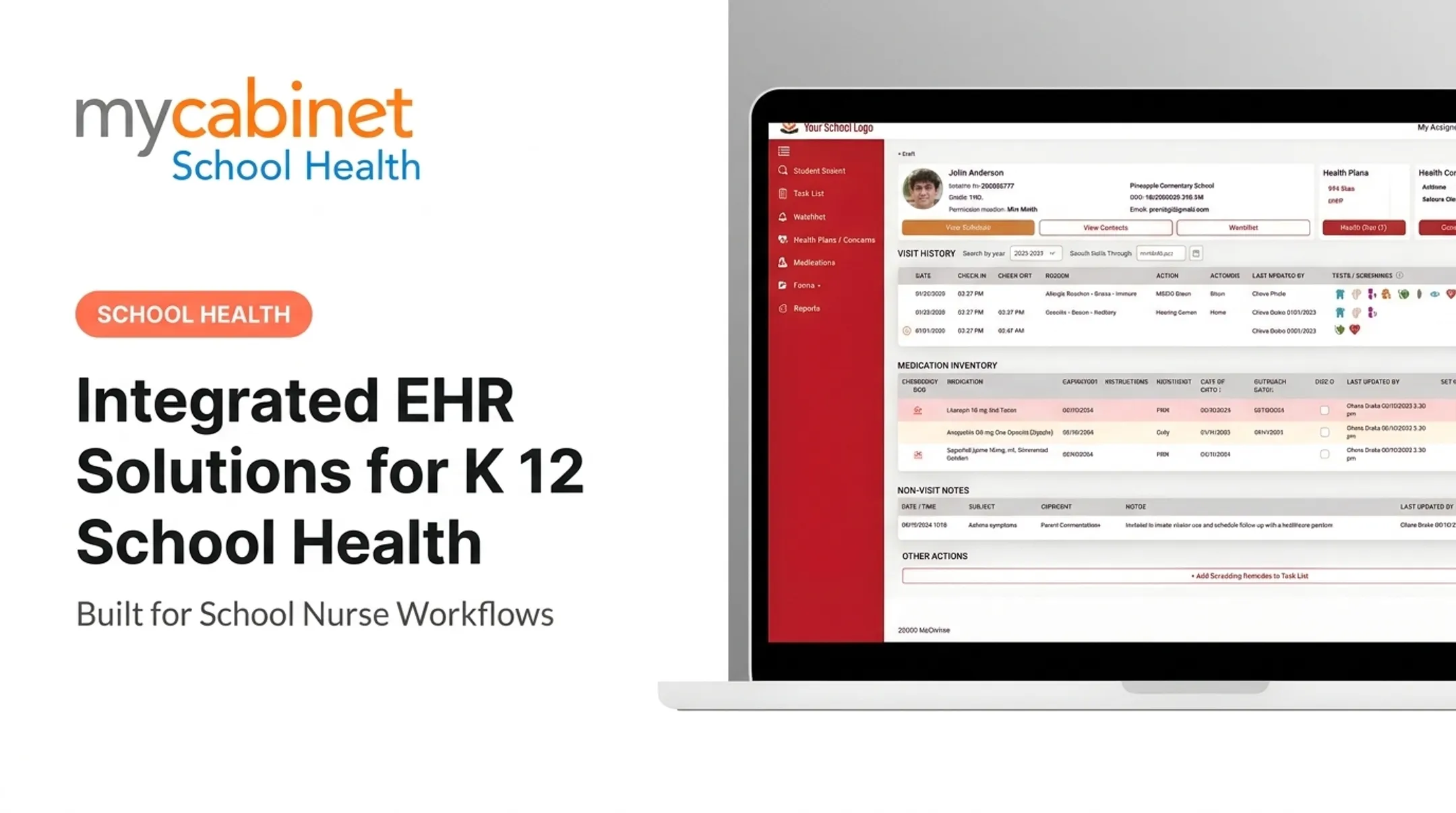
- Nurse Portal — the operational hub for visits, medications, screenings, forms, and task lists
- Parent App and Parent Web Portal — where families submit forms and receive updates
- SIS synchronization — real-time sync keeps student profiles current without manual re-entry

Task Lists That Do the Remembering
Instead of nurses tracking incomplete visits, rechecks, medication expirations, and screenings across separate lists, MyCabinet's task list surfaces them automatically, with color-coding and one-click completion. Structured visit types and clean audit trails mean documentation stays consistent without extra steps.
Controlled, One-Way Parent Communication
When a nurse documents a clinic visit or a stored medication nears expiration, parents get a notification — push or email, depending on their settings. It's intentionally one-way. There's no open chat stream to manage, which keeps communication clear without adding to a nurse's inbox.
Districts evaluating school health platforms typically look for:
- SOC 2 Type II certification
- HIPAA compliance
- FERPA compliance
- ClassLink Certified Partner status

Cobb County School District is one example in practice. According to Superintendent Chris Ragsdale, the platform let parents submit health paperwork electronically and see when their child was seen in the clinic or given medication.
What to Look for When Evaluating a School Health EHR
Before committing to a platform, districts should confirm:
- Secure parent communication and digital form collection, not just internal record storage
- Role-based access controls paired with FERPA, HIPAA, and SOC 2 certifications
- Built-in connectivity between nurse, parent, and student workflows
Ask directly whether the system requires separate integrations or comes pre-connected. That last question matters most. A platform that requires three vendors and a custom integration project defeats the purpose of "integration" in the first place.
Frequently Asked Questions
What is EMR integration?
EMR integration connects an EMR with other systems so data is shared automatically instead of requiring manual re-entry. In schools, this typically means linking nurse recordkeeping with parent apps and district systems.
What types of information are integrated into an EHR?
Common data types include demographics, immunization records, medications, visit history, screening results, and digital health forms submitted by parents.
Is EMR a CRM tool?
No. An EMR is a clinical/health record system focused on documenting care, not managing customer relationships. Both may still include communication features like notifications.
What's the difference between EMR and EHR?
An EMR is typically a single-provider record, while an EHR is designed for broader interoperability across providers and systems, per ONC's definition.
How does integration improve school nurse workflows?
It reduces paperwork and duplicate data entry, speeds up access to student records, and improves communication with parents through real-time visibility.
Is student health data secure in an integrated system?
Yes, when the platform maintains FERPA and HIPAA compliance, role-based access controls, and encrypted data handling. These are standard safeguards for any legitimate school health system.