
That's a problem. Manual tracking creates gaps. Gaps turn into missed deadlines, medication errors, and failed audits.
This guide breaks down what compliance monitoring actually means for schools, the key areas you need to track, and how technology helps you stay ahead of problems instead of reacting to them. We'll pay special attention to health compliance—an area that's often under-resourced despite carrying real legal and safety risk.
Key Takeaways
- Compliance monitoring spans safeguarding, health, data privacy, HR, and academic operations
- Paper-based tracking raises the risk of missed deadlines, medication errors, and audit failures
- Centralized digital systems, especially for school health, cut administrative burden and improve accountability
- Clear ownership and regular review cycles are non-negotiable for sustained compliance
What Is Compliance Monitoring in Schools?
Compliance monitoring is the ongoing process of tracking, documenting, and verifying that a school meets its legal, regulatory, and internal policy obligations. The work is continuous: review evidence, catch exceptions, assign corrective action, and confirm each fix actually happened.
What does compliance mean in schools? In practice, it means meeting obligations across three broad domains:
- Legal requirements set by state and federal law
- Internal operational policies
- Health and safety standards
Pennsylvania's Department of Education, for example, runs a six-year monitoring cycle across all districts. It uses self-assessments, file reviews, and interviews to verify compliance and correct noncompliance within one year.
What is an example of compliance in schools? Common examples include:
- Tracking student attendance and escalating unexcused absences per state law
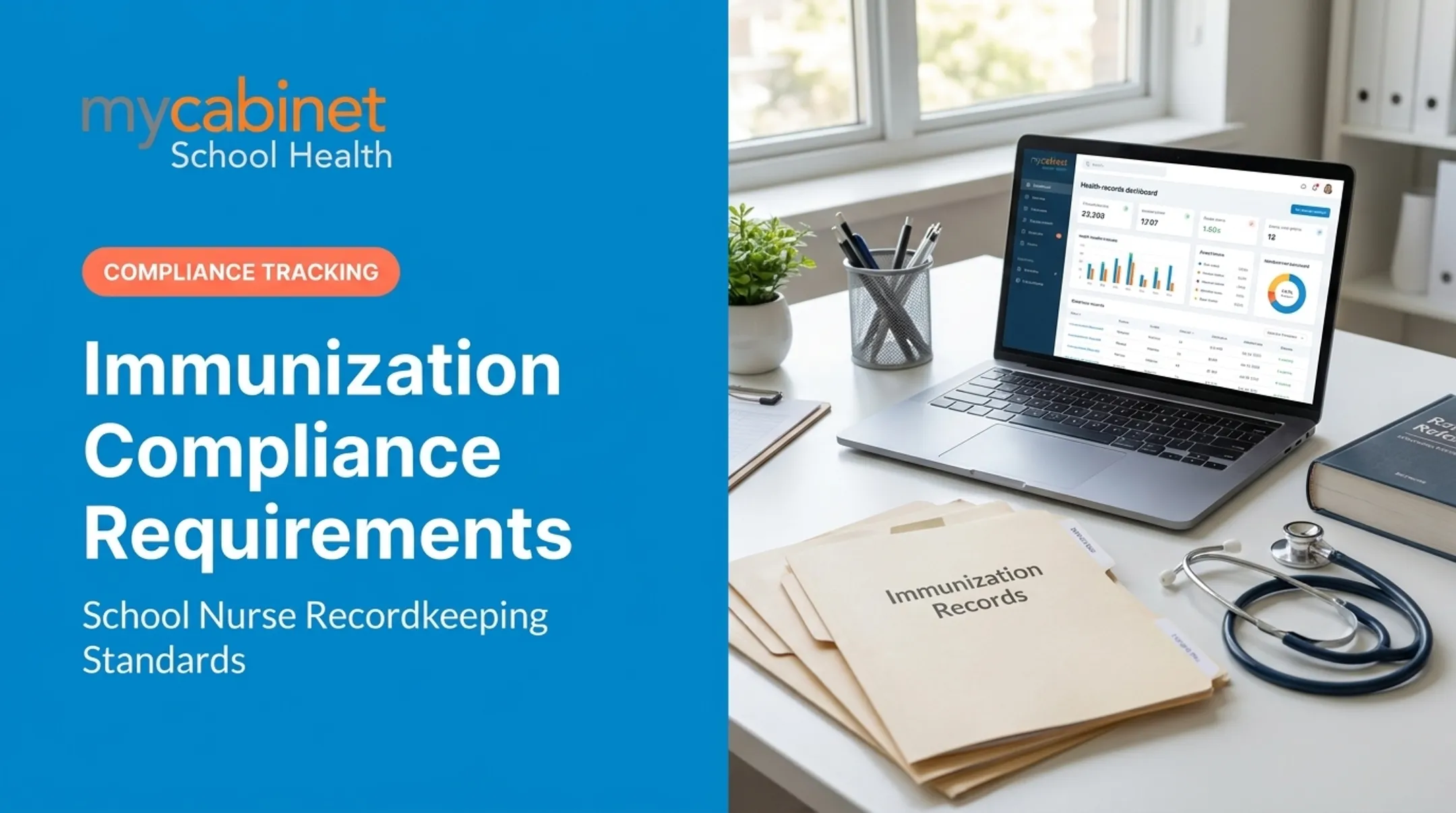
- Maintaining immunization records or documented exemptions for every enrolled student
- Logging Title IX complaints and response timelines
- Recording medication administration (dose, time, route, and administrator initials) for every dose given
Here's the part districts often miss: having a policy isn't the same as monitoring it. A medication policy sitting in a handbook does nothing if nobody's checking whether logs are actually complete. Policies without tracking mechanisms tend to fail exactly when it matters most: during an audit or after an incident.
The Three Types of Compliance Schools Must Track
What are the three types of compliance in schools? Regulatory, operational, and health and safety. Each carries different risks and requires different evidence.
Regulatory and Legal Compliance
This covers federal and state laws schools can't opt out of:
- FERPA (student data privacy)
- Title IX (sex discrimination and harassment response)
- ADA (accessibility for public-school programs and services)
- State compulsory attendance laws
Operational and Policy Compliance
These are internally set standards that still require documentation and consistent enforcement to hold up under scrutiny:
- Dress code policies
- Discipline procedures
- Student codes of conduct
Health and Safety Compliance
Often the most administratively heavy category:
- Immunization tracking and exemption documentation
- Medication administration logs
- Emergency response protocols
- Health recordkeeping that respects FERPA (and HIPAA, where it applies)
Federal guidance clarifies that student health records maintained by a school-affiliated provider are usually classified as FERPA education records, not HIPAA records. Get that classification wrong, and your access controls and disclosure rules will be wrong too.
The 7 Pillars of School Compliance
What are the 7 pillars of compliance in schools? There's no single federal framework by this exact name, but districts commonly organize their compliance inventory around seven areas:
| Pillar | Example to Monitor |
|---|---|
| Safeguarding & civil rights | Title IX coordinator contact info, complaint response timelines |
| Data privacy & records | Access logs, disclosure consent, retention schedules |
| Health services | Immunization status, medication administration records |
| HR & staff credentialing | Certification status and renewal dates |
| Financial management | Grant expenditure records, procurement files |
| Facilities & grounds | Asbestos inspection reports, corrective work logs |
| Curriculum & academic standards | Assessment administration, results reporting |

Of these seven, health services compliance is frequently the most under-resourced—despite carrying legal exposure and direct safety risk. That pillar is the focus of the next section.
Why Health Compliance Monitoring Is Often the Weakest Link
School nurses are often running an entire clinic on paper logs, spreadsheets, and fax machines. That's not a knock on nurses. It's a resourcing problem. And it shows up in the numbers.
A 2022 systematic review published in the Journal of School Nursing pulled together older US survey data: one study found 48.5% of nurses reported a medication error in the prior year, another found 31%.
These are self-reported, older figures, not a current national benchmark. They still point to a persistent risk pattern in manual medication tracking.
Common gaps in paper-based systems:
- Documentation that's incomplete or illegible
- Medications going unnoticed past their expiration date
- Parent communication that's delayed or undocumented
- Audit trails that are nearly impossible to reconstruct during a review
Nurses managing dozens (sometimes hundreds) of student visits per week often end up tracking outreach dates, follow-ups, incomplete visits, and medication expirations across separate tools. That's repetitive, error-prone work that pulls time away from actual student care.
When compliance reviews hit, that fragmentation becomes the weak link. This is the gap MyCabinet School Health was built to close.
The platform centralizes visit documentation, medication expiration tracking, and audit trails in one system with FERPA-aligned, role-based access. Nurses aren't left reconstructing records from memory under audit pressure.

Cobb County Superintendent Chris Ragsdale put it simply at a 2025 school board meeting: the platform "digitized and makes documentation easier," letting parents submit paperwork electronically and see when their child was seen and given medication.
Best Practices for Effective Compliance Monitoring
Strong compliance programs share a few common habits, regardless of district size.
- Assign clear ownership. Every compliance area needs a named owner: a safety officer, health office lead, HR director, or business manager—not a shared inbox nobody checks.
- Run scheduled internal audits. Don't wait for an external inspection to find your gaps. Mississippi's Department of Education, for instance, uses an annual risk assessment to flag higher-risk areas for closer review before problems escalate.
- Centralize records digitally. Scattered paper and spreadsheets make audit trails nearly impossible to reconstruct. A single digital system with role-based permissions keeps evidence organized and accessible.
- Document training completion. If staff are trained on a policy, that training needs a paper trail too: date, trainer, and completion status for accountability during review.
Pennsylvania's monitoring model requires corrective action within one year of a finding. That's a useful benchmark even outside a state-run program: set a deadline, name an owner, and verify the fix actually happened.

How Technology Streamlines Compliance Monitoring
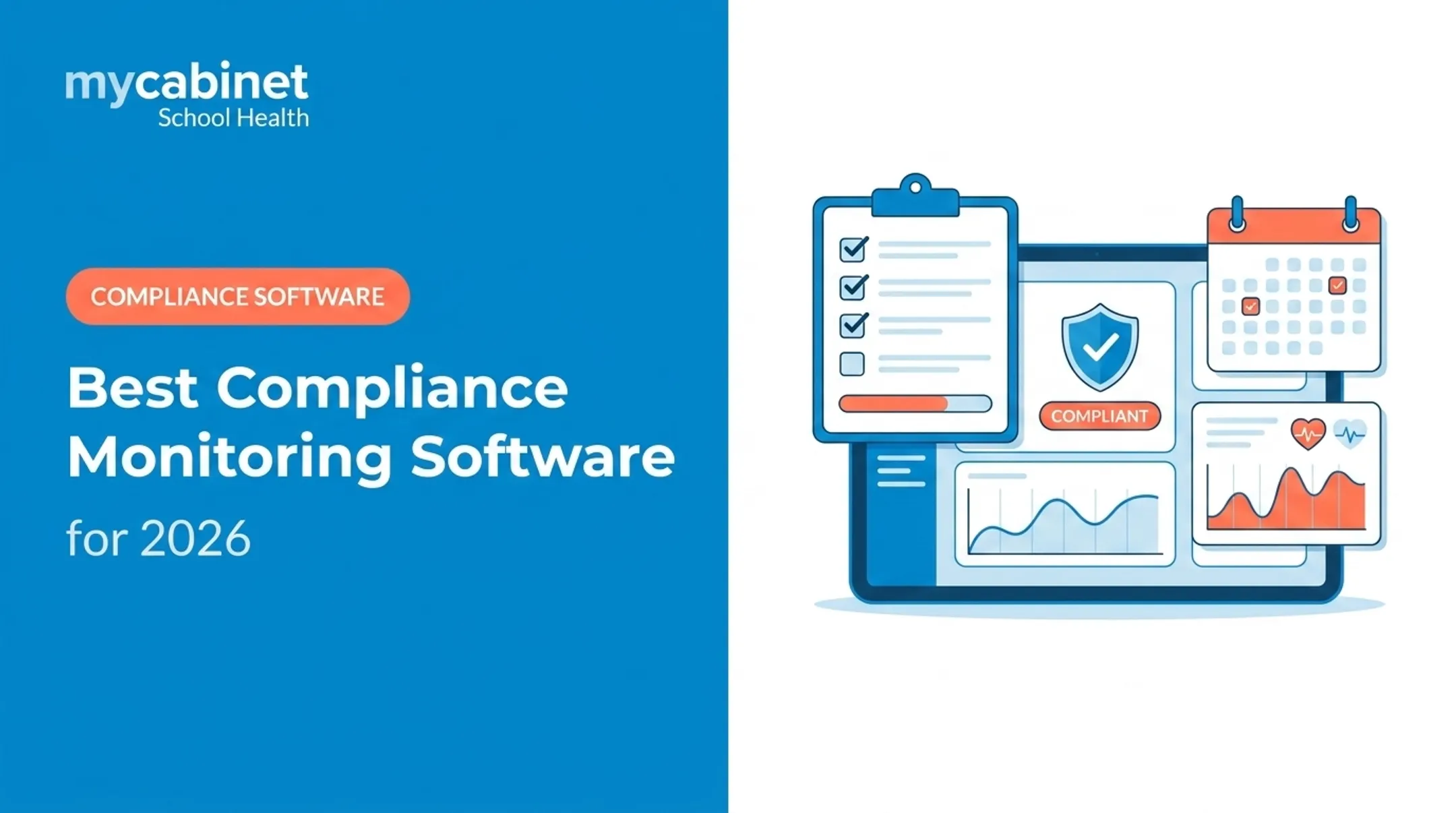
Centralized platforms give districts something manual tracking can't: real-time visibility. Instead of hunting through binders during an audit, you pull up a dashboard.
In school health specifically, this looks like:
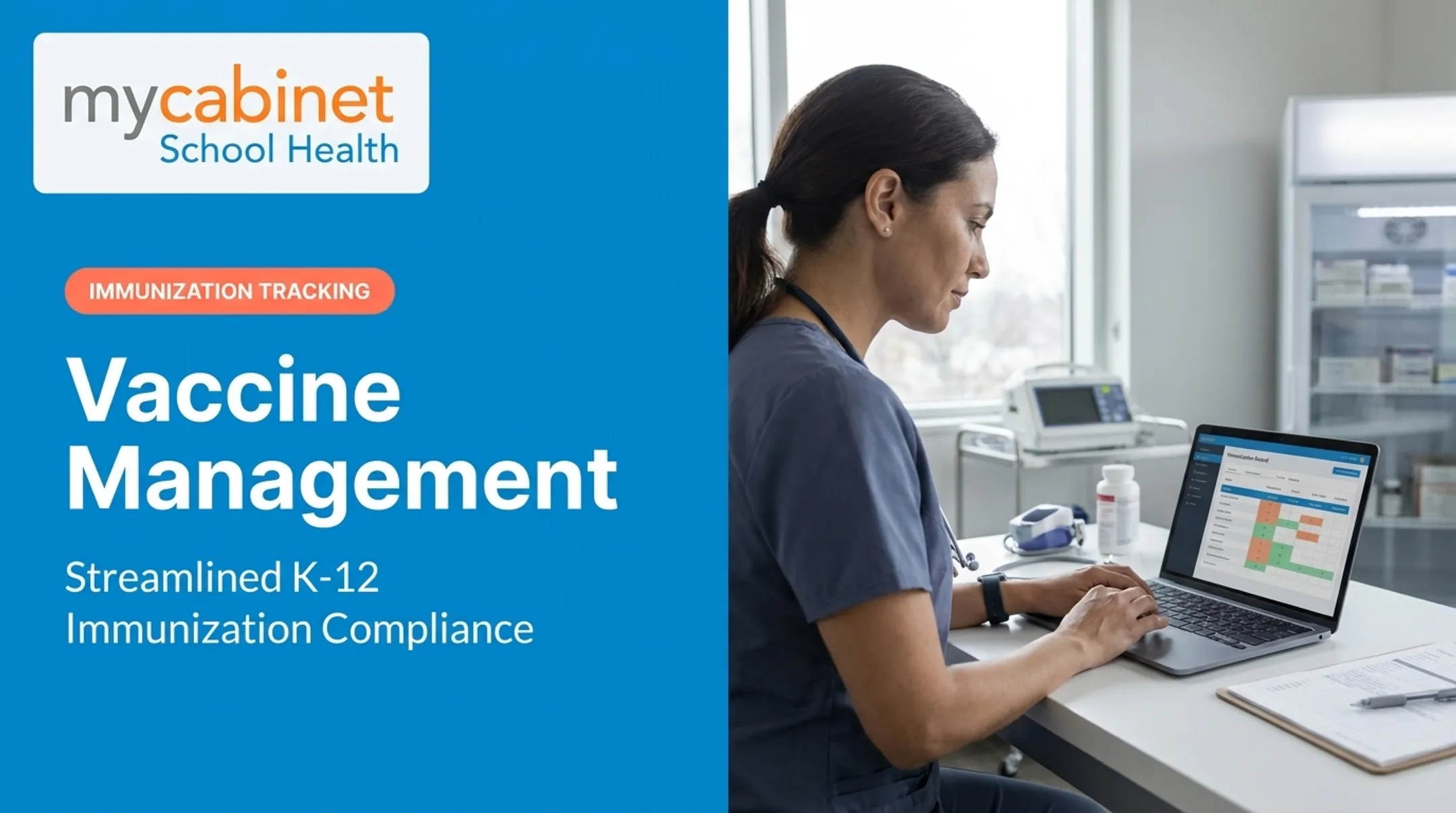
- Automated task lists that surface incomplete visits, recheck reminders, and medication expirations before they become incidents
- Structured documentation with predefined visit types, so records stay consistent and audit-ready by default
- Role-based access that limits each user to what they need—parents see their child, nurses see care-relevant data
MyCabinet's Nurse Portal builds this into the daily workflow. Incomplete visits, medication reminders, and screening follow-ups appear in a color-coded task list, so priorities stay visible even when the clinic gets busy.

On the family side, the Parent App and Parent Web Portal use a nurse-led, one-way notification model. Parents receive timely updates on clinic visits and medication expirations, and can securely submit health forms for nurse review.
That design avoids unrestricted messaging that can complicate FERPA-aligned data sharing. Communication stays intentional instead of noisy.
The same visibility principle shows up in clinical outcomes research. A 2022 peer-reviewed study of Colorado school nurses found that view-only access to hospital EHR data was linked to fewer ED visits and hospitalizations in the student population studied. Stronger data access did not just improve care coordination—it reduced gaps that compliance programs are built to catch.
Frequently Asked Questions
What does compliance mean in schools?
It means meeting your legal, regulatory, and internal policy obligations across school operations, from student safety and data privacy to health services and academic standards. Having a policy isn't enough. Schools need documented proof they're following it.
What are the three types of compliance in schools?
Three main types: regulatory/legal (FERPA, Title IX, ADA, attendance laws); operational/policy (internal rules like discipline procedures); and health and safety (immunizations, medication logs, emergency protocols).
What are the 7 pillars of compliance in schools?
Safeguarding and civil rights, data privacy, health services, HR and credentialing, financial management, facilities and grounds, and curriculum and academic standards. Health services is often the most under-resourced.
What is an example of compliance in schools?
Common examples include immunization recordkeeping, medication administration logs, Title IX complaint tracking, and attendance escalation procedures for unexcused absences.