
This comparison isn't academic. The format you choose affects cost, compliance risk, student safety, and how much time your staff spends chasing down information instead of caring for people. According to the CDC's 2024 National Electronic Health Records Survey, 95% of US office-based physicians now use some form of EHR, and ONC reports that more than 99% of non-federal acute-care hospitals have adopted certified EHR systems. Paper hasn't disappeared, but it's increasingly the exception, not the rule.
Key Takeaways
- Paper charts cost little upfront but are harder to scale, secure, and audit
- EMR/EHR systems digitize documentation for better accuracy, access, and care coordination
- Paper still fits very small, low-volume, or backup use; electronic wins almost everywhere else
- Choose based on organization size, budget, and compliance requirements
- Schools and clinics are moving to electronic systems for safety and day-to-day efficiency
Paper vs Electronic Medical Records: Quick Comparison
Cost
- Paper: Low upfront cost, but storage, staffing, and error-correction expenses build up over time
- Electronic: Higher upfront cost (a Commonwealth Fund study put average implementation near $32,606 per full-time physician, plus about $1,500/month in maintenance), with lower long-term operating costs
Accessibility & Storage
- Paper: Bound to a physical location; only one person can access a file at a time
- Electronic: Cloud-based, accessible remotely, and scalable across multiple sites or staff
Data Security & Compliance
- Paper: Vulnerable to fire, water damage, misplacement, or theft; difficult to audit
- Electronic: Encrypted, backed up, and built with audit trails that support HIPAA and FERPA compliance
Accuracy & Legibility
- Paper: Handwriting errors are common; one hospital study found 20% of medication orders illegible or hard to read and 24% incomplete
- Electronic: Standardized fields, searchable records, and fewer transcription mistakes
Care Coordination
- Paper: Sharing across providers means faxing, scanning, or physically transporting files
- Electronic: Built for interoperability, so specialists, labs, and schools can exchange information quickly

What Are Paper Medical Records?
Paper medical records are physical charts, folders, and forms that track a person's history, visits, and treatment. For decades, this was the only option. School health offices were no exception: nurses managed binders of immunization records, medication logs, and health plans for hundreds of students.
Paper's appeal is simple:
- No upfront software cost
- No dependency on internet or power
- Works during system outages
But that appeal has limits. Even with 95% of physicians on some form of EHR, a small share of practices still lean on paper. Rural, low-volume, or resource-constrained clinics often do so out of necessity rather than preference.
Use Cases of Paper Records
Paper still has a place in specific situations:
- Small or rural practices with limited IT budgets
- Backup systems during outages or migrations
- School nurse offices with minimal technical support, where binders and spreadsheets still persist
A national survey found nearly 72% of Rural Health Clinics reported EHR adoption, so a meaningful minority had not switched at the time of that survey. These are shrinking niches, not growth areas.

What Are Electronic Medical/Health Records?
The terms "EMR" and "EHR" get used interchangeably, but they're not the same thing.
- EMR (Electronic Medical Record): A digital version of the paper chart used inside a single practice, with limited ability to travel outside that office.
- EHR (Electronic Health Record): Built for interoperability so the record can follow the person across providers, specialists, hospitals, and other care settings.
Why Electronic Records Matter Operationally
Electronic systems tie documentation directly to operational outcomes:
- Fewer prescribing errors: a meta-analysis of 10 studies found computerized order entry cut errors by 48% versus paper orders
- Faster retrieval with searchable history instead of flipping through folders
- Built-in compliance tracking through audit trails and role-based access
Not all electronic platforms are built the same, though. Some are standalone EMRs with basic charting. Others are connected platforms layering in practice management, parent engagement, and workflow automation.
Use Cases of Electronic Records
In school health specifically, electronic records replace paper-based nurse workflows across several fronts:
- Clinical visit documentation
- Medication administration and expiration tracking
- Digital health form collection and approval
- Parent communication tied directly to clinic visits
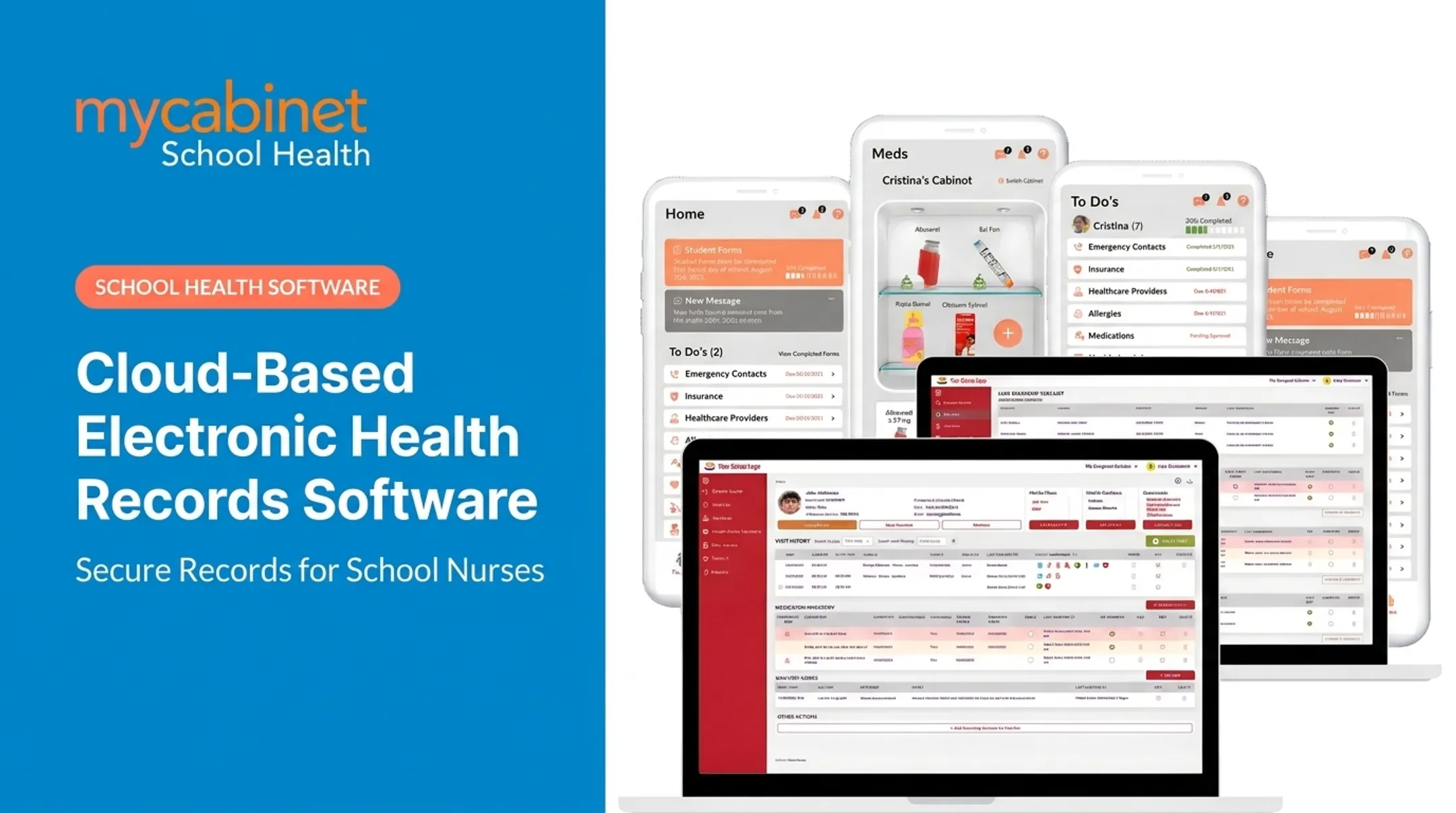
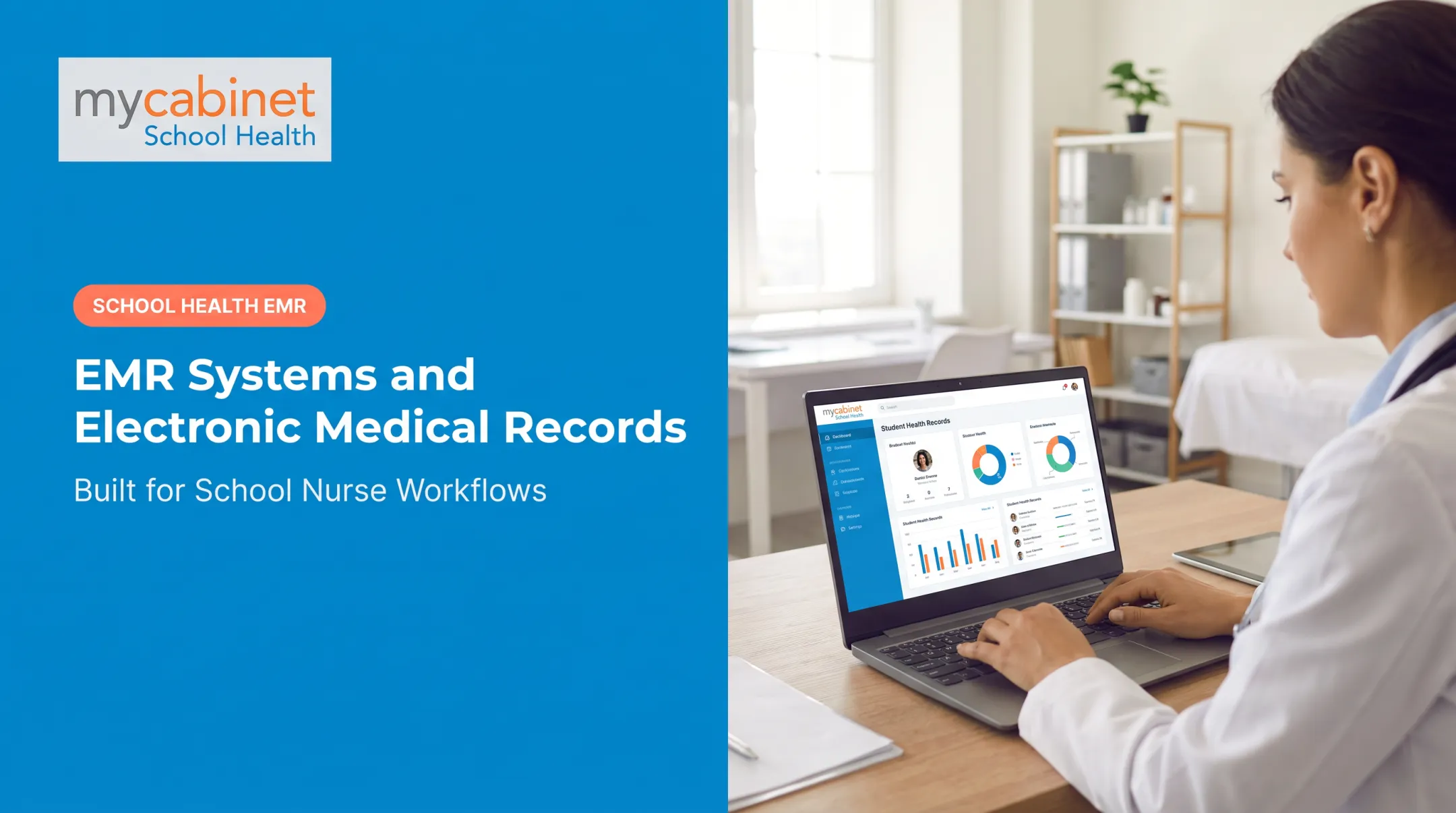
MyCabinet School Health applies this model to K–12 environments. Instead of nurses juggling binders, spreadsheets, and separate communication tools, the platform organizes daily work into a task list covering incomplete visits, rechecks, medication reminders, and screening follow-ups.
Nurses see what needs attention without hunting through paper files. Parents get notified directly when their child is seen or when a medication is nearing expiration.

Paper vs Electronic: Which Is Better for Your Practice or School?
The better choice depends on how you work day to day. Run your practice or school health office against these five factors:
- Budget — Can you absorb upfront software costs for long-term savings?
- Size and volume — More students means more risk in a paper-based system.
- Staff comfort with technology — Training takes time, but most modern platforms are built for ease of use.
- Compliance requirements — HIPAA and FERPA obligations are far easier to meet with audit trails and encryption.
- Coordination needs — If multiple people need access to the same record, paper becomes a bottleneck fast.
Bottom line: Paper still works for very low-volume, temporary, or backup use. For scale, safety, or compliance, electronic records are the practical choice—especially in school health, where nurses track medications and stay in sync with dozens or hundreds of families.
Real-World Example: Moving from Paper to Electronic School Health Records
Cobb County School District, one of the largest districts in Georgia, adopted MyCabinet to modernize its school health documentation.
At a 2025 school board meeting, Superintendent Chris Ragsdale described the shift directly: MyCabinet "digitized and makes documentation easier."
He pointed specifically to the parent-facing benefit: families can now submit health paperwork electronically and see in real time when their child was seen by the nurse and given medication.
Ragsdale called it "a win for the parents and a win for the district."
That framing matters. The trigger for the switch wasn't just administrative burden. It was the visibility gap between school nurses and families. Paper-based systems left parents in the dark about their child's care during the school day. A connected platform closed that gap.

The takeaway: schools don't just need a digital filing cabinet. They need a system built around how nurses actually work: task-driven, medication-aware, and connected to the families who depend on that information.
If your district is still managing student health through paper, spreadsheets, or disconnected tools, book a demo to see how MyCabinet's Nurse Portal and Parent App work together.
Conclusion
Neither paper nor electronic records are universally "better." The right choice depends on scale, compliance obligations, and how complex your workflows are. Still, most US healthcare providers and school systems are moving toward electronic records because the operational gains are concrete.
Schools and clinics that make the switch typically see:
- Fewer medication errors and clearer administration logs
- Cleaner compliance records with audit-ready trails
- Safer day-to-day clinical workflows for staff
- Stronger communication among nurses, providers, and families
For school health offices, the deciding factor is often fit: choose a system built around nurse workflows, medication oversight, and controlled family updates—not a generic documentation archive.
Frequently Asked Questions
What is the difference between paper medical records and electronic medical records?
Paper records are physical documents stored on-site. Electronic records are digital, searchable, and far easier to share securely or back up in case of loss or damage.
What is the difference between an EHR and an EMR?
An EMR is a digital chart used within a single practice. An EHR is designed for interoperability, allowing information to move across providers, specialists, and other care settings.
Why have healthcare providers moved from paper charting to EHRs?
Federal incentives under the HITECH Act and MACRA pushed adoption, alongside gains in care coordination, efficiency, and easier compliance tracking. CMS estimated incentive payments between $9.7 billion and $27.4 billion from 2011 to 2019.
Do medical offices and hospitals still use paper medical records?
A small percentage still do, mostly in rural, low-volume, or resource-limited settings, including some school health offices. National data shows 95% of office-based physicians and over 99% of non-federal hospitals now use certified EHRs.
Are electronic health records more secure than paper records?
EHRs offer encryption, audit trails, and backups that paper can't match. However, they still require strong cybersecurity practices, since digital systems face their own breach risks.
Is switching from paper to electronic records worth the cost for smaller practices or schools?
Upfront costs exist, but long-term gains in efficiency, compliance, and safety typically outweigh the investment — especially for districts managing more students each year.