
Missed doses aren't just a personal health issue. They ripple into hospital readmissions, wasted prescriptions, and preventable complications. In a school the same failure wears different clothes: a rescue inhaler that expired in a locked cabinet, or a midday dose nobody logged.
Medication monitoring systems exist to close that gap. They're the tools, devices, and software that track whether someone actually takes their medication as directed, and they've evolved dramatically over the past decade.
This article breaks down the types of systems available, who needs closer monitoring, what features matter most, and how monitoring works differently in specialized settings like schools.
Key Takeaways
- Monitoring options range from a $5 pill organizer to ingestible sensors that confirm a dose was swallowed
- Electronic monitoring paired with reminders outperforms passive tracking alone
- The right system depends entirely on setting: home use looks nothing like a school clinic
- Schools need purpose-built platforms with audit trails, not consumer reminder apps
What Are Medication Monitoring Systems and Why Adherence Matters
Medication monitoring systems combine hardware, software, or simple paper tools to track medication-taking behavior. The goal is straightforward: confirm doses are taken on time, flag when they're not, and give someone (a caregiver, provider, or nurse) enough visibility to intervene.
There are two broad approaches:
- Direct methods: Observing someone take a dose, or measuring the drug itself in blood or urine. These are accurate but often invasive, expensive, or impractical outside a clinical setting.
- Indirect methods: Pill counts, refill records, self-reported logs, and electronic monitors. These are easier to scale but rely on proxies.
A pharmacy refill record shows a prescription was picked up, not that it was taken, according to a 2019 peer-reviewed review.
Non-adherence isn't limited to one age group. Seniors juggling five prescriptions, adults managing chronic conditions, and children who need medication administered at school all face the same core problem: doses get missed.
When nobody notices in time, caregivers and nurses lose the window to intervene. That visibility gap is why adherence monitoring matters.
Types of Medication Monitoring Systems
Not every student needs the same level of monitoring. Here's how the options stack up, from simplest to most advanced.
Manual and Digital Consumer Tools
Manual systems — pill organizers, printed medication administration records (MARs) — cost almost nothing and require no setup, which is why so many school health offices still run on a paper MAR. The tradeoff is zero real-time tracking: if a dose gets skipped, nobody knows until it's obvious.
Digital/consumer systems — mobile apps, smart pill organizers, wearable reminders — work well for tech-comfortable individuals managing their own care. They add reminders and logging but still depend heavily on self-reporting.
Electronic and Institutional Systems
Electronic Medication Event Monitoring Systems (MEMS) use smart pill bottles, blister packs, or electronic inhalers with chips that log every time the container is opened. That is a major step up in data quality, though opening a bottle still does not prove the pill was swallowed, per a 2020 peer-reviewed review.
Pharmacy-integrated and institutional systems, the category a district's school health platform belongs to, cover automated dispensing, compliance packaging, and care-community platforms common in assisted living facilities and clinics. These often track a population-level metric called Proportion of Days Covered (PDC), which the CDC identifies as its leading adherence indicator.
Advanced direct-monitoring technologies aim to close the accuracy gap left by proxy-based tracking:
- Digital pills — FDA-approved ingestible sensors (such as ABILIFY MYCITE) confirm ingestion via a wearable patch and app
- Video-based observation — Staff or software visually confirm a dose was taken
- Motion-sensor wearables — Detect the physical motion associated with taking medication
School-based tracking systems stand apart from consumer tools. Trained staff log dosage, frequency, and administration directly instead of relying on self-reporting. That model fits students who cannot manage their own medication schedule during the school day and gives nurses a clear audit trail for oversight and safety.

Which Conditions and Drugs Require Closer Monitoring
Some medications carry a narrow therapeutic window, meaning the difference between an effective dose and a harmful one is small. These require therapeutic drug monitoring (TDM), which measures actual drug concentrations rather than just tracking whether a dose was taken.
Drug classes commonly requiring TDM include:
- Antibiotics: vancomycin, gentamicin, amikacin, tobramycin
- Antiepileptics: phenytoin, carbamazepine, valproic acid, levetiracetam
- Mood stabilizers: lithium
- Immunosuppressants: cyclosporine, tacrolimus, methotrexate
- Cardiac drugs: digoxin, amiodarone, quinidine
A 2023 study of public hospital TDM practice found measurements broke down as 43.8% antibiotics, 23.6% antiepileptic drugs, and 19.8% immunosuppressants — a useful snapshot of where this kind of monitoring gets used most.
Warfarin is a special case. Rather than measuring drug concentration directly, it's monitored through INR (International Normalized Ratio), with a target range of 2.0–3.0 after a first blood clot, according to a 2024 hematology publication.
Lab-based TDM is only part of the picture. Many chronic conditions still need close adherence tracking even when drug levels are not drawn every time.
Conditions that benefit most include:
- Diabetes and insulin regimens
- Asthma and COPD inhaler therapy
- Hypertension
- Seizure disorders managed on antiepileptics
- ADHD and other mental health medication plans
In these cases, the tracking itself improves outcomes, not only the lab work. That same need shows up in schools, where nurses oversee daily administration for asthma, diabetes, seizure, and ADHD medications and rely on clear dose, timing, and missed-dose records.
Benefits and Key Features to Look for in a Monitoring System
A 2022 systematic review of 47 studies and over 6,000 patients found electronic adherence monitoring produced significantly better adherence than standard care (standardized mean difference 0.93), according to research published in PLOS One.
Electronic monitoring alone had a much smaller effect than when paired with reminders or provider check-ins. The combination is what moves the needle.
In a pediatric inhaler study, kids using electronic monitoring were 1.5 times more likely to stick to their regimen than those without it.
When evaluating a system, look for:
- Real-time visibility — caregivers or staff can act the moment a dose is missed, not days later
- Automated tracking and reporting that cuts manual logs and admin load
- HIPAA-aligned data security (and FERPA where school records are involved)
- Integration with existing health records or care platforms to avoid duplicate entry

Better adherence still does not always mean better clinical outcomes. Only 26% of the studies reviewed found statistically significant clinical improvements alongside adherence gains. Treat monitoring as one part of a broader care workflow—pair it with follow-up, not as a standalone fix.
Medication Monitoring and Adherence in School Health Settings
Schools face a different adherence challenge than homes or clinics. A student with asthma or a seizure disorder often can't self-manage a school-day dose: a nurse or trained staff member has to administer it, document it, and communicate with parents.
A 2022 systematic review covering 6,298 school nurses across all 50 states found policy coverage inconsistent: 43.5% at the state level, 84.8% at the district level, and just 12.3% at the individual school level. That patchwork creates real risk. One North Carolina study found 76% of medications given to students were administered by unlicensed assistive personnel, with an average of 78 medication errors requiring intervention reported annually across 115 districts.
Why Generic Apps Fall Short
Consumer reminder apps are built for individuals managing their own pills. Schools need something different:
- Structured, staff-administered documentation (not self-report)
- Dosage and frequency visibility tied to a student's full health profile
- Expiration tracking for medications stored on-site
- Parent communication that's controlled, not an open messaging free-for-all
- Audit trails that support compliance and reduce liability
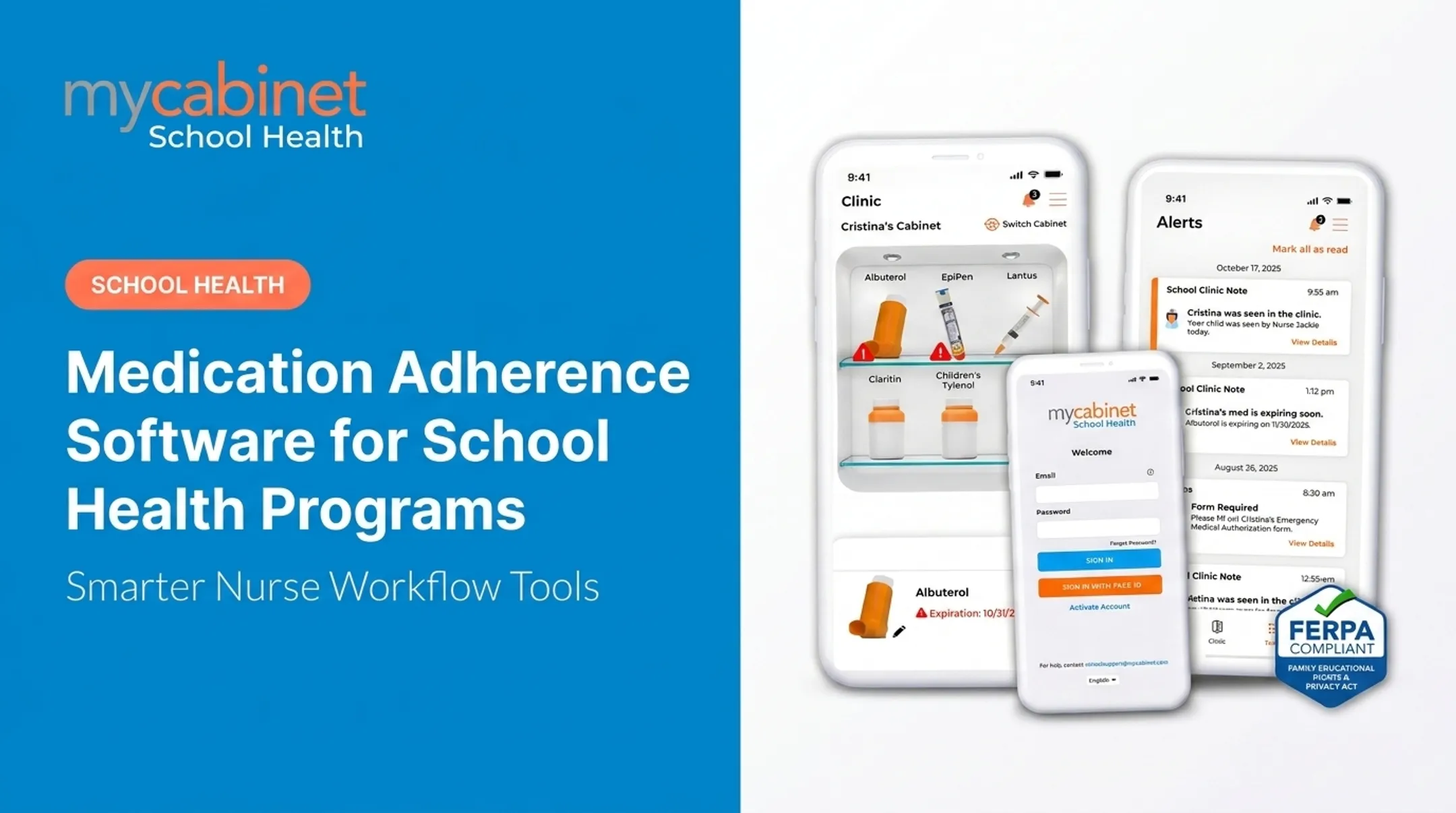
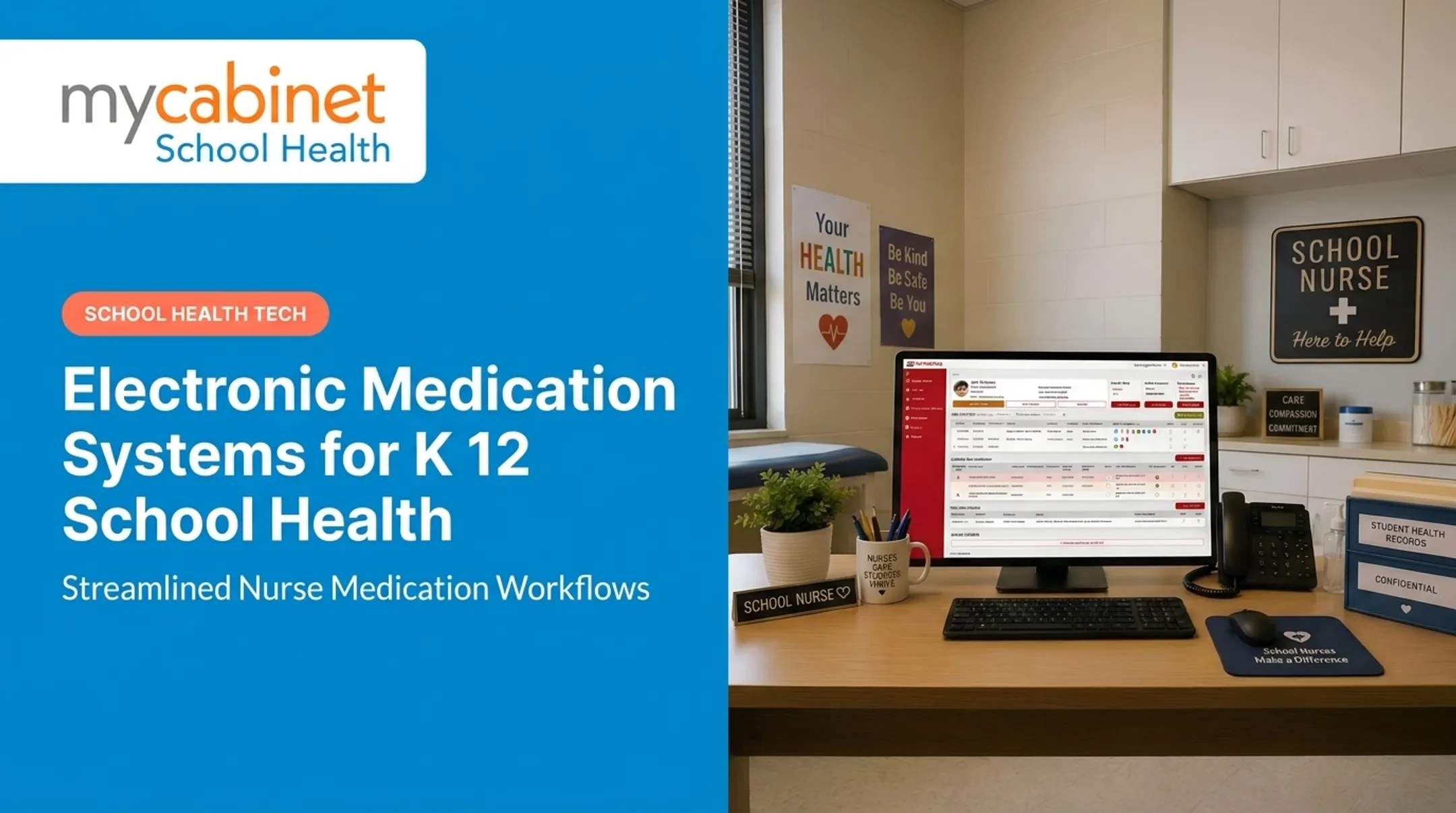
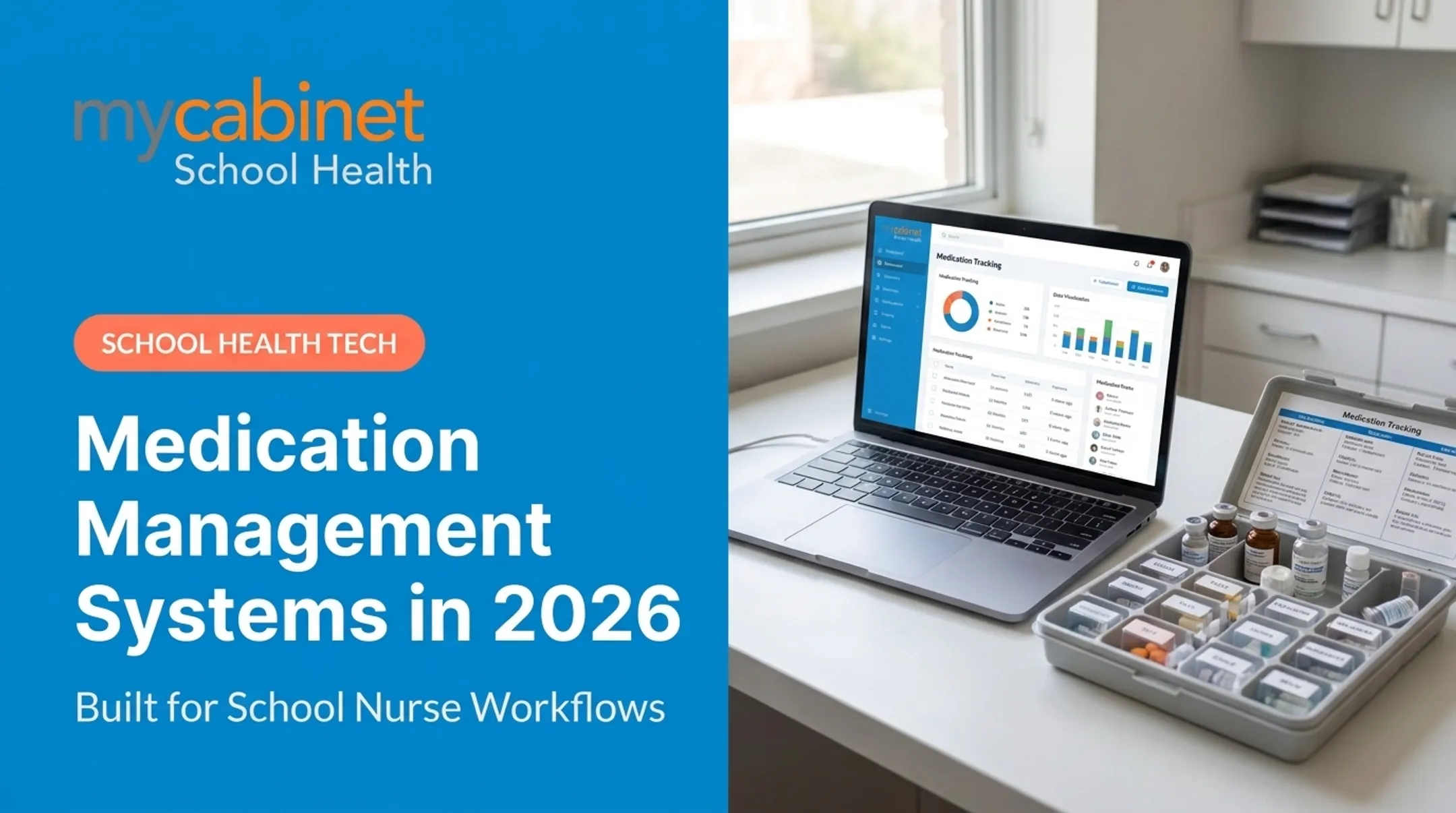
MyCabinet School Health is built for this workflow. The Nurse Portal puts medication reminders and expirations into task lists with incomplete visits and rechecks. Dosage and frequency live in the student's health profile, not a separate binder or spreadsheet.

On the family side, the Parent App and Web Portal send controlled, one-way notifications (including approximate expiration dates for medications stored at school) without unrestricted messaging.
As Cobb County School District Superintendent Chris Ragsdale put it, the platform "digitized and makes documentation easier," so parents can see when their child was seen and given medication.
For conditions like asthma, where the CDC reports 4.8 million U.S. children currently affected, that nurse-to-parent visibility matters. A missed Albuterol dose tied to an asthma action plan is the kind of gap purpose-built monitoring is meant to catch.
Frequently Asked Questions
Which drugs require therapeutic drug monitoring (TDM)?
Drug classes with narrow therapeutic windows need TDM, including anticonvulsants (phenytoin, valproic acid), antibiotics (vancomycin, gentamicin), immunosuppressants (tacrolimus), and lithium. Small dosing changes in these drugs can mean the difference between ineffective treatment and toxicity.
What are the types of medication monitoring systems?
Types range from manual tools (pill organizers, paper MARs) and consumer apps to electronic event monitors like smart bottles and blister packs. Clinics and schools often use pharmacy-integrated or institutional platforms; advanced options include ingestible sensors and video-based observation.
What are some good medication management systems for seniors?
Smart pillboxes with alarms, automated dispensers that lock until the scheduled dose time, and caregiver-connected apps that send alerts when a dose is missed all work well for older adults. Look for systems that notify a family member or caregiver automatically.
What app can I use to monitor my medication?
Consumer options like Medisafe, MyTherapy, and CareZone offer reminders, refill tracking, and caregiver sharing. Prioritize apps with dose-logging history and the ability to share data with a provider or family member.
How is medication monitoring different in a school setting compared to at home?
At home, monitoring often relies on self-reporting or reminders. In schools, nurses administer each dose, document it in the student health record, track expiration dates, and notify parents through controlled, audited channels rather than informal reminders.