
Parents often assume an IEP or 504 plan covers this. It usually doesn't. Health-specific care lives in a separate document: the Individual Health Plan, or IHP. Many parents and school staff confuse the three, and that confusion creates real gaps in daily care.
This article breaks down what an IHP actually is, who needs one, what belongs in it, and how it's different from an IEP or 504 plan.
Key Takeaways
- An IHP is a nurse-led plan that documents a student's healthcare needs during the school day
- Not legally required like an IEP or 504 plan, but NASN strongly recommends IHPs for recurring health needs
- IHPs can stand alone or attach to an IEP or 504 plan for added legal support
- Digital tools help nurses track medications, care tasks, and parent updates tied to the IHP
What Is an Individual Health Plan (IHP)?
An IHP is a formal, written plan developed by the school nurse in collaboration with parents, healthcare providers, and school staff. It manages a student's health needs throughout the school day, including the bus ride, field trips, and after-school events.
The core purpose is communication. Teachers, aides, and administrators need to know exactly what to do if a student has a seizure, a blood sugar drop, or an allergic reaction, without guessing.
Built on the Nursing Process
The National Association of School Nurses (NASN) frames IHPs around a nursing-process framework rather than a rigid checklist:
- Assessment — understanding the student's condition and daily needs
- Diagnosis — identifying the specific health problem or risk
- Goal-setting — defining measurable outcomes
- Interventions — the actual steps staff take
- Evaluation — reviewing and revising as needs change

That framework is flexible on paper. Unlike an IEP, there is no standardized federal template for an IHP, so format varies by state and district.
Legal status differs too. An IHP is a plan-of-care document, not a legally binding IEP or 504 plan, so due process protections apply only when the IHP is attached to one of those plans.
What Is an Individualized Plan of Care?
This term is often used interchangeably with IHP. It refers to any structured plan detailing student-specific health interventions, monitoring procedures, and goals. If you see this phrase in a school health packet, treat it the same as an IHP.
Who Needs an IHP and What Does It Include?
There's no federal law guaranteeing a right to an IHP. The decision sits with the school nurse, based on whether a condition could affect the student's safety, daily functioning, or attendance. Common candidates include students with:
- Asthma or other respiratory conditions
- Diabetes requiring blood sugar monitoring
- Seizure disorders
- Severe food or environmental allergies
- Tube feeding or other daily medical procedures
- Mental or emotional health conditions requiring monitoring
For these students, NASN treats the IHP as the plan that defines and coordinates nursing care at school—tying day-to-day actions to health, safety, attendance, and learning.
What Typically Goes in an IHP
- Medical triggers and warning signs to watch for
- Self-monitoring procedures the student can manage independently
- Medication administration details, including dosage, timing, storage, and expiration tracking
- Emergency response steps and field trip protocols
- Dietary or nutritional restrictions
- Staff training requirements and who's responsible for what
Medication management is often the highest-risk section. Errors in dosage, timing, or expiration dates create real safety risks.
Staffing makes that documentation harder to skip. NASN's 2025 workload data shows one-third of students don't have full-time access to a school nurse every day, all day. When one nurse covers multiple buildings, a clear IHP is often what keeps care consistent and prevents avoidable incidents.

How Is an IHP Developed? Roles of the IHP Team
Building an IHP is a team effort, not a solo task for the nurse or the parent.
Parents/guardians:
- Share medical documentation and provider orders
- Sign release forms allowing communication with healthcare providers
- Keep emergency contacts current
- Report any change in the student's condition promptly
School nurse:
- Leads the assessment and writes the plan
- Trains teachers and aides on their responsibilities
- Maintains documentation and audit trails
- Reviews and updates the plan whenever the student's condition changes, not just once a year
School nurse:
- Leads the assessment and writes the plan
- Trains teachers and aides on their responsibilities
- Maintains documentation and audit trails
- Reviews and updates the plan whenever the student's condition changes, not just once a year
Teachers and school staff:
- Follow classroom and emergency protocols in the plan
- Watch for symptom changes and report them to the nurse
- Support accommodations without sharing protected health details beyond need-to-know
A student's needs can shift mid-semester: a new medication, a growth spurt that changes dosage, or a change in seizure frequency. The IHP should move with them.
Managing this manually across dozens or hundreds of students gets messy fast. Digital platforms help here.
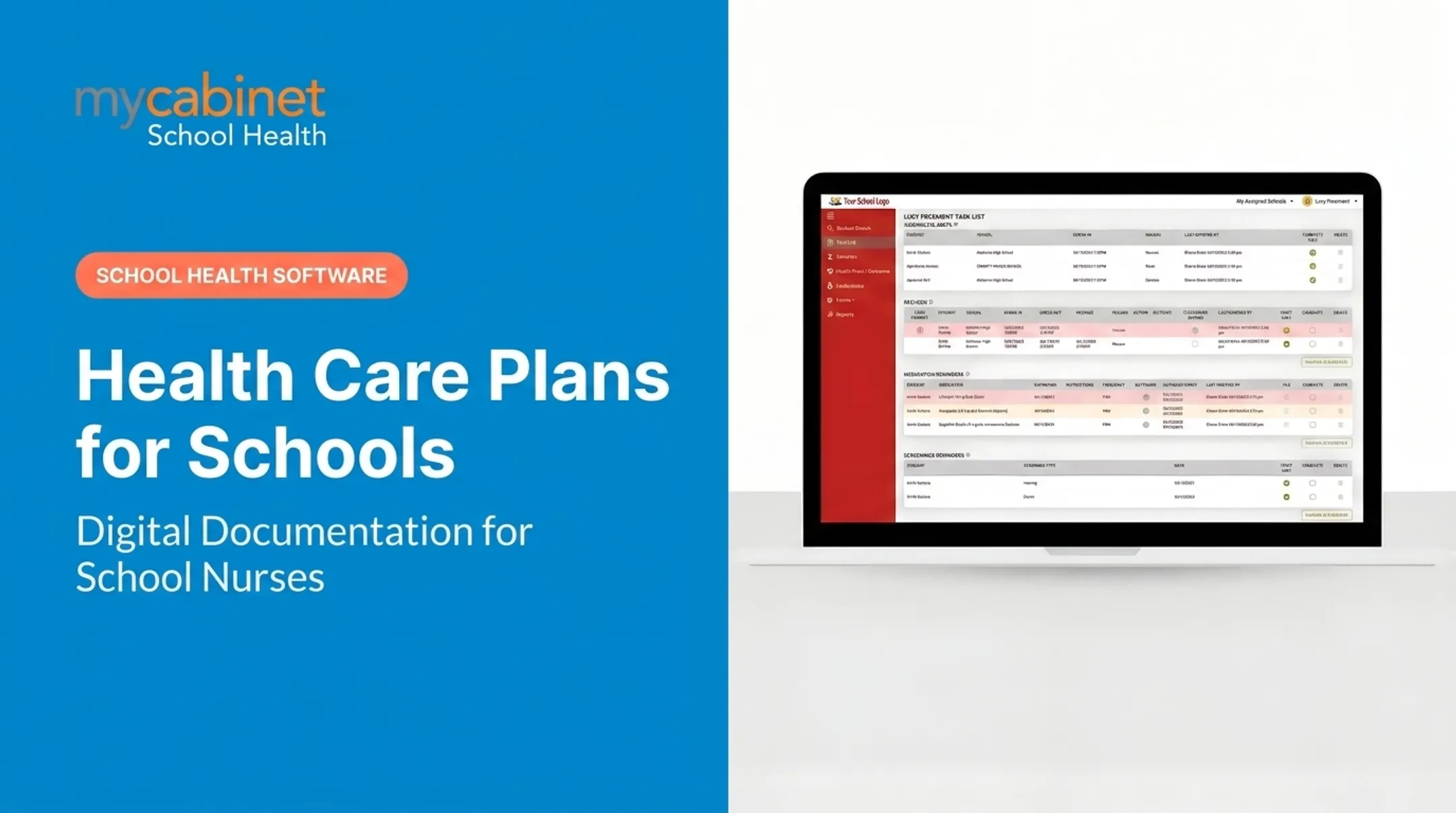
MyCabinet's structured visit documentation and intelligent task lists flag incomplete visits, upcoming rechecks, medication expirations, and screening reminders—so nurses juggling multiple care plans miss fewer follow-ups.

IHP vs. IEP vs. 504 Plan: What's the Difference?
This is where most confusion happens. Here's the breakdown:
| Plan | Legal Status | Who Develops It | What It Covers |
|---|---|---|---|
| IHP | Not legally binding on its own | School nurse, with parents and providers | Day-to-day healthcare management at school |
| IEP | Legally binding under IDEA | IEP team (educators, specialists, parents) | Specialized instruction and educational services |
| 504 Plan | Legally binding under the ADA/Section 504 | School team knowledgeable about the student | Accommodations for a condition limiting a major life activity |
| An IEP addresses learning gaps through speech therapy, specialized instruction, or classroom modifications tied to a disability that affects education. | |||
| A 504 plan provides accommodations—extra time on tests or elevator access, for example—for students whose condition limits a major life activity but who don't need specialized instruction. | |||
| An IHP is different from both. It's purely about healthcare management: what happens when blood sugar drops, when an inhaler is needed, when a seizure starts. | |||
| It can stand entirely on its own, or it can be referenced within an IEP or 504 plan to give it legal backing. Either way, the detailed health protocol should live in the IHP, not buried inside an IEP's education-focused language. |

Benefits of a Well-Managed IHP
A well-implemented IHP is associated with:
- Fewer medical emergencies at school
- Better day-to-day symptom management
- More consistent attendance
NASN frames this as the core purpose of an IHP: coordinating care in a way that supports safety and school participation, not as a guaranteed statistical outcome.
Clear documentation also solves a quieter problem: miscommunication. When a substitute teacher covers a classroom, or a new aide joins a field trip, an IHP tells them exactly what to watch for and what to do. Without it, care depends on memory and hallway conversations.
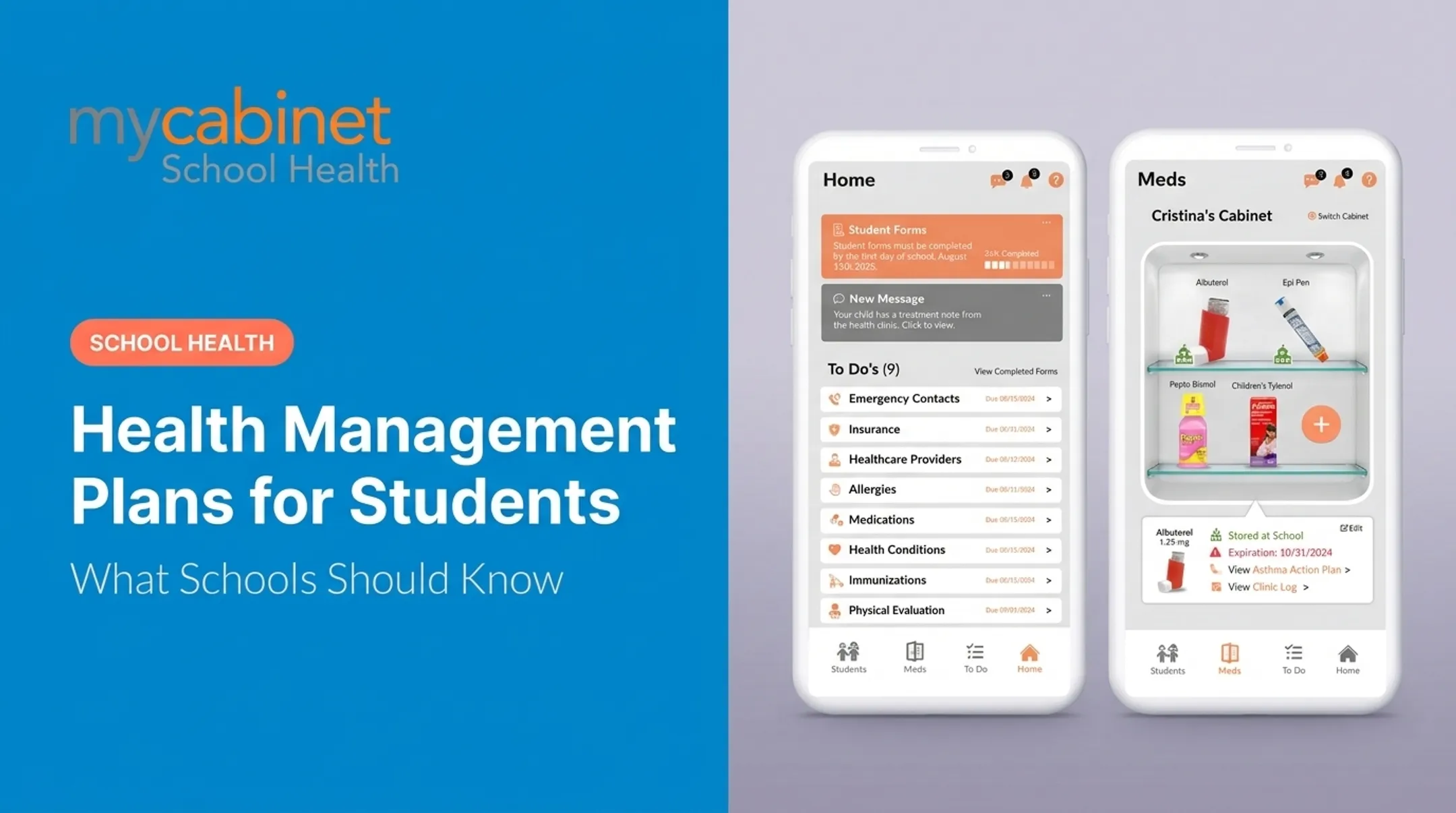
Digital systems close gaps that paper can't. MyCabinet's Parent App and Nurse Portal give families real-time visibility into their child's care, medication logs, clinic visits, and health plan updates. Nurses get one place to manage documentation instead of chasing paper forms, faxes, and spreadsheets.
That kind of connected visibility matters most during the moments schools can't plan for: a sudden asthma flare, a forgotten EpiPen, or a substitute who's never seen the student's file.
Frequently Asked Questions
What is an individualized plan of care?
It's another term for an IHP: a structured, student-specific plan of health interventions, monitoring procedures, and goals developed by the school nurse.
What are the benefits of an IHP?
Well-managed IHPs support fewer medical emergencies, better symptom management, more consistent attendance, and clearer communication between parents, nurses, and teaching staff.
What is the difference between a 504 plan and an IHP?
A 504 plan provides legal accommodations for a condition limiting a major life activity. An IHP focuses specifically on the healthcare management steps needed during the school day.
What does it mean if a student has an IEP?
It means the student has a legally binding plan under IDEA addressing specialized instruction and services tied to a disability affecting their education.
Is an IHP legally required?
There's no federal mandate requiring an IHP. However, the National Association of School Nurses (NASN) strongly recommends one for any student with ongoing or complex health needs.
Who decides if a student needs an IHP?
The school nurse makes this determination, based on the student's health needs, safety risks, and how the condition affects daily functioning at school.