
Missing fields. Outdated allergy information. Illegible handwriting on a medication order. Any one of these can delay treatment when seconds matter.
This guide breaks down exactly what a school nurse care plan form should include, organized by condition type, and explains how digital collection improves both accuracy and access.
Key Takeaways
- A complete care plan form needs student identifiers, diagnosis details, symptoms, treatment steps, medication authorization, and emergency contacts
- Condition-specific plans (asthma, allergies, diabetes, seizures) each require fields beyond the general template
- Digital collection reduces errors and gives nurses instant access during emergencies
- Treat FERPA compliance and physician sign-off as core requirements on every care plan form
What Is a School Nurse Care Plan Form?
A school health care plan, often called an Individualized Healthcare Plan (IHP), is a nursing document that outlines how a student's chronic or acute condition should be managed during the school day.
The National Association of School Nurses defines IHPs as individualized plans for students with complex physical, developmental, behavioral, or emotional health needs, or temporary health-status changes. These documents contain protected health information (NASN, 2025).
Don't confuse an IHP with:
- A hospital nursing care plan: a clinical document for inpatient treatment, not school-day management
- A 504 plan: addresses educational accommodations, not clinical protocols
An IHP gives teachers, coaches, and front-office staff a clear, actionable reference so they know exactly what to do when the nurse isn't in the room.
Who Needs One
Common qualifying conditions include:
- Asthma
- Severe food or environmental allergies
- Diabetes (Type 1 or Type 2)
- Seizure disorders
- ADHD requiring in-school medication management
- Other chronic illnesses requiring intervention during school hours
Core Components Every Care Plan Form Should Include
Every general IHP, regardless of condition, needs these building blocks:
- Student identification: Name, date of birth, grade, and student ID at minimum so staff can confirm the right record in a fast-moving situation
- Diagnosis and medical history: Primary condition, diagnosing physician, date of diagnosis, and comorbidities that could affect treatment
- Signs and symptoms: Checklist of what a reaction, episode, or emergency looks like for this student—generic descriptions aren't enough
- Step-by-step response protocol: Sequential staff actions, including a clear trigger point for calling 911
- Medication and dosage details: Drug name, dosage, route, timing, storage requirements, and expiration date
- Authorization and signatures: Dated parent or guardian consent, physician signature, and nurse review sign-off
- Emergency contact hierarchy: Parent, secondary contact, and treating physician, with current phone numbers For a concrete model, Connecticut's official IHP form requires:
- Name, date of birth, and sex
- Allergies, physician, diagnosis, and medical history
- Diet, mobility, and equipment needs
- Medication or treatment orders
- A health-care goal and intervention steps
- Signatures from the parent, student, and school nurse Notably, that form doesn't include a dedicated symptoms section. Condition-specific action plans need to fill that gap.

Condition-Specific Elements to Add
A general IHP template only gets you partway there. Each major condition needs its own layer of detail.
Allergy and Anaphylaxis Plans
FARE's model emergency care plan includes trigger lists, epinephrine brand/dose, antihistamine details, and self-carry status. The response sequence matters just as much as the fields:
- Administer epinephrine immediately
- Call 911
- Lay the student flat and raise their legs (or sit upright if breathing is difficult)
- Repeat epinephrine after 5+ minutes if symptoms persist
- Alert emergency contacts and transport to the ER, even if symptoms resolve

This isn't a small population. 5.8% of U.S. children ages 0–17 have a diagnosed food allergy (CDC, 2023).
Asthma Action Plans
These use a green/yellow/red zone system based on peak flow percentages:
- Green (80–100% of personal best): Normal activity
- Yellow (50–80%): Caution, rescue inhaler may be needed
- Red (below 50%): Quick-relief medicine, provider contact, emergency care if no improvement
6.7% of U.S. children currently live with asthma (CDC, 2024). Most schools run multiple asthma plans at once, so standardized zone-based forms are the practical baseline.

Diabetes Management Plans
The Diabetes Medical Management Plan (DMMP) should be signed by the care team and parent, then updated annually or whenever the regimen changes. Key fields:
- Blood glucose target range (typically 70–180 mg/dL)
- Insulin dosing schedule and delivery method
- Hypoglycemia and hyperglycemia response steps
- Carb-counting guidance for meals
Seizure Action Plans
These plans should capture the details staff need in the moment:
- Seizure type and typical presentation
- Duration thresholds that trigger emergency response
- Rescue medication protocol
- Post-seizure recovery steps
Epilepsy Foundation materials call for doctor and nurse review, with updates annually or whenever seizure frequency or treatment changes.
Across all four conditions, the pattern is the same: keep a shared IHP structure, then add the condition-specific fields and response steps your team will actually use under pressure.
Digital Collection: Why Paper Forms Fall Short
Paper-based care plans fail in predictable ways:
- Forms get lost in a filing cabinet
- Medication details go stale after a dosage change nobody reported
- Handwriting becomes a guessing game
- Parent-to-nurse communication drags out over days
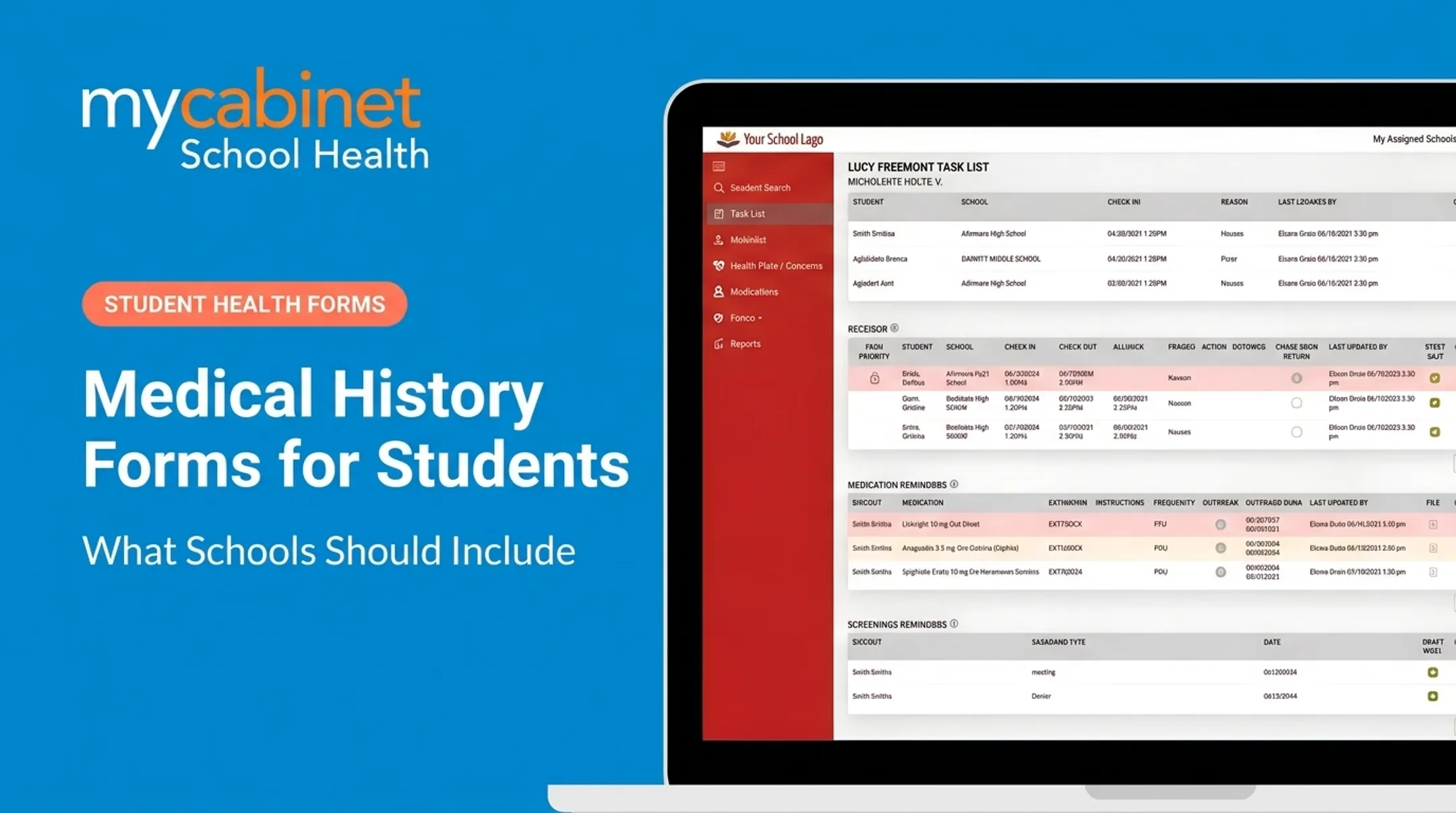
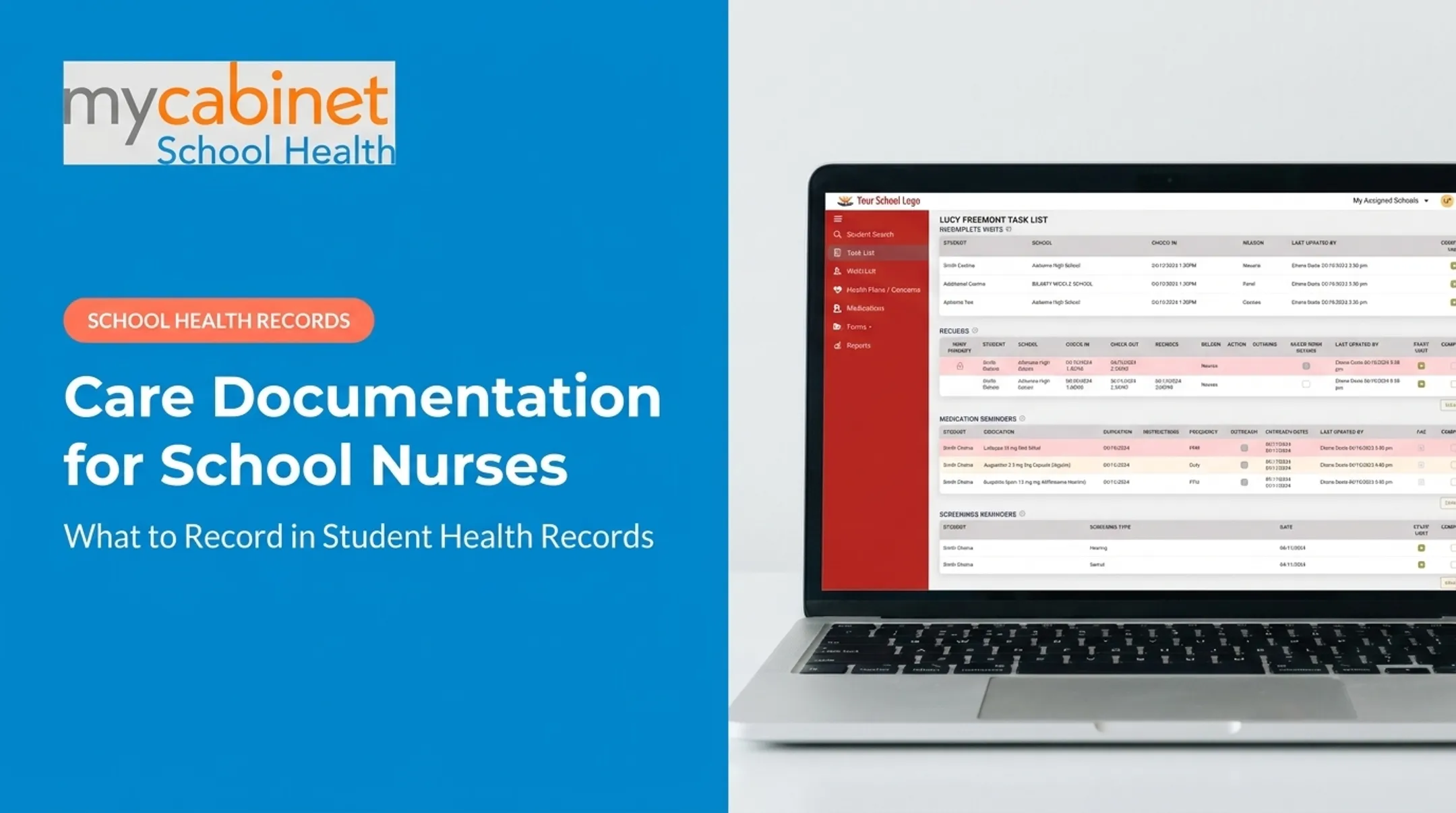
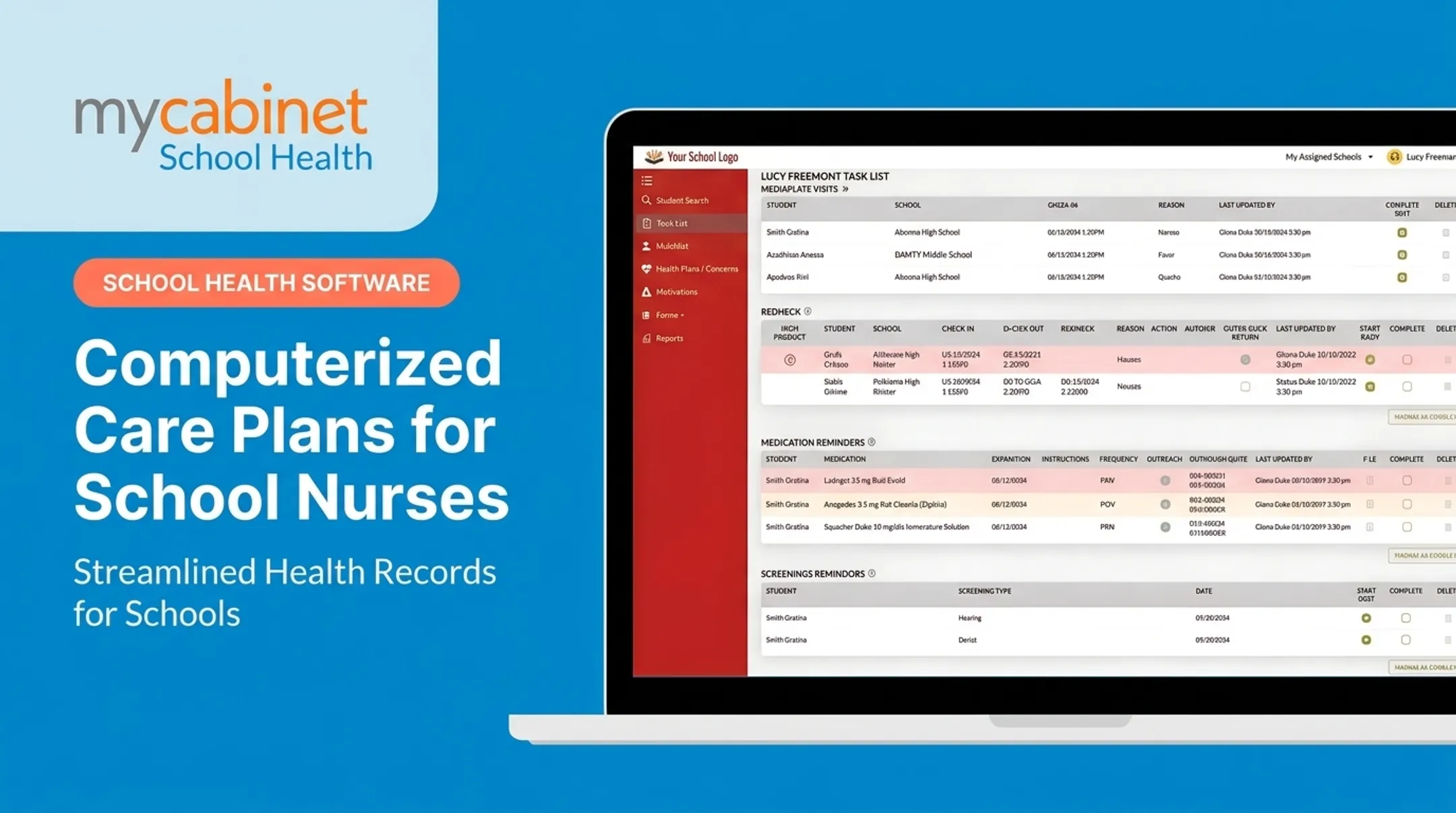
Digital collection flips this. Parents upload completed forms directly through a portal or app; nurses review, approve, and attach them to the student's health profile — no chasing down paperwork before the first bell.
MyCabinet School Health's Parent App and Parent Web Portal follow this exact workflow:
- Parent uploads the completed care plan through the app or portal
- The form appears in the Nurse Portal for review
- The nurse approves it, and it attaches to the student's health record
- Nurses access the plan alongside medications, allergies, and emergency contacts — all in one place
This centralization matters most when a chronic condition involves a stored medication. MyCabinet tracks medication expiration dates tied to the student's profile and surfaces reminders through nurse task lists. Parents get expiration alerts through the app so they can restock before a plan becomes unusable.

Compliance and Best Practices
Care plans contain sensitive health information, so access and review cycles need clear structure.
FERPA and access control. Student health records maintained by a school are FERPA education records, not HIPAA-covered records (U.S. Dept. of Education). School officials can access them only when they have a legitimate educational interest — meaning care plans should be visible on a need-to-know basis, not open to every staff member.
Annual review cycles. NASN and multiple state programs recommend reviewing IHPs at least annually, with interim updates whenever the diagnosis, medication, or treatment protocol changes.
Audit trails. A documented history of when a plan was created, reviewed, and updated protects both the student and the school. MyCabinet builds audit trails and role-based permissions into its platform, so plan activity is traceable and accountable.
Restricted access, scheduled review, and logged activity keep care plans defensible and easier to sustain year to year.
Frequently Asked Questions
What does a care plan form look like?
It's typically a short, structured document organized into sections: student info, diagnosis, symptoms, action steps, medications, and signatures. Condition-specific plans, like asthma or allergy action plans, often follow a standardized template.
What are the main components of a care plan form?
Student identification, diagnosis and medical history, symptoms to watch for, step-by-step treatment protocol, medication details, and authorization signatures from parents, physicians, and the school nurse.
Who is responsible for filling out a student's care plan form?
Parents or guardians and the treating physician typically complete and sign the plan. The school nurse reviews it, adds relevant school-specific details, and finalizes it for use.
How often should a care plan form be updated?
At minimum, annually. Update it immediately whenever medication, diagnosis, or treatment protocol changes — don't wait for the next school year.
Can care plan forms be submitted digitally?
Yes. Digital submission through a parent portal or app speeds up nurse review and cuts down on paperwork errors compared to faxed or handwritten forms.
What happens if a care plan form is incomplete or missing?
Incomplete forms risk a delayed or incorrect emergency response. Nurses should follow up with families before the school year starts, not after an incident forces the issue.