
Finding the correct hearing and vision screening form, understanding your state's certification rules, and keeping records organized are recurring administrative headaches. This guide walks through where to find forms, what certification requires, best practices for managing the paperwork, and how digital tools are changing the process.
Key Takeaways
- Screening requirements and forms vary by state — there's no single federal template to rely on
- Most states require screener certification or approved training before you can administer tests
- Digital collection and task tracking cut down on missed screenings and lost paperwork
- Environmental setup (noise, lighting, distance) directly affects screening accuracy
Why Hearing and Vision Screening Matter in Schools
Undetected vision and hearing problems affect both health and learning.
A 2023 systematic review of children ages 6–18 found that kids with vision impairment consistently read slower than their normally sighted peers, across every study examined. A 2025 cohort study of nearly 4,700 children likewise linked even slight-to-mild hearing loss to lower educational placement (relative risk 1.52).
Roughly 25% of children ages 6–18 need corrective lenses for refractive errors alone, per a 2023 analysis of refractive error burden. That load is why 41 states mandate vision screening at the elementary level, though far fewer extend it through high school.
For nurses, this translates into real administrative weight:
- Multiple screening cycles per year, often tied to specific grades
- Different forms and thresholds depending on screening type
- Follow-up tracking for every student who doesn't pass
- Coordination across potentially thousands of students per district

Finding State-Specific Hearing and Vision Screening Forms
There's no national screening form. Each state's department of health or education publishes its own version, and one template will not keep you compliant everywhere.
What State Forms Typically Look Like
Two examples show the range:
- Georgia Form 3300: Required under Rule 511-5-6 for first-time public school entry. Combines vision, hearing, dental, and nutrition screening, with results marked passed, failed/needs further evaluation, under professional care, or unable to complete.
- Illinois screening worksheets: The Illinois Department of Public Health publishes separate vision and hearing worksheets (plus rescreening versions) for student info, test scores, pass/fail status, and referral notes.
Most state forms still share a common core:
- Student identifying information (name, grade, age)
- Screening results and pass/fail thresholds
- Referral criteria for failed screenings
- Screener signature and certification info

Where to Actually Find Your State's Form
- Check your state department of health or education website first. These are the official sources, not third-party templates.
- Visit your district's health office resources. Many districts pre-load the current form for staff.
- Consult your state school nurse association. They often maintain updated compliance checklists.
Some states also require a separate parent notification or referral form when a student fails a screening. Georgia's rule, for example, directs parents toward professional evaluation but does not mandate a distinct notice form. Verify against your specific state rule.
Practical tip: Keep a reference list of your state's current forms and review it each year. Requirements shift. Illinois's worksheets and Georgia's Form 3300 have both been revised in recent years.
Screener Certification and Training Requirements Across States
Most states won't let just anyone pick up an audiometer or vision chart. Illinois, for example, requires that mandated screenings be performed by technicians trained and certified by the state health department, with certification valid for three years before renewal.
Texas takes a slightly different approach: screeners are certified for vision, hearing, or both (as listed on the certificate), and that certification lasts five years, with a recertification course required before expiration.
| State | Certification scope | Renewal period |
|---|---|---|
| Illinois | Department-trained/certified technicians | 3 years |
| Texas | Vision, hearing, or both (as listed) | 5 years |
Before you schedule screenings:
- Confirm whether your certificate covers vision, hearing, or both before assigning staff
- Use only state-approved training paths (state courses, CE modules, or district-run sessions)
- Limit non-certified helpers, including volunteers, to supervised support where state rules allow it

Because requirements and approved-course lists change, check your state's board of education or health department directly rather than relying on secondhand summaries.
Best Practices for Managing Screening Forms and Records
Getting through screening season without chaos comes down to a handful of habits.
Build a Screening Calendar Early
Map out state-mandated grade levels and deadlines before the school year starts. Indiana, for example, requires hearing screening in grades 1, 4, 7, and 10, and vision screening at several other checkpoints. Waiting until the deadline is close guarantees a scramble.
Go Digital Where You Can
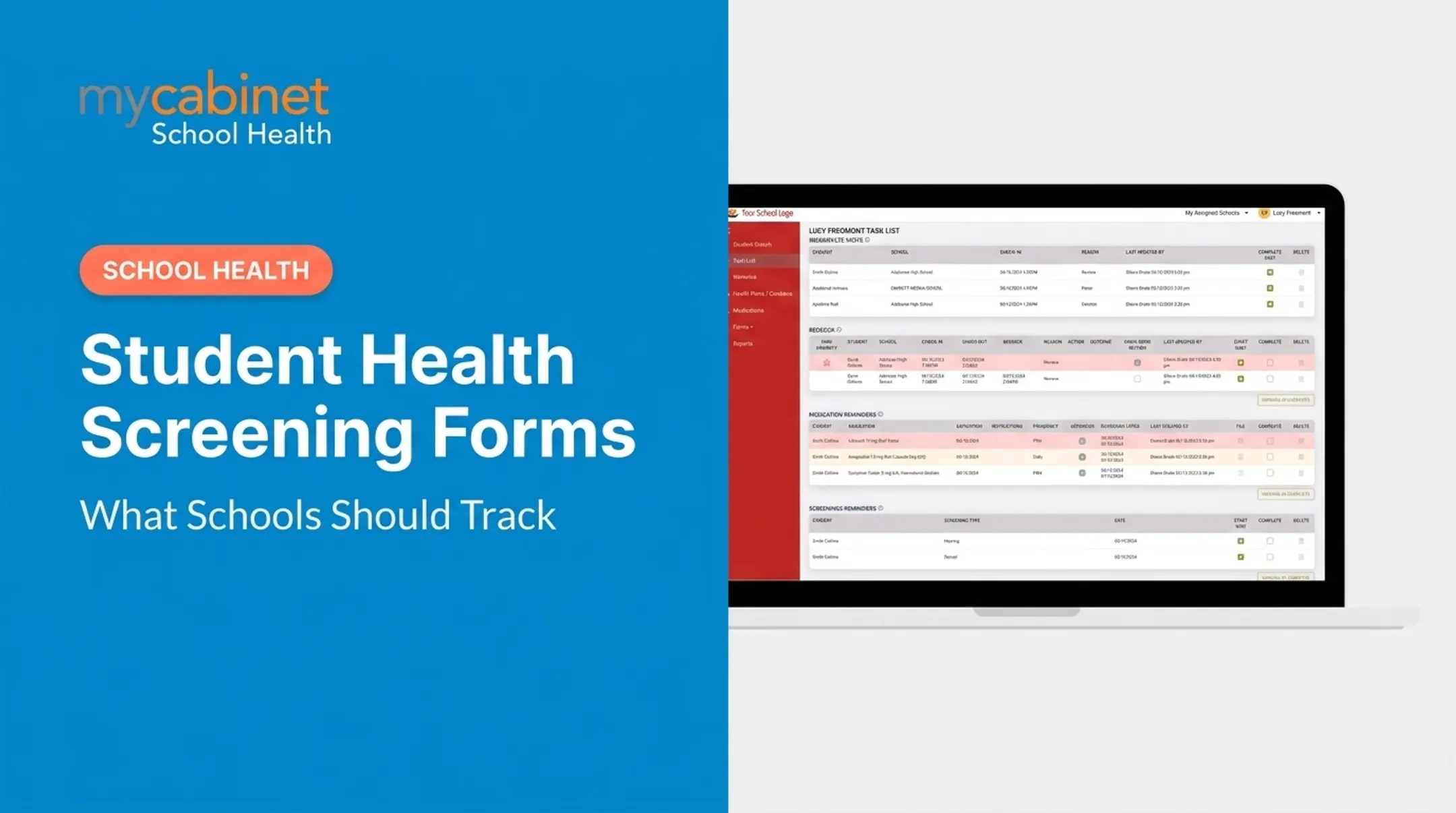
Paper forms get lost, handwriting gets illegible, and filing errors creep in. Digital collection removes most of that friction. MyCabinet's Nurse Portal, for instance, uses screening reminders and task lists that sit alongside visits, rechecks, and medication reminders, so nothing falls through simply because a folder went missing.
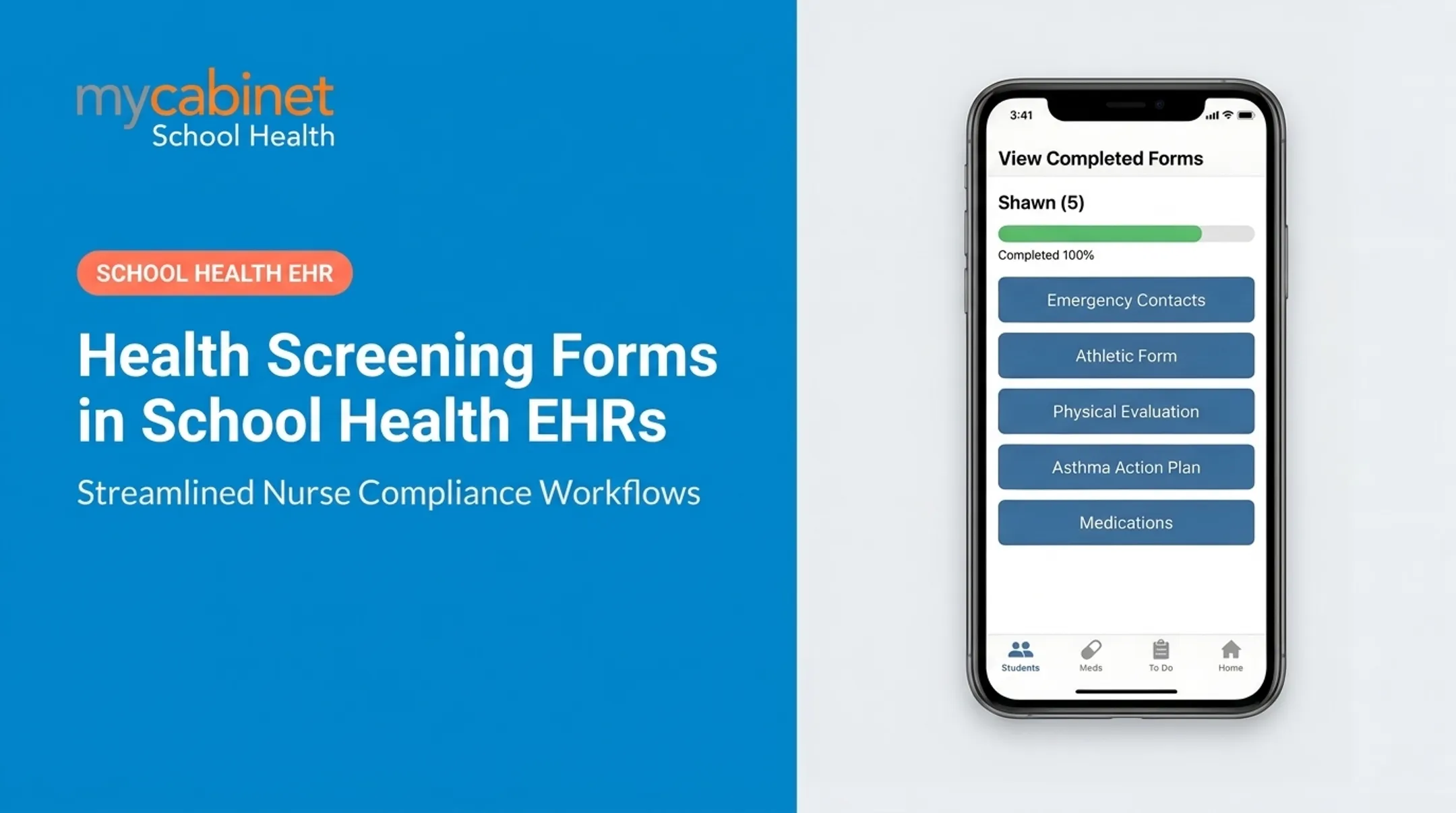
Parents can upload required health documentation through the Parent App or Parent Web Portal. Nurses then review and approve submissions inside the system, and once approved, the document attaches directly to the student's health record — no scanning, no chasing down emails.

Prioritize FERPA-Compliant Storage
Screening results are sensitive. The Department of Education's 2023 guidance makes clear that student health records, even non-treatment screening data, can qualify as protected education records under FERPA. That means:
- Access should be limited to staff with a legitimate educational interest
- Third-party platforms must stay under the school's direct control
- Redisclosure without consent generally requires an applicable exception
Platforms handling this data should carry recognized safeguards: SOC 2 Type II certification, HIPAA compliance, and FERPA alignment, plus role-based permissions and audit trails.
Close the Loop on Failed Screenings
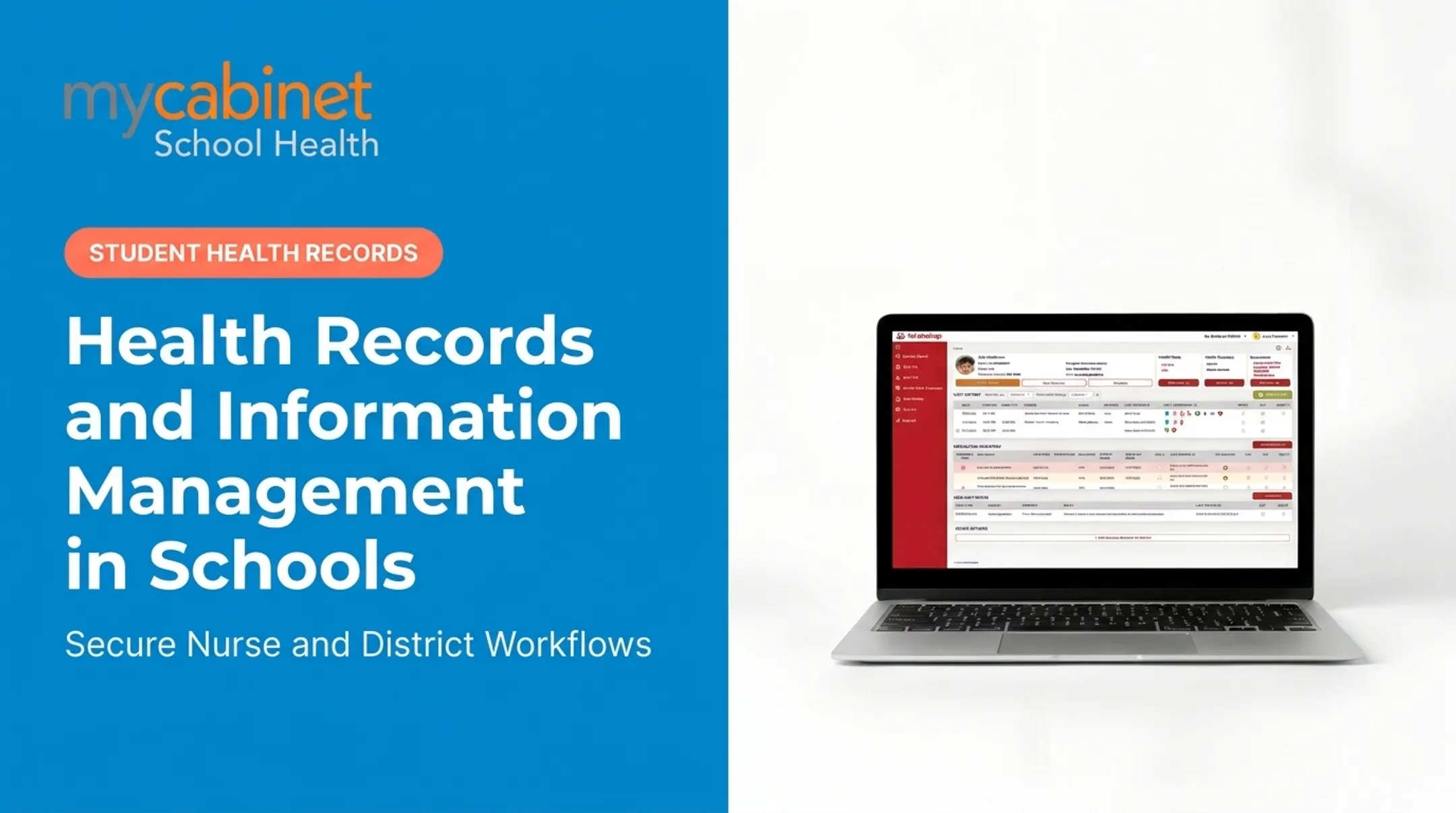
A failed screening starts a follow-up chain, not a closed file. Structured visit documentation with predefined visit types keeps that chain on the student's actual record rather than a separate spreadsheet. That continuity matters when a parent, auditor, or new district asks for history months later.
What to Avoid Before and During a Hearing or Vision Test
Small missteps can skew results and trigger unnecessary referrals.
Before a hearing test, avoid:
- Recent loud noise exposure that can temporarily shift thresholds
- Testing a student with an active ear infection
- Unchecked excessive earwax buildup
Environmental factors to control:
- Background noise within ASHA ambient limits (Missouri examples include 49.5 dB at 1,000 Hz)
- Lighting and glare on vision charts; do not spotlight the chart
- Correct chart-to-eye distance (commonly 10 feet, depending on the chart)
Don't rush the process. Skipping audiometer calibration, or using a different vision chart or distance than specified, leads to inaccurate referrals.

Missouri guidance recommends rescreening within 14–21 days before a formal referral. A single failed attempt is not automatically conclusive.
Frequently Asked Questions
Where can I find hearing and vision screening forms for my state (such as Georgia Form 3300 or the Illinois school vision form)?
Check your state department of health or education website first, as they publish and update the official forms. Your district health office or state nursing association can also point you to the current version. Forms like Georgia's Form 3300 are state-specific and revised periodically.
How do I get certified to perform hearing and vision screenings in Illinois?
Illinois requires screeners to complete department-approved training and certification through IDPH, valid for three years before renewal. Verify the current list of approved courses directly with the state health department, since providers can change.
What should I avoid doing before a hearing test?
Avoid recent loud noise exposure, and don't screen when ear infections or excess earwax are present. Skip testing in rooms that fail ambient-noise guidelines.
How often are students required to have hearing and vision screenings?
Frequency depends on your state and grade level. Common checkpoints include kindergarten, specific entry grades, and periodic rechecks. Indiana, for example, requires hearing screening in grades 1, 4, 7, and 10.
What happens if a student fails a school vision or hearing screening?
Most states require a rescreen within a short window, followed by referral to a licensed provider if the issue persists. Parent notification and encouragement to seek professional evaluation typically follow.
Can digital tools replace paper screening forms entirely?
Many states now accept digital records if properly documented and securely stored. Platforms like MyCabinet support this shift by letting parents upload forms digitally and nurses review, approve, and attach them directly to student records.