
Common pain points pile up fast:
- Paper forms that go missing in a stack of enrollment paperwork
- Handwriting nobody can decipher when a student is having an allergic reaction
- Allergy or medication details that are months (or years) out of date
- Nurses spending hours chasing down parents for signatures or missing fields
This guide breaks down what a student medical history intake form actually needs to include, why it matters more than most districts treat it, and how schools are moving away from paper to fix these gaps.
Key Takeaways
- A complete intake form captures allergies, medications, immunizations, conditions, and emergency contacts before day one.
- Paper-based collection creates errors, delays, and compliance exposure for nurses and administrators.
- Digital forms tied to a school health platform improve accuracy, save nurse time, and give parents real visibility.
- FERPA-aligned handling of student health data is the baseline for every compliant school health workflow.
What Is a Student Medical History Intake Form?
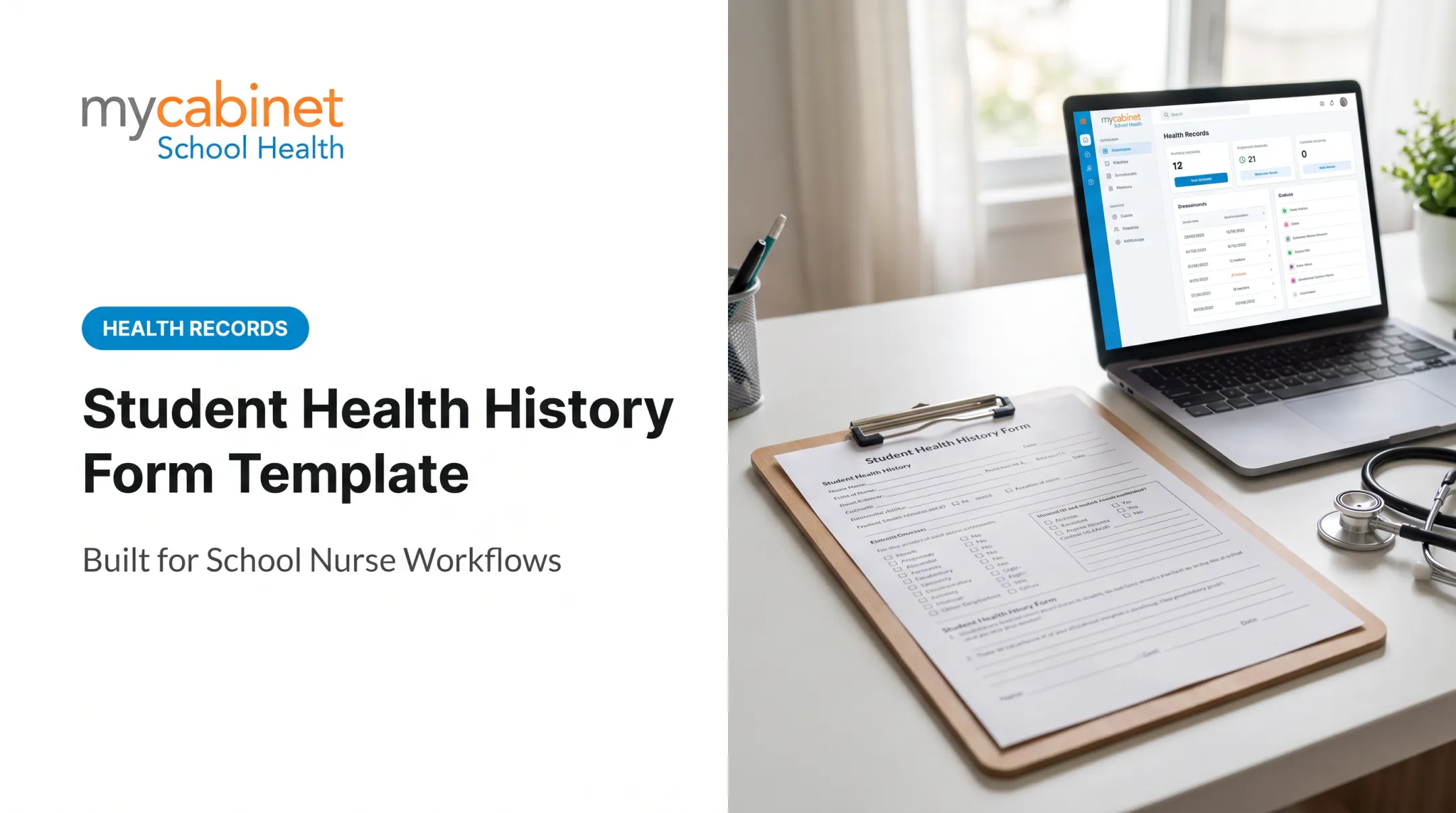
A student medical history intake form is a paper or digital document parents complete before or during enrollment. It gives the school nurse a full health picture of their child and is the record nurses rely on when a student needs care.
Unlike a general medical intake form you'd fill out at a doctor's office, school medical history forms include fields specific to the classroom and campus environment:
- Bus transportation needs tied to medical conditions
- PE or activity restrictions
- Self-carry authorization for medications like inhalers or EpiPens
- Consent to share information with teachers or coaches who need it
These forms typically work alongside immunization records and emergency action plans, which many state education departments require separately. Together, they give the nurse's office a complete, actionable record rather than fragments spread across different files.
Why Schools and Nurses Need Comprehensive Intake Forms
Supporting Health and Safety Outcomes
Missing or outdated allergy and medication data delays emergency response when seconds matter.
A study of every public school district in North Carolina found an average of 78 medication administration errors requiring medical intervention per year statewide, with about 27% of districts reporting at least one corrective action plan annually for a serious error (Best et al., The Journal of School Nursing).
The same research found lower error rates in districts that employed nurses directly than in districts spreading coverage across more schools. Staffing structure matters, and so does complete intake data nurses can trust at the point of care.
Reducing Administrative and Compliance Burden
That same information gap shows up as paperwork. Nurses managing hundreds or thousands of student records each fall don't have time to chase missing forms one by one. Backlogs build during peak enrollment, when accurate records matter most.
FERPA governs most of this data. The US Department of Education's 2023 guidance confirms that student health records maintained by a school (or a vendor acting on its behalf) count as education records.
Schools generally need written parental consent before disclosing them, outside specific exceptions like health and safety emergencies (FERPA Guidance for School Officials).
Essential Elements of a Student Medical History Intake Form
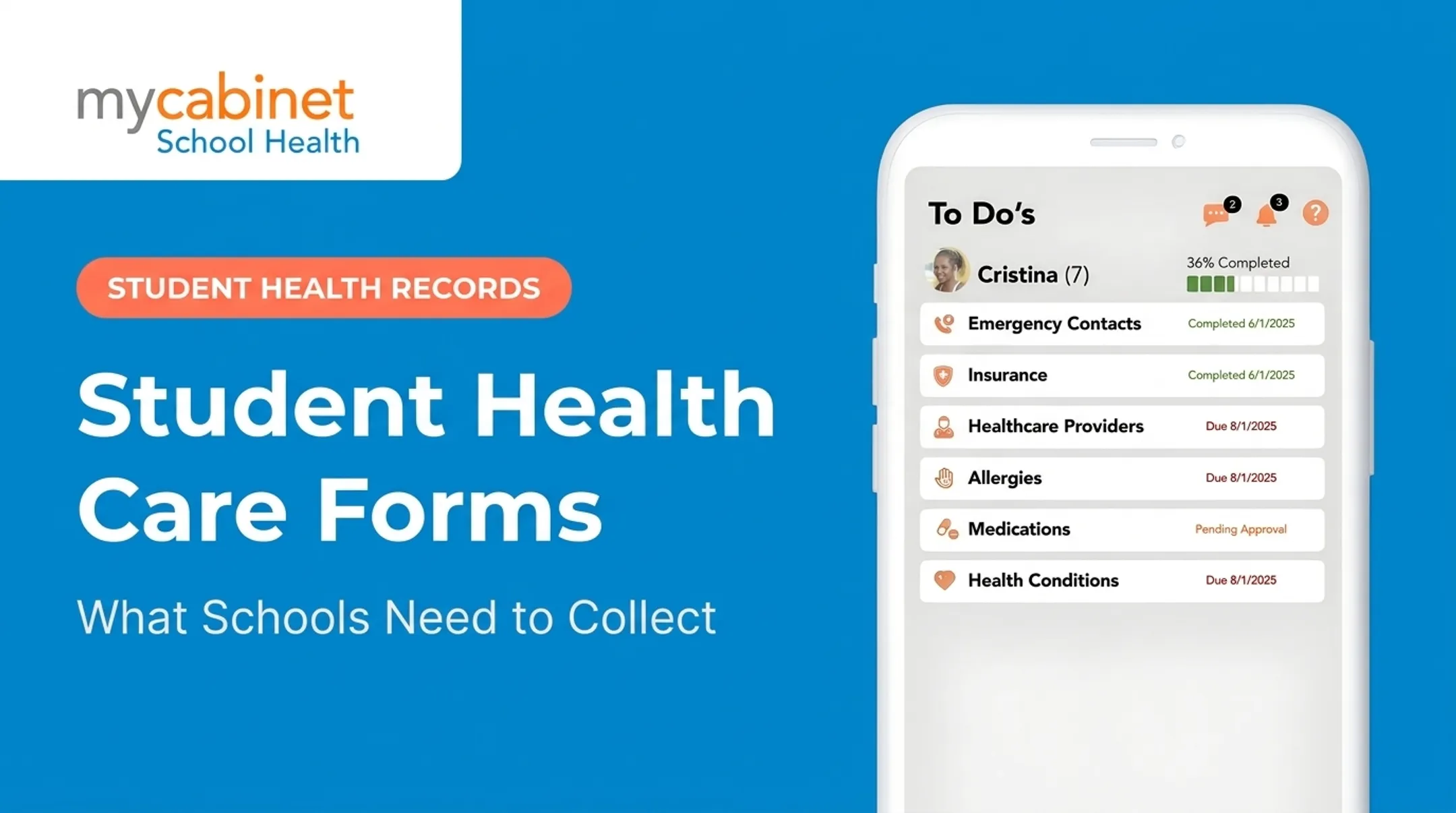
A well-built form covers six core categories:
- Student and family information: full name, date of birth, grade, homeroom or teacher, and parent/guardian contact details
- Emergency contacts: primary and secondary contacts, authorized pickup persons, and treating physician information
- Medical history and conditions: chronic conditions like asthma, diabetes, or seizure disorders, prior surgeries, and developmental concerns
- Allergies and reactions: food, medication, and environmental allergies, including severity and required treatment steps
- Current medications: dosage, frequency, administration instructions, and self-carry authorization for items like inhalers or EpiPens
- Immunization records and consent: vaccination status, treatment consent, and authorization to share information with staff

In practice, those fields help most when a nurse can see them together on one student profile. Flags for asthma, seizure disorder, an active 504 Plan, or an Individualized Healthcare Plan (IHCP) sit next to albuterol dosing, EpiPen expiration dates, and the asthma action plan.
Keeping that information in one place, instead of scattered paper files, is what helps a nurse act fast.
Paper Forms vs. Digital Intake for Schools
Paper collection creates predictable problems every single year:
- Forms get lost in the shuffle of enrollment packets
- Handwriting is misread, especially for medication names and dosages
- Outdated information doesn't get flagged until there's already a problem
- Staff re-key data manually into whatever system the school actually uses
The 2020 US Government Accountability Office review linked incomplete or illegible health documentation directly to increased institutional risk and harder compliance oversight. That finding reflects a documented pattern across public institutions handling sensitive records.
Digital intake closes those gaps. Parents submit and update information from a phone or laptop, so schools spend less time on back-and-forth email and paper chasing.
- Nurse review and approval before a form enters the record creates an audit trail paper folders can't match
- Incomplete records are flagged in the system instead of tracked by hand
- Automatic follow-ups reach families when forms are still missing
- Updates stay attached to the student record, so staff aren't re-entering the same data

How MyCabinet School Health Simplifies Medical History Intake
MyCabinet School Health was built to solve a clear operational gap: moving accurate health information from parents to nurses without the paper trail.
Here's how the workflow actually works:
- Parents submit forms digitally through the Parent App or Parent Web Portal—no printing or scanning
- Nurses review and approve submissions directly inside the Nurse Portal
- Approved forms attach automatically to the student's profile, eliminating manual re-entry
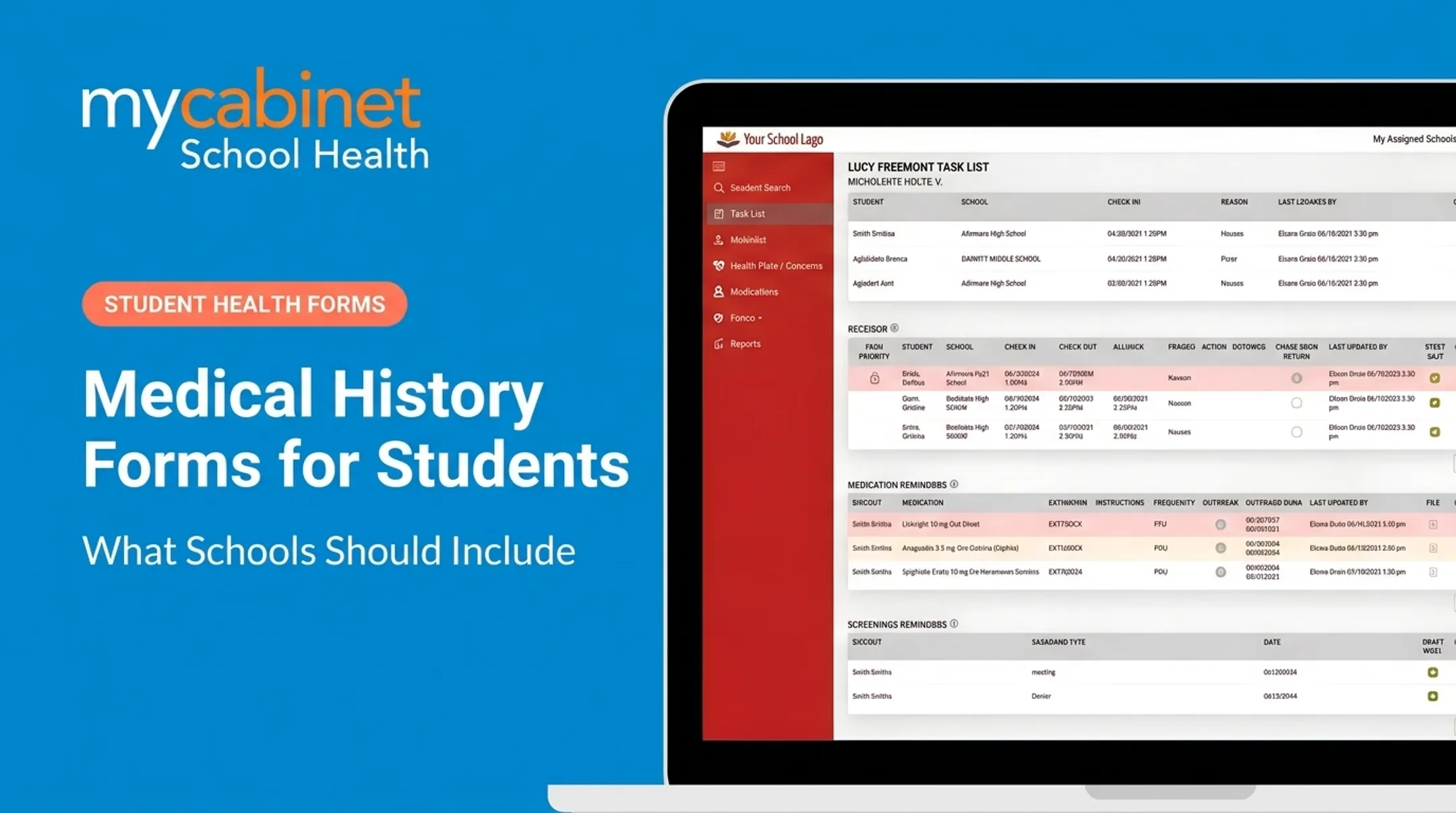
- Intelligent task lists flag gaps such as incomplete intake forms, expiring medication authorizations, and missing screenings

Role-based access keeps sensitive health data restricted to authorized staff only, aligned with FERPA requirements. That same connected intake path is what districts like Cobb County School District rely on to keep nurse workflows organized during back-to-school enrollment, when hundreds of forms can arrive within days.
As Cobb County Superintendent Chris Ragsdale put it at a 2025 school board meeting, the shift to digital paperwork let parents see when their child was seen by the nurse and what medication was given. That visibility closes the loop paper packets could not.
Best Practices for Collecting Student Medical Information
A few habits separate districts that stay ahead of intake issues from those that scramble every August:
- Send forms early with clear deadlines and automated reminders, not a single email in July
- Require annual updates, since allergies, medications, and conditions change year to year
- Keep forms focused, capturing critical safety details without overwhelming parents with unnecessary fields
None of this works if the process still depends on someone manually tracking spreadsheets. Automated reminders and digital submission remove the guesswork for both nurses and families.
Frequently Asked Questions
What is a medical intake form?
A medical intake form collects health history, medications, allergies, and emergency contacts before care begins. In schools, it also covers items like self-carry medication authorization and PE restrictions.
How do I get a medical history form?
Schools and districts typically provide these forms during enrollment, often through a digital portal or parent app. You can also request one directly from the school nurse's office.
Who fills out a student medical history form?
Parents or guardians complete the form, ideally at enrollment or before the school year starts. Parents should also submit updates whenever medications, conditions, or allergies change.
How often should student medical forms be updated?
Update forms at least once a year, and right away when a medication, condition, or allergy changes. Waiting until next year can leave nurses working from outdated information.
Are student medical intake forms confidential?
Yes. FERPA-aligned rules limit access to authorized school staff, and HIPAA-aligned safeguards apply when a platform stores or processes the data for the school.
Can parents submit medical forms digitally?
Yes. Platforms like MyCabinet School Health let parents submit and update forms through a mobile app or web portal, replacing paper submissions entirely.