
For school nurses, that reality means juggling paper Individualized Health Plans (IHPs), 504 accommodations, and emergency action plans across dozens, sometimes hundreds, of students. One missed medication expiration or an outdated emergency contact can turn into a genuine safety issue.
This guide breaks down what health management plans actually are, why schools need them, what belongs in one, the compliance rules to know, and how digital tools like MyCabinet help nurses keep everything organized.
Key Takeaways
- Keep every student's medical needs, treatments, and emergency protocols documented in one shared plan
- Schools carry legal and safety obligations to keep these plans accurate, accessible, and FERPA-aligned
- Assign clear roles to nurses, parents, and physicians so plans stay current year-round
- Digital school-health platforms cut paperwork, flag missed medication renewals, and give parents real-time visibility
What Is a Health Management Plan?
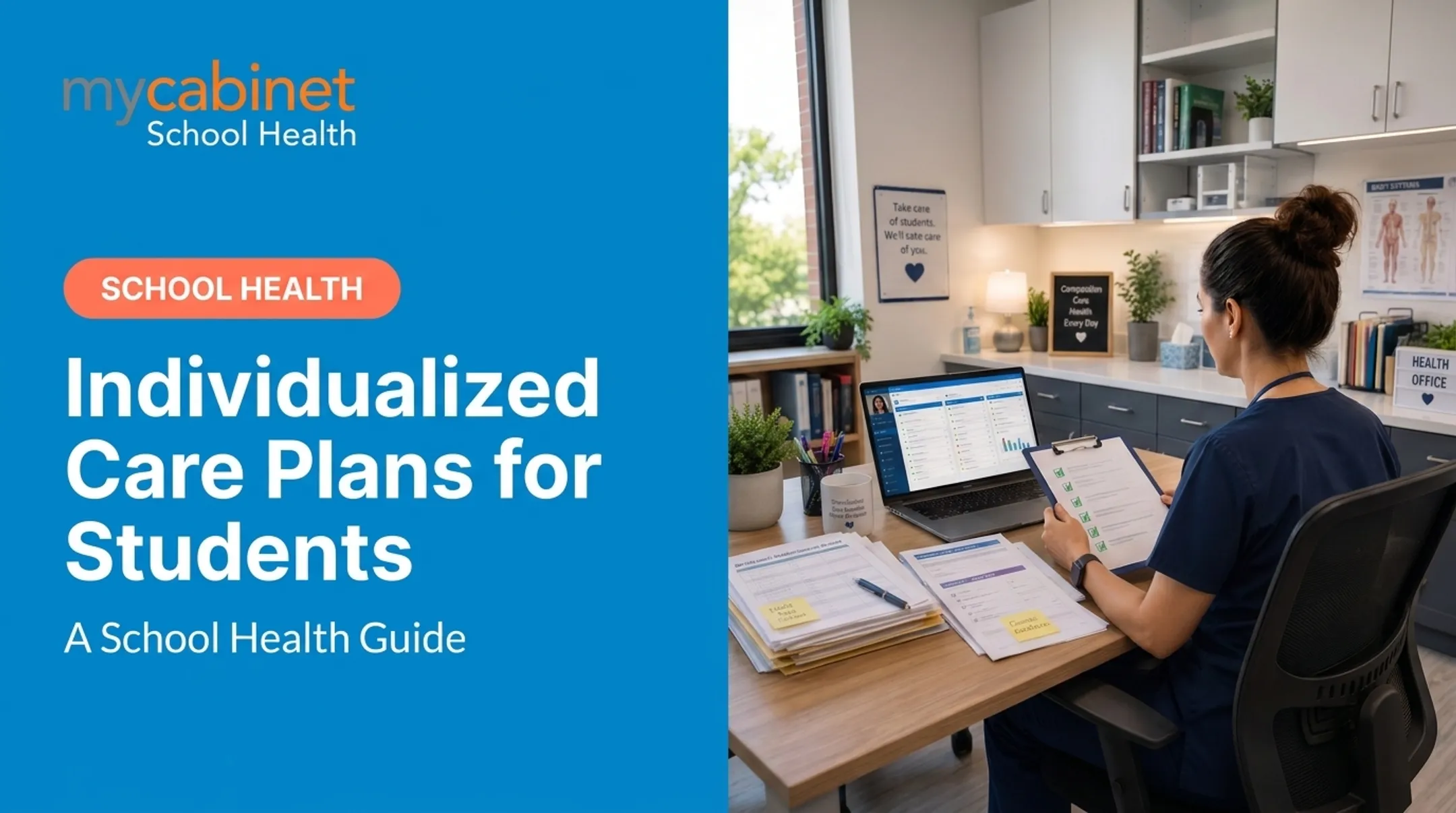
A student health management plan is a documented, individualized profile covering a student's diagnosis, medications, treatment steps, allergies, and emergency response protocol. It is the operational playbook the school nurse and staff follow when that student has a medical event during the school day.
These plans aren't one single document. The American Academy of Pediatrics distinguishes several related tools that schools often confuse:
- IHP (Individualized Health Plan): Created and maintained by the school nurse; documents the nursing process and medication administration
- EAP (Emergency Action Plan): Written by the student's outside physician; gives clinical emergency instructions (like an asthma action plan)
- ECP (Emergency Care Plan): Developed by the nurse to help non-medical staff recognize symptoms and respond appropriately
- 504 Plan/IEP: Formal accommodation or education plans that may include health-related provisions, built with the parent and school team

Common conditions requiring these plans in K-12 settings include asthma, type 1 diabetes, severe allergies with anaphylaxis risk, seizure disorders, and ADHD medication management. The nurse typically builds the plan in collaboration with parents and the student's physician, then keeps it updated as conditions change.
Difference From Clinical Care Plans
Knowing which document applies still leaves a common point of confusion: how a school plan relates to the doctor's plan.
A school health management plan isn't a substitute for the broader clinical care plan a doctor manages. It's narrower by design—what staff need to recognize, what to do, and who to call during school hours. Clinical care plans cover long-term treatment; school plans cover the school-day window when a teacher or coach may be the first responder.
Why Schools Need Structured Health Management Plans
Several forces make structured health management plans a requirement, not an optional extra.
Legal requirements
Section 504 requires schools to provide individualized evaluations and accommodations for students with disabilities, including health conditions. It also requires procedural safeguards such as record access and periodic reevaluation.
State laws add detail. Washington's RCW 28A.210.380, for example, requires district policies covering treatment plans, staff training, and anaphylaxis-specific emergency care.
Measurable safety risk
The student population carrying serious health conditions is large enough that every school will encounter it:
- Food allergies affect 1 in 13 children (about two per classroom), and at least 40% have needed an emergency department (ED) visit for a reaction
- Roughly 456,000 U.S. children under 18 have active epilepsy
- The CDC's 2026 diabetes report counts 314,000 children and adolescents under 20 with diagnosed type 1 diabetes
When conditions are undocumented or poorly communicated, emergency response slows—often in the moments that matter most.
Administrative strain
Nurses who manage plans through paper files, spreadsheets, and email are more prone to missed reviews and medication tracking errors. National staffing benchmarks show roughly 630 students per full-time nurse in schools that have at least one.
A 2024 national workforce study also found fewer than half of responding schools reported RN supervision. That gap adds another layer of variability nurses must handle on their own.

Those same gaps show up for families. When parents can see how their child's health needs are tracked, trust in the school office rises—especially for chronic conditions that require daily medication.
Key Components of an Effective Student Health Management Plan
A thorough plan covers six areas. Skipping any one of them creates a gap someone eventually falls through.
- Student and diagnosis information — condition, allergies, physician contact, emergency contacts
- Medication details — dosage, frequency, administration instructions, and expiration dates
- Emergency protocols — step-by-step response for symptom flare-ups, including clear criteria for calling 911
- Staff responsibilities — which personnel (nurse, classroom teacher, coach, bus driver) need training or awareness
- Communication plan — how updates move between nurse, parents, and relevant staff
- Review schedule — when to reassess the plan (at minimum annually per AAP guidance, or immediately after a health change)
Medication order details matter more than most schools realize. The AAP specifically calls out fields that reduce administration errors when standardized:
- Dosage and route
- Frequency
- Effective dates and discontinuation dates
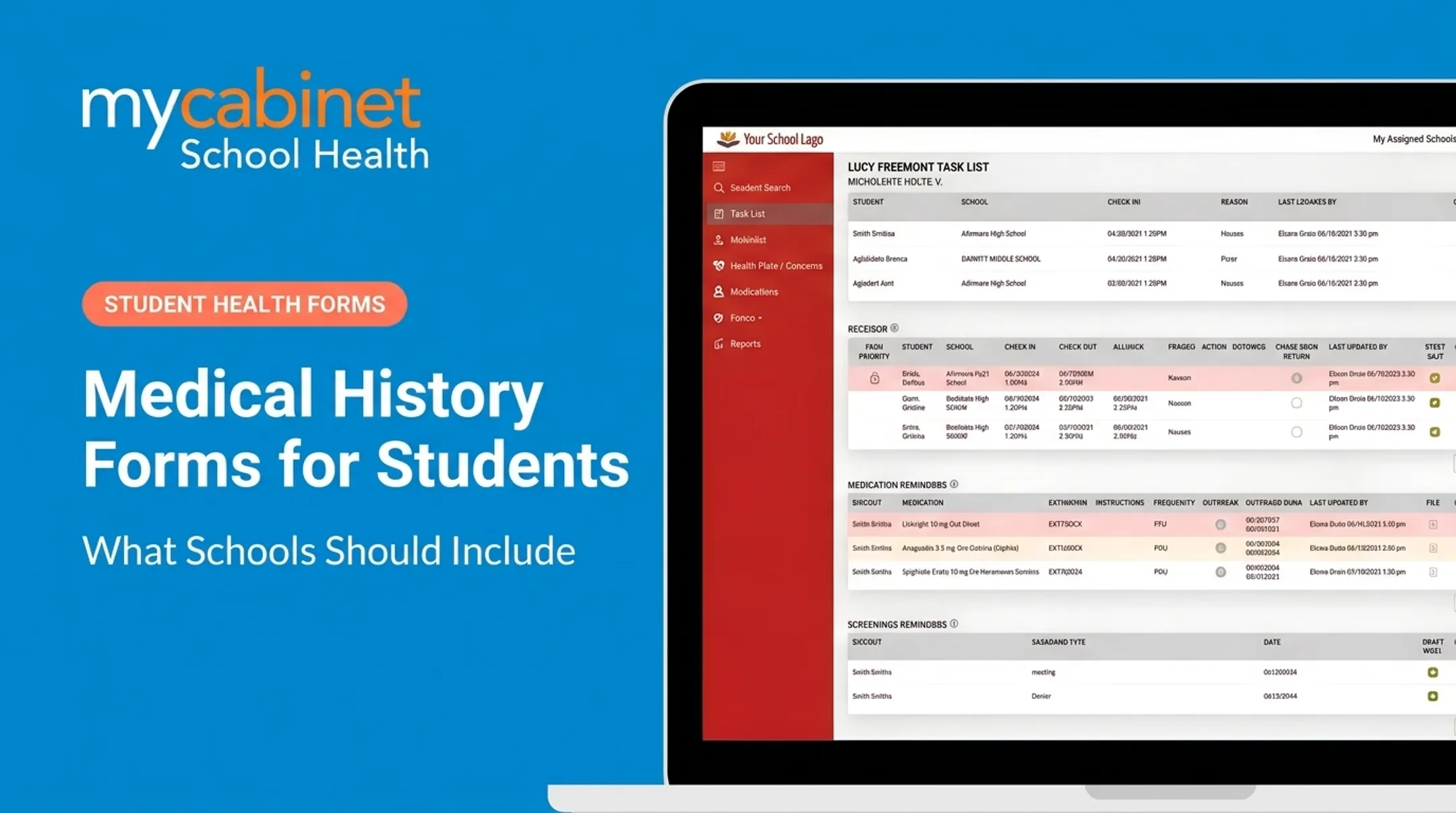
Keeping those fields current is hard on paper. MyCabinet gives nurses real-time visibility into medications, allergies, care plans, and emergency contacts in one student profile, so a plan built in August doesn't quietly go stale by March.

Compliance and Documentation Considerations
Health records in K-12 schools fall under FERPA, not HIPAA, when maintained by a FERPA-covered school. That distinction surprises a lot of administrators who assume HIPAA governs everything health-related.
Key compliance points schools should have locked down:
- Parental consent is required for plan creation and any data sharing outside the school
- Signed authorization forms should accompany medication administration and information exchange with outside providers
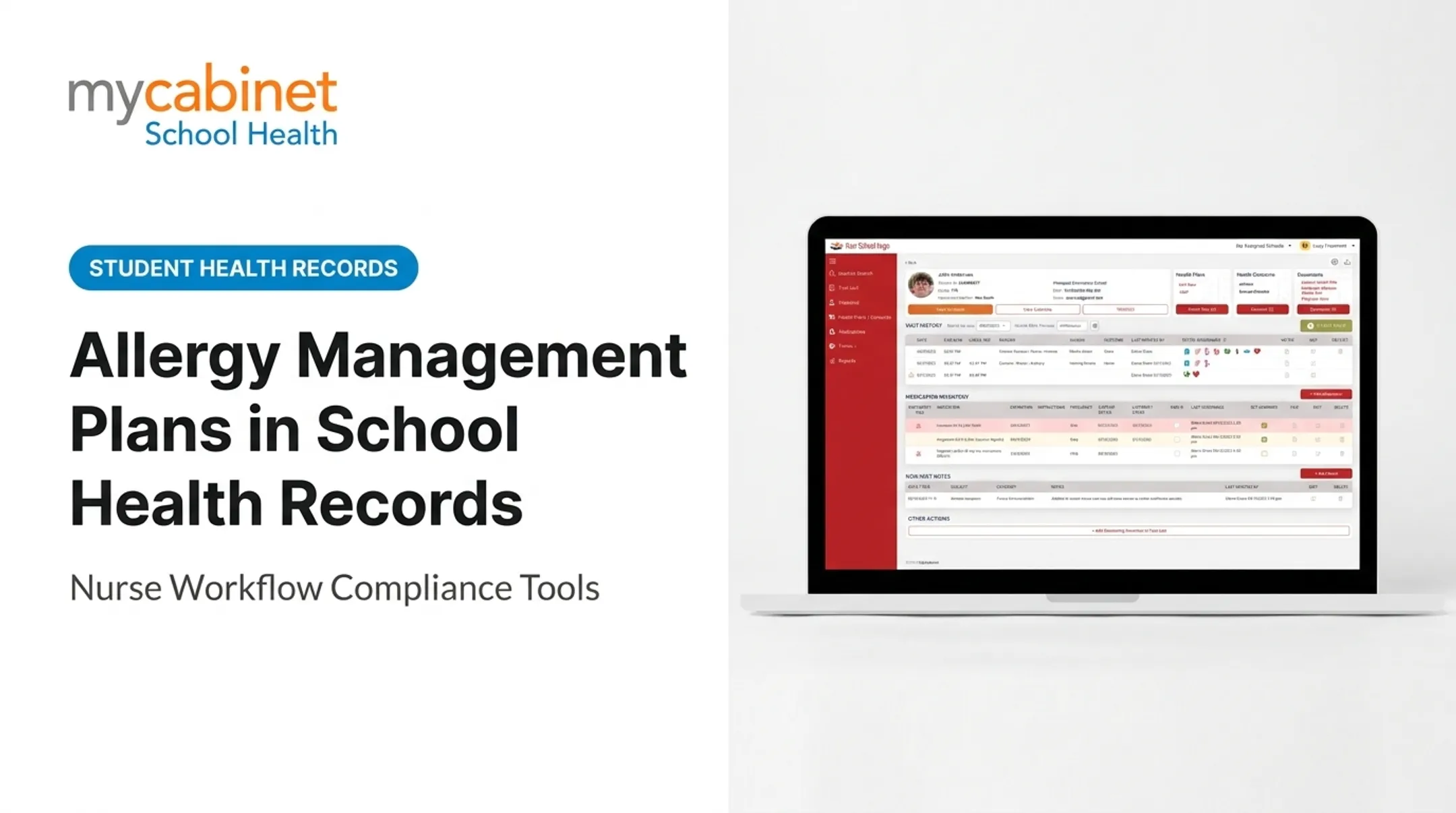
- Audit trails for clinic visits, medication doses, and plan updates protect liability—not just keep records tidy
- FERPA penalties for noncompliance can include loss of federal funding, so this isn't a low-stakes checkbox
MyCabinet supports this framework directly. The platform is HIPAA compliant, FERPA compliant, and SOC 2 Type II certified, with role-based permissions and audit trails on every visit and medication record.
How Technology Streamlines Health Management Plans
Paper-based IHPs and manual spreadsheets weren't designed for the volume of chronic conditions schools manage today. Many districts have relied on tools like Frontline or Snap Health for over a decade. Those systems received only minimal updates and left nurses working around clunky interfaces and buried records.
A connected digital system changes the day-to-day workflow:
- Centralized, searchable records replace paper folders scattered across a clinic office
- Intelligent task lists flag incomplete visits, upcoming rechecks, medication expirations, and required screenings before they're missed
- Structured visit documentation with predefined visit types keeps audit trails consistent across every nurse in a district
- Digital form collection lets parents upload medical forms and immunization records directly, with nurse review and approval, instead of faxing paperwork back and forth
MyCabinet's Nurse Portal, Parent App, and Parent Web Portal work as one connected system. Parents get controlled, one-way notifications about clinic visits and medication expirations. They gain real visibility without an open chat stream that would compromise student privacy.

Cobb County Superintendent Chris Ragsdale put it simply: MyCabinet lets parents see when their child was seen and given medication. That kind of transparency used to require a phone call and a lot of patience.
Best Practices for Schools Building or Updating Health Management Plans
A few habits separate districts with strong health-plan hygiene from ones constantly playing catch-up:
- Standardize templates district-wide so every school documents the same fields the same way
- Train staff beyond the nurse's office — teachers, coaches, and bus drivers need to recognize symptoms and know the response steps for students in their care
- Schedule reviews at the start of each school year and immediately after any diagnosis or medication change, not just whenever there's time
- Build escalation pathways for field trips and after-hours events, when the nurse may not be physically present
None of this requires a complete system overhaul overnight. Most districts start by digitizing the highest-risk plans (anaphylaxis, seizure, diabetes) and expand from there.
Frequently Asked Questions
What is a health management plan?
A health management plan is a documented, individualized plan that outlines a student's medical condition, treatment, and emergency response steps. The school nurse, parents, and the student's physician create it together.
How many sessions do you get on a chronic disease management plan?
School health management plans aren't session-based. They involve ongoing monitoring, daily medication administration, and periodic reviews rather than a fixed number of appointments.
Who is responsible for creating a student's health management plan?
The school nurse leads plan development, working directly with the parent or guardian and the student's treating physician to align school protocols with medical orders.
How often should a school health management plan be updated?
At minimum, annually. Plans should also be updated immediately after any change in diagnosis, medication, or treatment protocol.
What happens if a school doesn't have a documented plan for a student with a chronic condition?
The risks include delayed emergency response and potential noncompliance with Section 504/ADA requirements. Undocumented plans also increase institutional liability if an incident occurs.
Can parents access their child's health management plan?
Yes. MyCabinet's Parent App and Web Portal give families controlled visibility into visits and medications while keeping documentation nurse-controlled.