
Introduction
Giving a student their medication sounds simple. In practice, it's a chain of decisions that starts long before the pill touches a hand: authorization, storage, timing, and documentation all have to line up.
A 2022 study of North Carolina school districts found an average of 78 medication errors requiring medical intervention every year, with missed doses as the most common type (Best et al., 2022). Most of these errors trace back to paperwork gaps, not clinical mistakes.
Rules also shift depending on your state, district, student condition, medication type, and delegation policy. There's no single national standard, so verify your specific requirements before building a workflow.
This article walks through preparation, administration, documentation, common errors, and how digital school health systems like MyCabinet School Health support safer oversight.
Key Takeaways
- Verify authorization, medication identity, and instructions before every dose
- Document administrations, refusals, and discrepancies promptly per district policy
- Track expirations, discontinued orders, and parent communication in the record
- Only delegate administration to staff when law, training, and supervision requirements are met
- Digital platforms cut paper and manual follow-up while improving record visibility
How to Administer Medication and Document It
Medication administration in schools follows a repeatable sequence. Skip a step, and you create risk for the student and liability for the district.
Step 1: Confirm Authorization and Readiness
Before accepting any medication, verify you have:
- A current, legible provider order matching the medication label
- Parent or guardian authorization on file
- Relevant student health information and district-specific forms
- Clarity on whether the medication needs special handling, self-administration approval, or delegation sign-off
Record the receipt details at intake: date received, quantity (if your policy requires it), storage location, expiration date, and any discrepancy you spot immediately. Catching a labeling problem at intake is far easier than catching it mid-administration.
Step 2: Perform Pre-Administration Checks
Washington state's school medication guidelines require matching the student, medication, dose, route, and timing against the current order before every administration — and the label must match the medication request and record exactly (Washington OSPI, 2022).
If the label doesn't match, is missing, or can't be read: do not administer. Pause and follow your school's escalation procedure instead of guessing.
Also check:
- The student's current condition or reported symptoms
- Whether recent communication raises a reason to pause
- That storage followed locked, temperature-controlled, or controlled-substance protocols
Step 3: Administer and Record the Dose
Give the medication using the authorized route and technique. Then document immediately — not before, not hours later:
- Actual administration time (not the scheduled time)
- Dose, route, and administering staff member
- Any required observations or student response
Document refusals, vomiting, spillage, missed doses, and suspected errors in separate, prompt notes. Include who was notified and what direction they gave.
Washington's guidance requires refusals to be logged as "refused" on the medication administration record and reported to the supervising nurse and parent (Washington OSPI, 2022). Late entries or corrections should stay traceable through your system's audit process — never quietly edited.
Step 4: Reconcile, Communicate, and Follow Up
Close the loop after each administration cycle:
- Compare the medication record with remaining inventory and the current order on your required schedule — especially after dose changes, discontinuation, or staff handoffs
- Send family updates through approved channels only
- Log every outreach attempt and response with date, method, and notes tied to the student record
- Review upcoming expirations, order renewals, and planned absences before they interrupt dosing

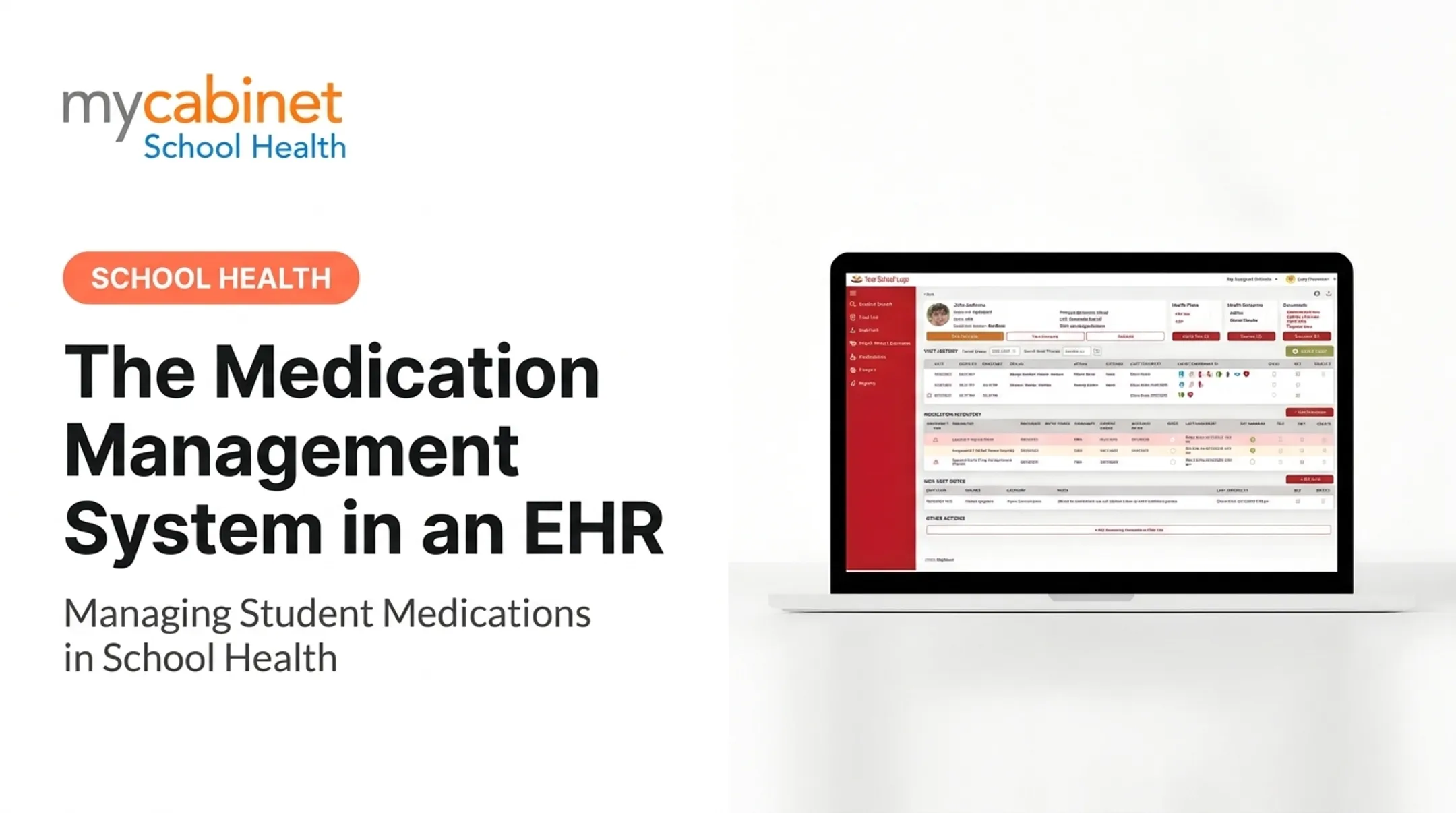
MyCabinet School Health stores outreach logs (contact date, phone or email, and notes) on the student record so follow-up does not rely on memory of a call from weeks earlier.
When Should You Use This Workflow and What You Need Before Administering Medication?
This workflow applies any time a school stores, administers, supervises, delegates, or documents student medication. That said, adapt it to the specific medication and the policy governing it.
Typical readiness requirements include:
- A current prescriber order
- Parent or guardian authorization
- Properly labeled medication
- Student-specific instructions and emergency contacts
- A documented plan for PRN or emergency use, where applicable
Situations needing extra review:
| Scenario | Why it matters |
|---|---|
| Controlled substances | Requires stricter storage, counts, and disposal tracking |
| Injectable or emergency medication (epinephrine, naloxone, seizure rescue) | Time-critical response; needs ready access, trained staff, and clear protocols |
| Self-carry or self-administration | Needs documented approval and monitoring |
| Field trips, substitutes, transfers | Handoff risk increases without clear ownership |
Before you rely on any medication-management system, confirm it can support:
- Secure storage and access controls
- Reliable timestamps and expiration tracking
- Exportable documentation and a clear audit trail
- Documented downtime procedures
One practical note: research your state's education department, nursing board, and public health guidance directly. A district in New York and a district in Vermont won't have identical requirements, and this article can't substitute for that lookup.
Key Parameters That Affect Medication-Record Accuracy
A complete medication record is only as good as its accuracy at the moment it was created. Five variables drive most accuracy problems.
Student and Medication Identity
A mismatch between student, label, order, or record is a high-risk error. Consistent identifiers and standardized intake checks reduce ambiguity. This is the single most common failure point flagged in school medication safety guidance.
Order Status and Instruction Accuracy
Dose, route, frequency, PRN instructions, and start/end dates determine whether an administration is even authorized. An outdated order can lead to inappropriate administration or duplicate records. Renewal tracking has to stay an active, scheduled task—not a once-a-term review.
Timing and Exception Documentation
The scheduled time and the actual time aren't always the same. Missed, delayed, refused, or partial doses need follow-up notes. Precise timestamps support handoffs, clinical review, and incident investigation if something goes wrong.
Expiration, Storage, and Inventory Status
Medication becomes unusable through expiration, damage, improper storage, or insufficient quantity. MyCabinet School Health's expiration alerts notify parents when school-stored medication is approaching its expiration date and share the approximate date so replacement is planned before the supply lapses.
Access, Privacy, and Auditability
Student medication information is sensitive education and health data. It should be available to authorized users, not broadly exposed. NASN's position is direct: documentation must be timely, accurate, legible, complete, retrievable, and securely protected (NASN, 2024).
MyCabinet School Health applies role-based permissions so parents see only their own child's information, and school staff access only what they need for that student's care. Always verify your applicable FERPA, HIPAA, and state privacy requirements for your specific setting; this varies by district.

Common Mistakes and Troubleshooting Issues
Most medication errors in schools come from process breakdowns: missing forms, mismatched orders, and incomplete records.
Common failure points and how to respond:
- Incomplete authorization paperwork: Place the medication on hold, name the missing item, document your outreach, and escalate per policy. Do not rely on a verbal promise to bring the form later.
- Medication and order mismatch: Pause and check the label against the current order. Contact the prescriber or pharmacy for clarification, notify the parent, and document the incident if applicable.
- Expired, damaged, or improperly stored medication: Secure it separately, notify the appropriate parties, and document the resolution before requesting a replacement.
- Missed, delayed, refused, or incorrectly recorded dose: Document what actually happened, assess whether clinical guidance is needed, and notify the right people. Never backdate or silently edit a record; that is how audit trails become useless.
- Staff handoff or system downtime: Keep a paper or offline contingency ready, then reconcile it into the official record and confirm no duplicate entries exist.
- Inconsistent parent communication: Use approved channels only, log every attempt and response, and set reminders for unresolved renewals rather than trusting memory.
A U.S. Government Accountability Office review noted that inadequate health documentation increases institutional risk and complicates compliance oversight in public systems. These small gaps carry real consequences.
Alternatives to Paper-Based Medication Recordkeeping
Paper logs, spreadsheets, email threads, and standalone calendars still exist in plenty of school health offices. They work, until they don't. Expiration tracking, version control, handoffs, and audit trails all get harder to manage as the paper stack grows.
Centralized School Health EHR
A purpose-built platform connects student profiles, medication orders, administration records, expiration tasks, digital forms, and parent communication in one place. NASN identifies electronic health records as the most efficient and secure method for managing student health information. It cautions that a general academic-management system isn't a substitute. Those systems typically lack standardized nursing documentation and confidentiality protections (NASN, 2024).
Trade-offs to plan for include:
- Implementation time and staff training
- Role configuration across nursing and admin users
- Confirming the system meets your district's legal requirements
MyCabinet School Health
MyCabinet School Health is built around nurse-centered medication oversight for K–12 schools and districts. Its features include:
- Medication expiration tracking with parent-facing alerts
- Dosage and frequency visibility tied to the student's health profile
- Outreach logging that records contact date, method, and notes
- Digital parent form collection with nurse review and approval before attachment to the student record
- Role-based permissions, audit trails, and SOC 2 Type II, HIPAA, and FERPA compliance
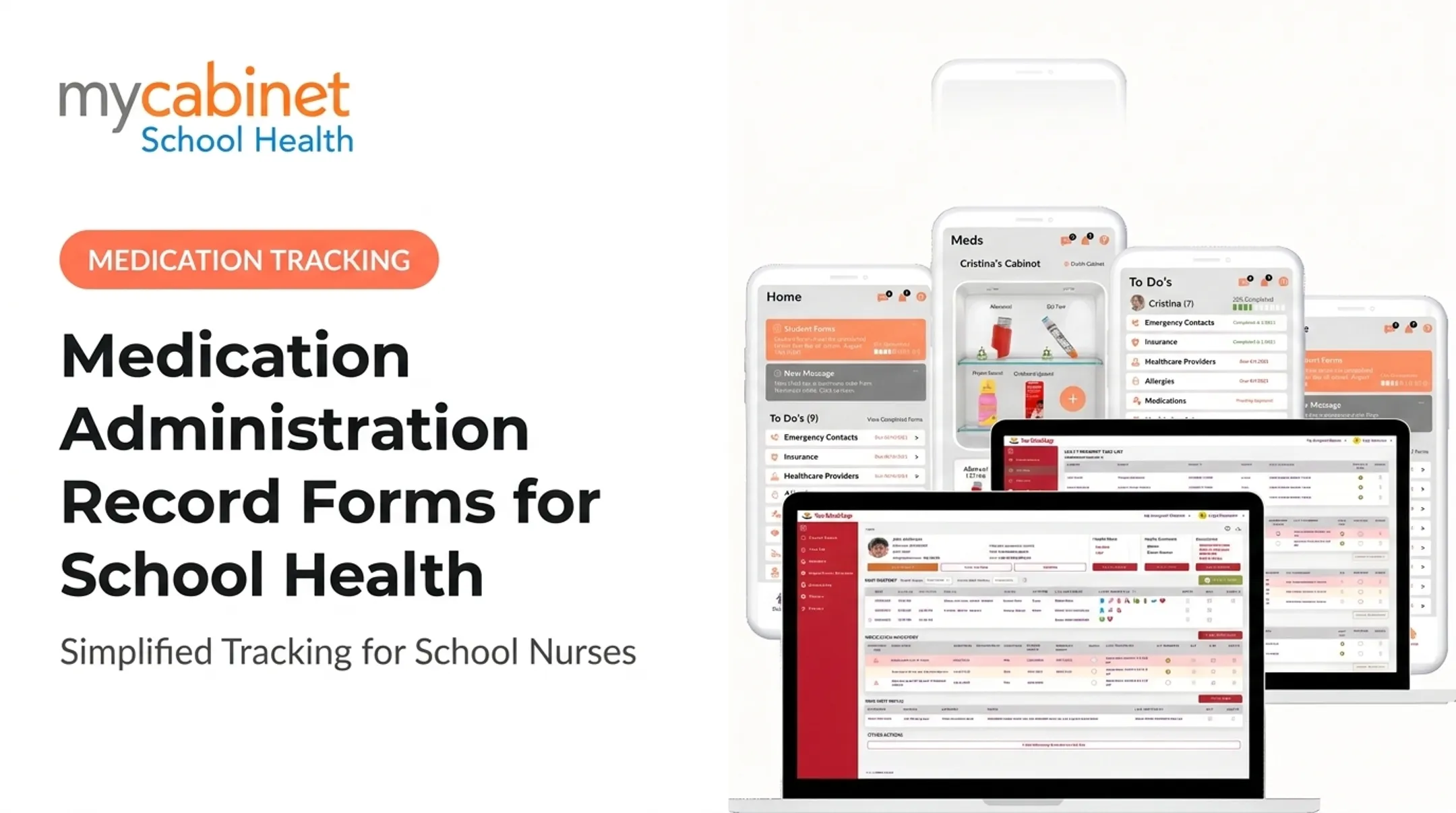
The Nurse Portal organizes incomplete visits, medication reminders, and expirations into task lists, so nothing depends on someone remembering to check a binder. The Parent App gives families a view of active medications and expiration alerts. Medication updates still go through the school clinic directly. The software supports the workflow; it doesn't replace nurse judgment or district procedure.
Hybrid Workflow
Some situations still need temporary paper or offline processes: field trips, emergencies, or system outages. That's fine, as long as someone owns reconciliation with a clear deadline. The risk is duplicate or conflicting records if nobody's assigned to merge the paper trail back into the official one.

Conclusion
Administering medication at school covers more than the dose itself. Authorization, identity checks, secure storage, administration, exception handling, communication, and ongoing record maintenance all connect as one workflow.
Most preventable problems stem from a few recurring gaps:
- Incomplete preparation before the school day
- Outdated orders or unclear handoffs
- Weak expiration tracking
- Documentation that doesn't match what actually happened
A reliable process balances clinical safety, privacy, compliance, and day-to-day visibility for nurses, administrators, and families.
Frequently Asked Questions
Are school nurses allowed to give medication?
Yes, generally within their licensure, provider orders, parent authorization, state law, and district policy. Exact requirements vary by state and by medication type, so check your jurisdiction's rules.
Can teachers administer medication to students?
In some jurisdictions and districts, yes — but only under defined authorization, training, delegation, and supervision requirements set by the school nurse and applicable law.
Can student nurses administer medication?
It depends on clinical placement rules, supervision level, and institutional policy. Student nurses generally shouldn't act independently without direct authorization and oversight.
What information should be included in a student medication record?
Student identifiers, medication name and strength, dose, route, schedule or PRN instructions, authorization dates, administration details, exceptions, notifications, and required signatures.
How should a school handle expired or discontinued medication?
Secure it separately, document the situation, notify the parent or guardian, and confirm no active order remains before returning or disposing of it per district policy.