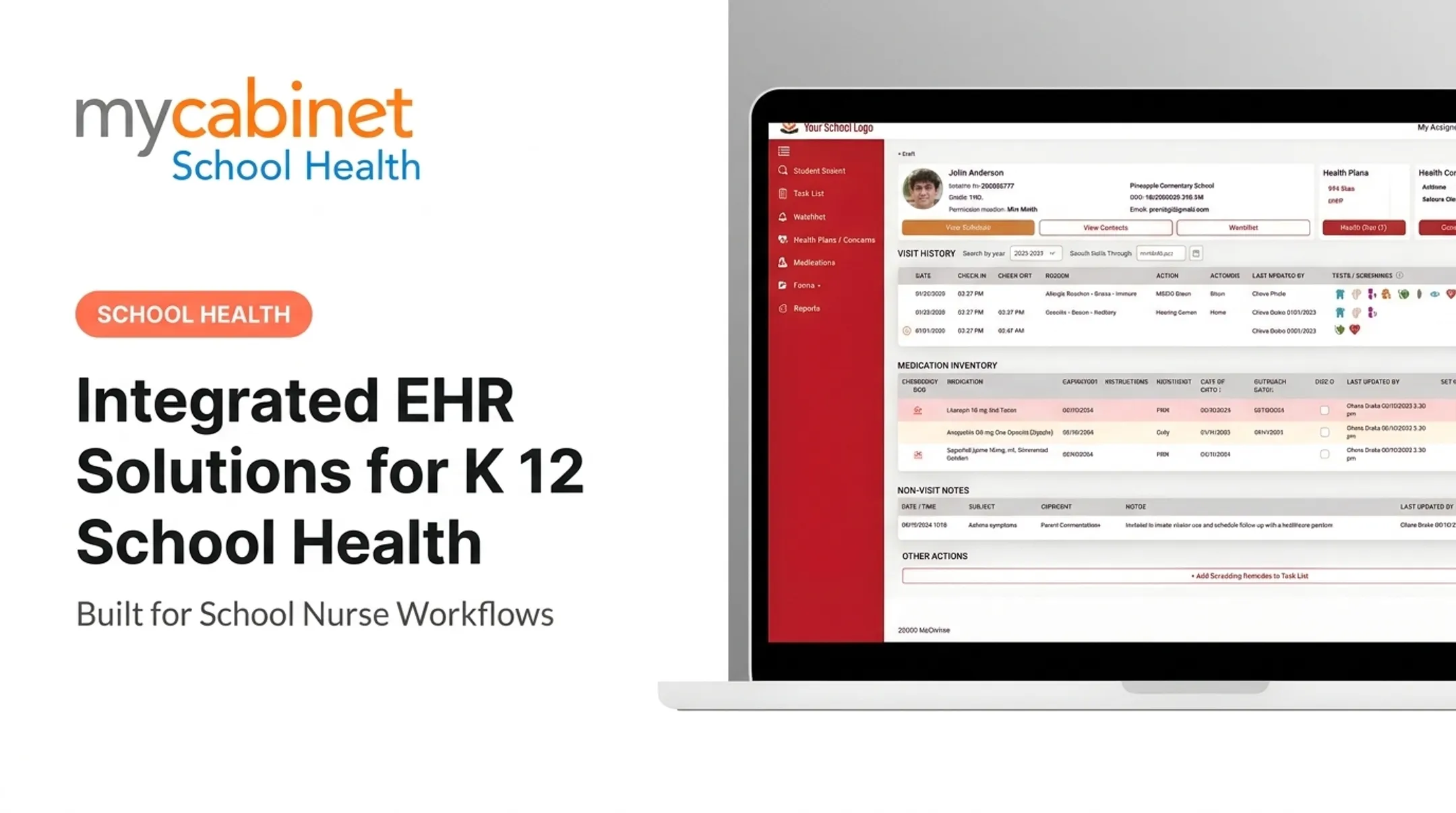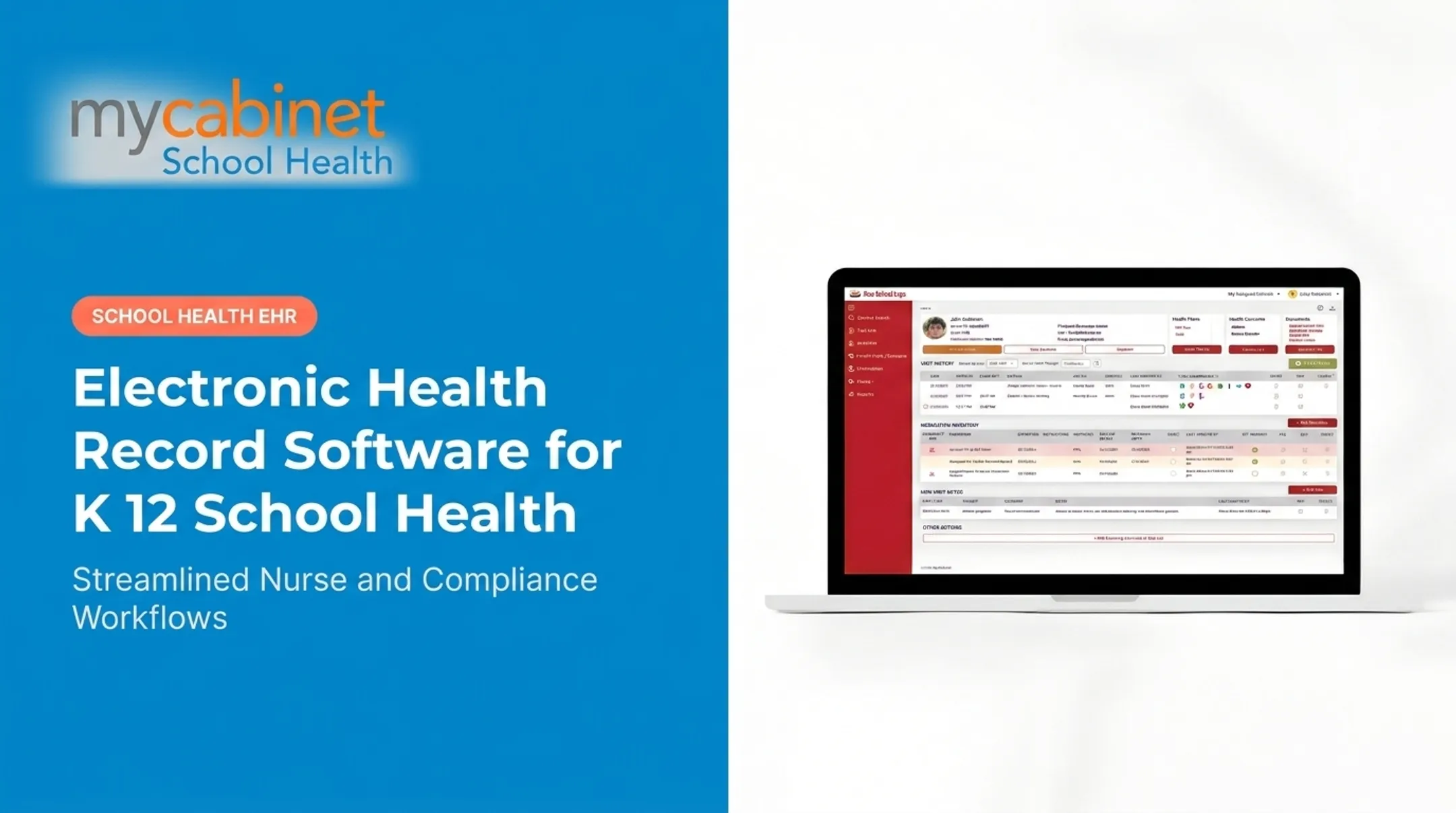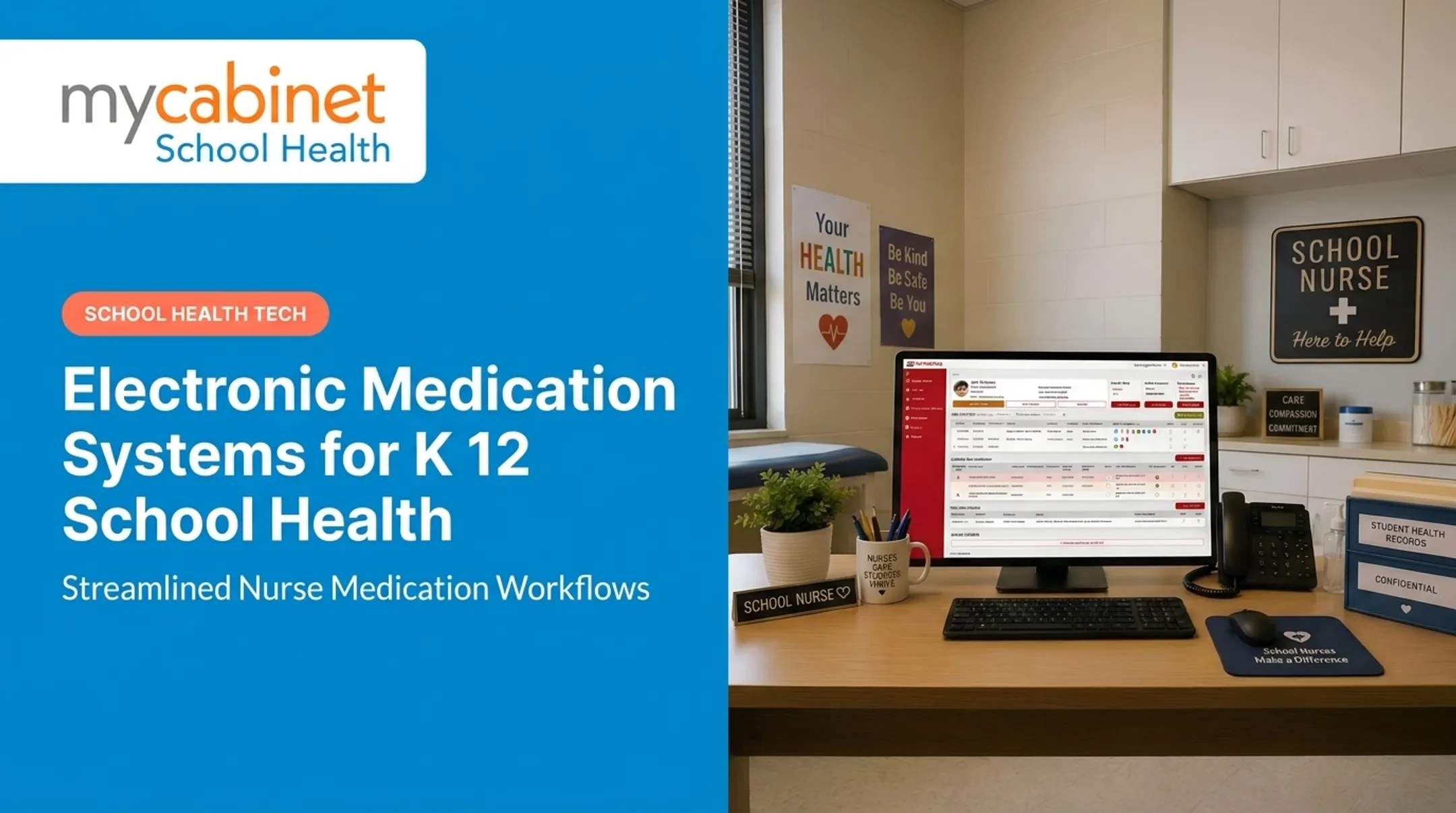

Choosing the wrong EMR isn't a minor inconvenience. It affects nurse workload, medication safety, compliance with FERPA and HIPAA, and how much parents trust the school with their kid's health information. This guide breaks down exactly what K-12 decision-makers should compare before picking a school health EMR.
Key Takeaways
- School health EMRs must center on nurse workflows, not clinical chart storage alone
- Compare workflow design, parent communication, medication tracking, compliance, and SIS integration
- The right platform reduces admin burden and improves visibility for nurses, districts, and families
- MyCabinet is purpose-built for school health, combining a nurse portal, parent app, and web portal
What Is Electronic Medical Records Software for K-12 School Health?
Electronic medical records software for K-12 school health is a digital system that lets school nurses document clinic visits, manage medications, and securely share health information with parents and district administrators.
It is not a hospital EHR or a generic student information system (SIS):
- Clinical EHRs (hospitals and physician offices) focus on billing, diagnosis coding, and health-system interoperability, not the fast, walk-in pace of a school clinic.
- Student information systems track academics (grades, attendance, schedules). They are not built for medication logs or health-plan documentation.
School health EMRs are purpose-built for the daily rhythm of a school clinic.
Core Components of a School Health EMR
A school health EMR typically includes:
- Visit documentation and task management: Structured visit types and intelligent task lists flag incomplete visits, rechecks, and expiring records so nurses are not relying on memory mid-day.
- Medication management: Dosage and frequency tracking, expiration alerts, and controlled-substance logging help catch an expired EpiPen before an emergency, not during one.
- Parent/guardian communication tools: Controlled, one-way notifications and digital form collection reduce phone tag and email chains.
- Compliance and access controls: Role-based access, audit trails, and FERPA/HIPAA-aligned data handling protect student records and keep the district audit-ready.

Why School Districts Rely on EMR Software
Districts adopt EMRs because the payoff shows up in daily operations:
- Less paperwork and administrative burden
- Safer medication handling through automated tracking
- Stronger parent engagement without constant phone calls
- Real-time visibility into student health across a campus or district
- More consistent compliance practices district-wide
A 2025 peer-reviewed time-use study found that non-direct-interaction work (administration, meetings, planning) consumed 64% of school nurses' recorded time, with only 36% spent in direct interaction with students and families.
That study was conducted in Norwegian schools, so it is not a U.S.-specific figure. Still, it matches what most American school nurses already know: paperwork eats the day that should belong to students.

What to Consider When Choosing the Best School Health EMR
K-12 buyers can't evaluate an EMR the way a clinical practice would. Nurse usability, family communication, and district-wide compliance carry different weight here. Score vendors on outcomes you can measure: nurse time saved, fewer medication errors, and faster onboarding.
Nurse Workflow Design
Static charting systems make nurses hunt for what needs attention. Task-list-driven design flips that: the system tells the nurse what's outstanding.
KPI to watch: fewer incomplete visits, faster clinic turnaround during busy periods like flu season or the first weeks of school.
Medication Management and Safety Features
Look for built-in safety controls, not side processes:
- Expiration tracking for stocked medications
- Clear dosage and frequency visibility
- Outreach logging when a parent needs a refill or renewal
Without these, tracking falls back on sticky notes and memory.
KPI to watch: reduction in missed or expired medication incidents.
Parent and Family Communication
A dedicated parent app or web portal beats email every time. Parents want to know when their child visited the clinic and what medication was given, without calling the front office.
KPI to watch: reduction in manual parent follow-up time for nurses and admin staff.
Compliance and Data Security
Non-negotiables here include:
- FERPA alignment (student health records held by the school are education records, not HIPAA records, per HHS guidance)
- SOC 2 certification for data security practices
- Role-based access controls with audit trails
KPI to watch: audit readiness and reduced compliance risk during state or district reviews.
Digital Form Collection and Documentation
Paper packets at the start of the school year are a bottleneck. In-system parent uploads with nurse review and approval eliminate the pile of forms sitting on a desk in August.
KPI to watch: faster onboarding of health forms at the start of the school year.
Integration and Scalability Across a District
A platform that works for one school needs to scale across dozens of campuses without fragmenting records. Look for SIS integration and cloud-based architecture that doesn't require local installation.

Large districts make that requirement concrete. Cobb County School District, which serves over 105,000 students across 112 schools, uses MyCabinet.
Superintendent Chris Ragsdale told the school board the platform "digitized and makes documentation easier." He noted parents could submit health paperwork electronically and see when their child was seen and given medication, calling it "a win for the parents and a win for the district."
KPI to watch: consistency of health records as a district adds schools or grows enrollment.
How MyCabinet School Health Can Help
MyCabinet was built around school nurse workflows, not adapted from a clinical documentation system. That distinction matters for anyone comparing it to generic EMR/EHR vendors.
Here's what sets it apart:
- Workflow-first design: Intelligent task lists surface incomplete visits, rechecks, medication reminders, expirations, and screenings so nurses know what needs attention
- Connected system: Nurse Portal, Parent App, and Parent Web Portal work together; MyCabinet is the only school health platform with a dedicated parent app
- Controlled parent notifications: One-way alerts for clinic visits and medication expirations, without unrestricted two-way messaging
- Digital health-form collection: Parent uploads and nurse review live in the same system
- Compliance and credentials: FERPA/HIPAA compliant, SOC 2 certified, and WBENC-certified women-owned

Pricing is customized to district needs and available on request. MyCabinet does not publish a flat per-student rate because the right setup depends on district size and selected features.
Conclusion
Choose the EMR that matches your district's nurse workflows and how families want to stay informed. A long feature list means little if daily clinic work still feels harder than it should.
Student health records carry higher stakes than a typical software purchase. Medication safety, FERPA and HIPAA compliance, and parent trust are all on the line. Once you've selected a platform, review performance regularly and keep asking your nurses what's working and what isn't.
Frequently Asked Questions
What are the top 10 electronic medical record systems?
Hospital and clinic EHRs such as Epic, Oracle Health, athenahealth, and eClinicalWorks dominate general market lists. They are not built for school health. K-12 buyers should compare purpose-built platforms like MyCabinet instead.
What is the difference between an EMR and an EHR for schools?
An EMR is a digital record kept within one institution; an EHR is designed for broader sharing across providers. In school health the labels are often used interchangeably. What matters is FERPA-aligned, nurse-specific workflows.
Do school health EMRs need to be FERPA compliant?
Yes. Student health records maintained by school staff are considered education records under FERPA, so any EMR handling that data needs to align with FERPA requirements in addition to HIPAA where it applies.
Can parents access their child's school health records?
Many school health platforms offer parent apps or web portals so families can view clinic visits, medications, and health forms without calling the school.
How much does a K-12 school health EMR cost?
Pricing varies by district size, number of schools, and selected features, and most vendors offer custom quotes rather than published rates. Districts should request all-in cost estimates that include training, support, and implementation.
What features should a school nurse prioritize in an EMR?
Prioritize task-list-driven workflows, medication tracking with expiration alerts, and built-in parent communication tools. Those features cut manual follow-up and free nurse time for students.