
This scenario plays out in health offices across the country every day. Many school nurses juggle paper forms, spreadsheets, and outdated files just to answer one question: is it safe to give this medication right now?
A medication profile solves that problem. It's not just a list of prescriptions. It's a current, structured view of what a student may receive at school, how it should be administered, who authorized it, and when the instructions need review.
This article breaks down what a medication profile is, what it should contain, why accuracy matters for student safety, and how schools can keep these records reliable throughout the year.
Key Takeaways
- Nurses get an up-to-date, actionable view of approved medication use during the school day
- Core fields put dosage, timing, authorization, prescriber and guardian contacts, and history in one place
- Regular review, expiration tracking, and role-based access reduce school medication risk
- Profiles guide care decisions; medication administration records document doses actually given
What Is a Medication Profile in K-12 School Health Records?
A medication profile is a centralized record of a student's current medications, approved administration instructions, relevant safety information, and authorization status. It's built specifically for the school setting, not adapted from a hospital chart or pharmacy printout.
That distinction matters. A home medication list tells you what a family keeps in the bathroom cabinet. A pharmacy profile tracks fills and refills. Neither addresses what school staff actually need:
- Who is authorized to administer the medication
- During which hours it may be given
- Under what storage conditions it must be kept
- Which student-specific procedures apply
Medication Profile vs. Medication Administration Record
These terms get used interchangeably, but they answer different questions.
| Record Type | What It Answers | When It's Used |
|---|---|---|
| Medication Profile | What is authorized, and under what conditions? | Before administration, for decision-making |
| Medication Administration Record (MAR) | What was actually given, when, and by whom? | At the moment of administration and after |
| Medication Safety Profile | What allergies, precautions, or limits apply? | Layered into both, for risk awareness |
A profile is a living record. It has to reflect:
- Starts, stops, and dose changes
- Substitutions and expired orders
- Updated instructions from a parent or prescriber It should also represent both scheduled medications and as-needed or emergency medications, as long as those are properly authorized and documented.
Required fields, retention timelines, and authorization procedures vary by district policy and state requirement. School nurses should confirm local rules rather than treat any single guideline as universal. This article is informational, not legal or clinical advice.
What Information Should a Student Medication Profile Include?
A well-built profile lets a nurse answer five questions in seconds: what is the medication, why and when is it given, who authorized it, what precautions apply, and what needs attention today?
Start with accurate student identification. Using approved identifiers to connect the medication record to the correct health file prevents duplicate entries and mix-ups between similarly named students.
Medication Details
- Medication name, strength, form, and route
- Dosage, frequency, and scheduled time or trigger condition
- Classification as routine, as-needed, or emergency medication
- Storage requirements, handling instructions, and measurement directions
- Food-related or other prescriber-approved administration notes
Authorization and Clinical Context
- Prescriber name and contact information
- Parent or guardian authorization, including signature and date
- Order date, start date, end date, and renewal requirements
- School-specific consent documentation
- Allergies, contraindications, and emergency instructions, recorded only when supported by authorized documentation
Accountability and Documentation
- Medication source or pharmacy information, when relevant
- Receipt and quantity details, per district policy
- Identity of staff authorized to administer or supervise the medication
- Links to administration records, missed-dose or refusal notes, and incident reports
- Communication history with parents and prescribers
Status and Review Controls
Every profile should show whether a medication is active, paused, discontinued, expired, or awaiting clarification.
Michigan's school medication guideline calls for label information that includes the student's name, dose, ordering physician, and expiration date on every container. It requires parental consent and a signed order for each medication and new instruction. Michigan's model school medication guideline also recommends renewing orders annually or more often if a student's needs change.
Effective dates, expiration alerts, and change history keep staff from relying on obsolete instructions. A paper file or static spreadsheet can't flag those changes on its own.

Why Accurate Medication Profiles Matter for School Medication Safety
An accurate profile helps a nurse verify the right student, medication, dose, route, and timing before administration. It supports clinical judgment and district procedure; it does not replace them.
Incomplete or outdated profiles create specific, avoidable risks:
- A discontinued medication that's still marked active
- Missing or expired authorization for a medication still being given
- Dosage changes that never made it into the record
- Conflicting instructions from two different updates
- Incomplete guidance for a medication needed in an urgent situation
The American Academy of Pediatrics addresses this directly in its 2024 policy statement. Standardization decreases the likelihood of medication error, and medication documentation should be reviewed regularly, with access limited to authorized personnel.
The AAP's policy on safe medication administration in schools also calls for documenting medication errors, lost doses, and wasted medication so patterns can be caught and corrected.
When Reconciliation Should Happen
Medication reconciliation isn't a once-a-year task. It should happen when a student:
- Enrolls in a new school
- Returns from a medical change or hospitalization
- Starts a new medication or dosage
- Transfers between schools within the same district
- Begins a new school year
Access, Audit Trails, and Continuity
Profiles work best when access is limited to people with a legitimate need to know:
- School nurses
- Authorized school staff
- The student's family
Federal guidance clarifies where privacy rules apply. The joint HHS and U.S. Department of Education guidance on FERPA and HIPAA explains that HIPAA generally doesn't apply to student health records maintained solely as FERPA education records. Most public school health data therefore falls under FERPA's access and disclosure rules.
Structured documentation and audit trails show when information was submitted, reviewed, approved, or changed. That visibility matters when a district investigates a discrepancy or traces how an instruction was updated.
When dosage, frequency, outreach, and expiration data live on the same student health profile—as in MyCabinet School Health—nurses can follow the record forward instead of rebuilding history from separate files.
How Schools Can Maintain Medication Profile Accuracy
Accurate profiles don't happen by accident. They require a workflow, not just good intentions.
A standardized intake and review process should cover:
- Parent or guardian submission of the medication request and consent
- Prescriber documentation, including the signed order
- Nurse review and approval before administration begins
- Secure storage of the record and any physical medication
- Follow-up communication when information is missing or unclear

Reviews shouldn't wait for a fixed calendar date alone. Schedule them at policy-defined intervals, and whenever a medication is started, stopped, changed, refused, recalled, expired, or no longer authorized.
Tracking What's About to Expire
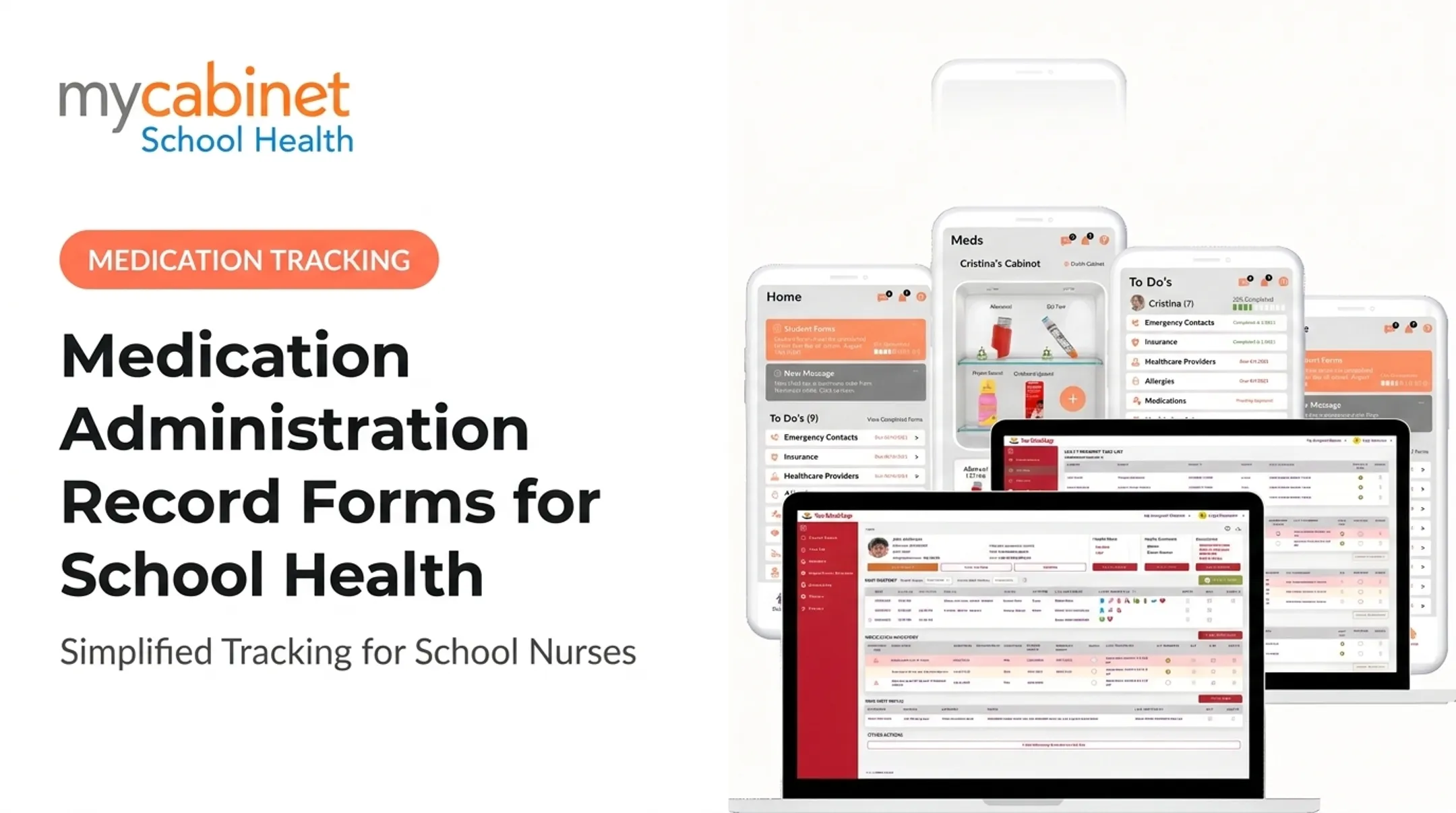
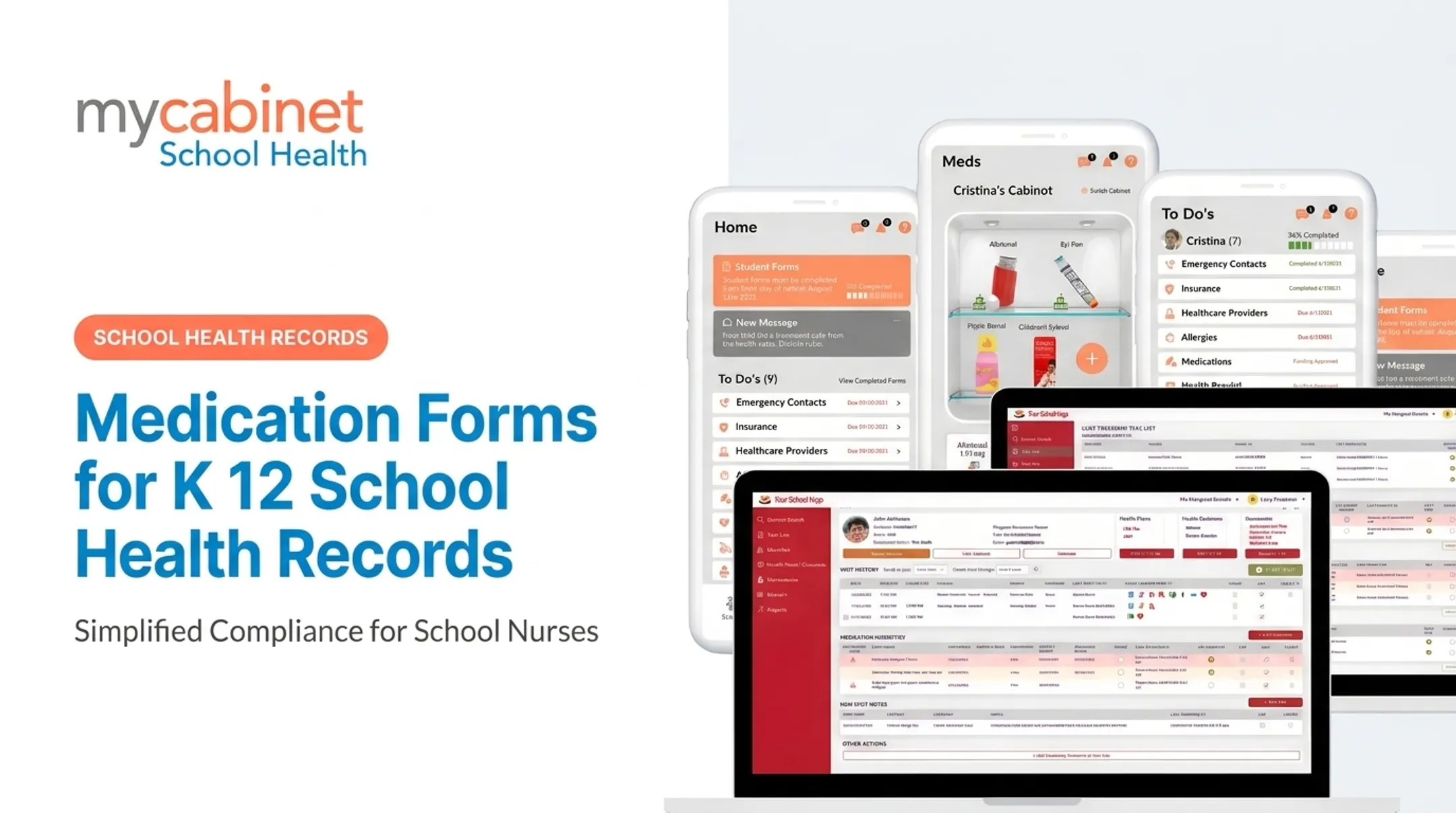
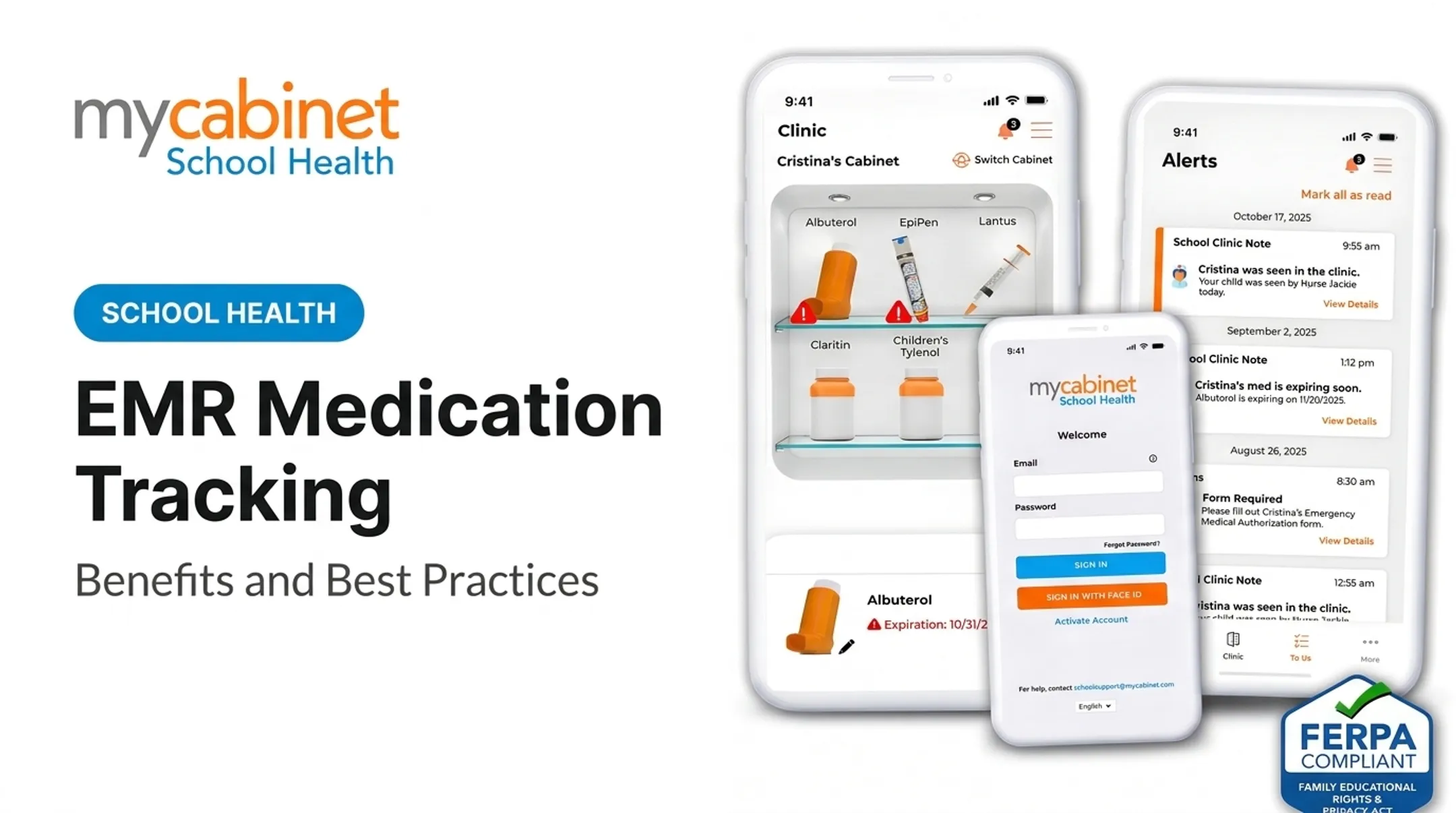
Expiration and task tracking flag the details that get missed in manual systems: upcoming renewals, incomplete forms, unconfirmed changes, and medications needing nurse attention. MyCabinet School Health supports this through task lists that surface medication reminders and expirations, using color-coded visual cues so nurses can triage quickly instead of scanning through binders.
The platform also lets parents view active medications their child has stored at school and see when a medication is close to expiring. Parents can't edit or add medications directly in the app; updates still route through the school clinic, keeping the nurse in control of what's authorized.
Privacy and Security Considerations
Accuracy also depends on limiting who can see and change medication records. Core safeguards include:
- Role-based access limiting information to staff with a legitimate need
- Controlled, one-way parent notifications rather than open messaging
- Secure document sharing for forms and authorizations
- Regular staff training on documentation procedures
- Periodic access reviews to confirm permissions stay current
Schools should verify these practices against district policy, FERPA, and applicable state requirements, since specifics can differ by state and by district.
Frequently Asked Questions
What is a medication profile?
A medication profile is a current, structured record of a student's medications, administration instructions, authorization, safety information, and status within the school health setting. It's what nurses check before giving a dose.
What are the components of a medication profile?
Core components include student identification, medication and dosage details, timing and route, authorization and prescriber information, effective dates, storage instructions, current status, and review history.
What is a medication safety profile?
A medication safety profile organizes information relevant to safer decisions, such as allergies, precautions, administration limits, and emergency guidance, based on authorized health documentation rather than general assumptions.
How often should a student's medication profile be updated?
It should be updated whenever medication or authorization details change, and reviewed according to district policy and school-year renewal procedures. Many districts also require review at each new school year.
What is the difference between a medication profile and a medication administration record?
The profile holds the medication's current instructions and status. The medication administration record documents the specific doses given, missed, or refused, tied to the profile's authorized instructions.