
This is the daily reality for school nurses, and it's exactly why the Medication Administration Record (MAR) matters so much. A national survey of over 6,000 school nurses found that 5.6% of children received medication at school on a typical day, with 3.3% receiving ADHD medication alone (Journal of School Nursing, 2018). Multiply that across a full caseload, and the margin for error shrinks fast.
This guide covers what a MAR is, what it must include, how to document it correctly, and how schools are modernizing the process—plus answers to the questions nurses and parents ask most.
Key Takeaways
- A MAR is a legal, student-specific record of every medication dose administered
- Required fields cover student info, medication details, dosage, timing, route, and administrator signature
- Digital MARs reduce missed doses, illegible entries, and delayed parent updates
- School MARs also require OTC logging, parental consent, and physician-order coordination
What Is a Medication Administration Record (MAR)?
A MAR is a documented, dated record showing exactly what medication was given, to whom, by whom, and when. It is the primary evidence that a medication order was followed correctly, not optional paperwork.
In school settings, the MAR tracks medications given by nurses or trained staff during school hours, separate from what happens at home. Colorado's guidelines specifically describe medication logs as permanent records that provide legal protection to the person administering medication (Colorado Department of Education).
That legal weight is real. MARs get pulled during:
- District health audits
- Compliance reviews
- Disputes over whether medication was given (or missed)
Paper vs. Electronic MARs
Schools can use paper or electronic MARs (eMARs); state guidance generally permits both. Adoption varies by district.
The National Association of School Nurses recommends that school health records be timely, accurate, legible, complete, retrievable, and securely protected (NASN Position Statement, 2024). Paper logs can meet that bar, but only if nothing gets lost, smudged, or forgotten in a drawer.
In schools, a MAR must also align with parental consent and district health policy, not only the physician's order. A complete medication order means nothing if the consent form never reached the nurse's office.
What Must Be Recorded on a Medication Administration Record?
Every MAR entry needs to answer the same core questions, no matter the state or district. At minimum, that means:
- Student identifying information — name, date of birth, allergies, student ID
- Medication details — name, strength, form, and prescribing provider
- Dosage and route — oral, topical, inhaled, injected, etc.
- Timing — date, scheduled time, and actual administration time
- Staff signature or initials — who gave the medication
- Notes — missed doses, refusals, side effects, or the reason for a PRN (as-needed) dose

Fields alone are not enough—how and when you document them matters too. Minnesota Department of Health guidance, for example, prohibits erasures or correction fluid on paper MARs and requires documentation right after administration, not hours later (Minnesota Department of Health).
That timing rule is not optional. A dose given at 10:15 AM and logged at 2:00 PM is a gap auditors, parents, and district lawyers will all notice.
How Do You Record Medication Administration on a MAR? (3 MAR Checks)
The "three checks" process is the backbone of safe administration:
- Check the label when retrieving the medication from storage
- Check the label again before preparing the dose
- Check the label a final time immediately before giving it to the student
Layered on top of these checks are the medication administration rights. The American Academy of Pediatrics' 2024 school policy identifies six (AAP Pediatrics, 2024):
- Right student
- Right medication
- Right dose
- Right route
- Right time
- Right documentation

Iowa's school nurse toolkit expands this into a 10-rights model that adds refusal, assessment, education, and evaluation. Of those rights, documentation is what turns a correct dose into a defensible MAR entry.
Document Immediately, Not Later
Document the moment you administer—not before, and not at the end of your shift. Waiting creates two risks: you forget details, or you accidentally chart a dose that was never actually given because a student was absent or refused.
This gets genuinely hard when three students need meds during the same 10-minute passing period. That's where structured task lists earn their keep, letting a nurse see everything due at once instead of relying on memory or sticky notes.
Types of MARs and Special Considerations for Schools
Types of Medication Administration Records
MARs generally fall into three categories:
- Inpatient MARs — used in hospitals, tied to continuous physician oversight
- Outpatient MARs — used in clinics or home care settings
- Electronic MARs (eMAR) — digital versions of either, often built into an EHR

School MARs are a hybrid of outpatient records with one extra demand: coordination between a physician's order, a parent's authorization, and a school nurse who wrote neither. That three-way handoff is where paperwork most often breaks down.
Do OTC Medications Need to Be Documented?
Yes—and this trips up more districts than you'd expect. Over-the-counter medications like ibuprofen or antihistamines require the same documentation rigor as prescription drugs, including:
- Parental authorization on file
- Dosage and time logged on the MAR
- Same signature/initial requirement as any prescription dose
Ohio requires districts to adopt formal OTC policies that state whether parent or guardian permission is required (Ohio Department of Education). Skipping OTC documentation because "it's just Tylenol" creates compliance and liability exposure for the district, not only the individual nurse.
How Long Should a MAR Be Kept, and How Can Schools Obtain One?
Retention Periods by State
Retention rules vary significantly by state, so there's no single national answer. Confirm your state and district policy before setting a schedule—don't assume a neighboring state's rule applies.
| State | Retention Period |
|---|---|
| Colorado | 3 years from log date (or district policy) |
| Texas | 3 years for medication/treatment logs |
| New York | 6 years for medication inventory records |
Electronic systems make long-term storage simpler than paper logs that can go missing across years of student turnover.
How Schools Obtain a MAR
Schools typically get a MAR template in one of three ways:
- Health record vendor templates included with existing systems
- District-provided templates from the health office or nursing leadership
- Forms built into a school health EHR platform with medication tracking
Why Schools Are Moving to Digital MARs
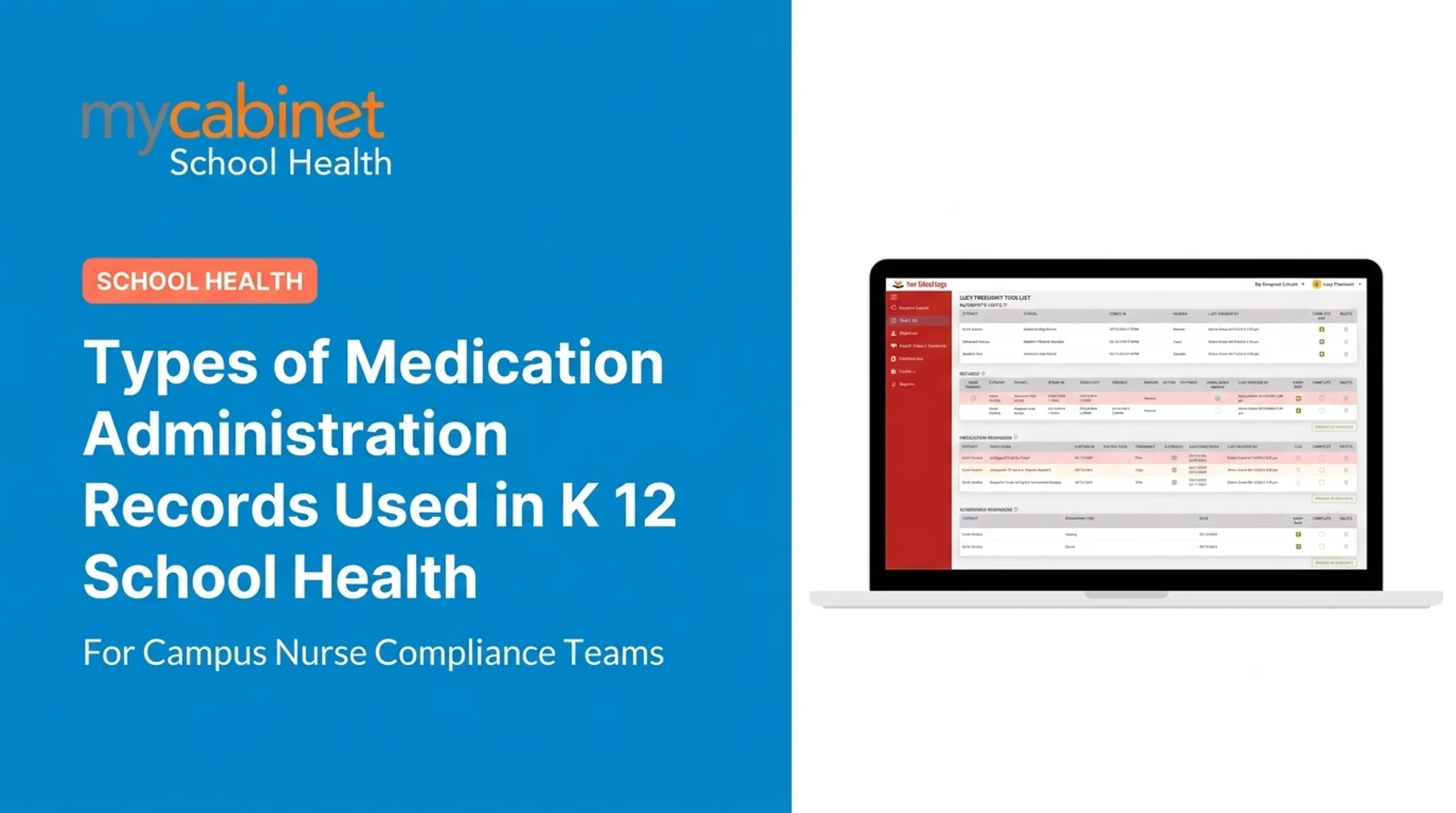
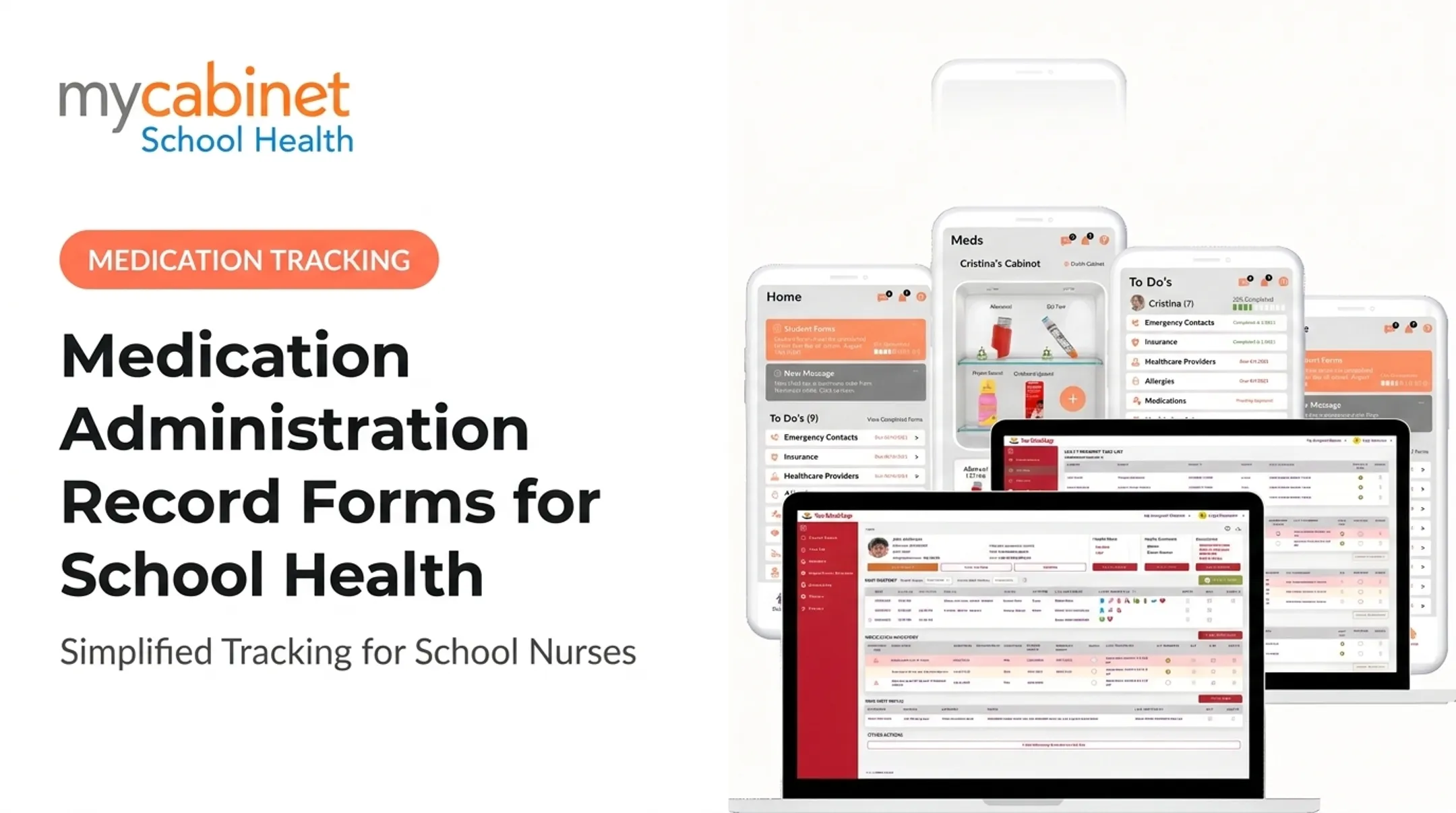
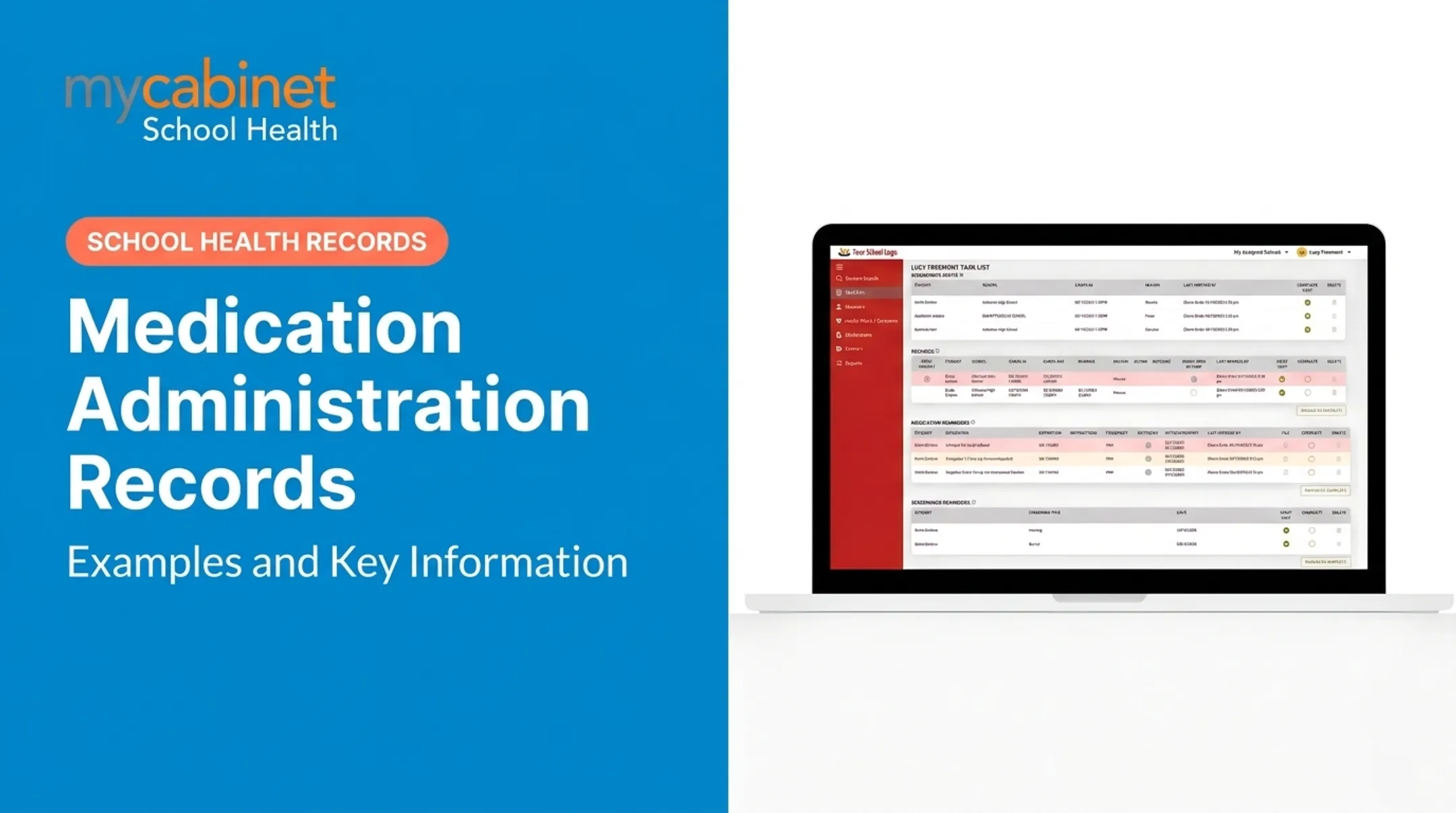
Paper MAR tracking has predictable failure points: illegible handwriting, missed doses during busy periods, and parent notifications that lag by hours or days. When a nurse is juggling 40+ students, a clipboard system leaves too much room for error. Digital MAR systems address this by putting medication tasks directly in front of the nurse, organized alongside everything else on their plate. MyCabinet School Health is built around exactly this workflow. Its Nurse Portal surfaces medication reminders and expiration tasks in the same queue as incomplete clinic visits and rechecks, so a nurse sees medication work as part of their daily task list rather than a separate system to check. The platform provides:
- Dosage and frequency visibility tied to each student's health profile
- Medication expiration tracking
- Outreach logging for parent contact and follow-up At Cobb County School District, this shift showed up in a concrete way. Superintendent Chris Ragsdale noted that parents could "see when their child was seen and given medication"—a level of transparency that simply isn't practical with paper logs. That transparency extends to families through MyCabinet's connected Parent App and Web Portal, which sends alerts when school-stored medication is nearing expiration, including an approximate expiration date. Communication stays deliberately one-way. There is no open chat thread with the nurse, so parents stay informed without a channel that could compromise FERPA-aligned student privacy or overwhelm the health office with messages.

Frequently Asked Questions
What must be recorded on a Medication Administration Record?
A MAR needs student identifying information, medication details, dosage and route, administration time, the staff member's signature or initials, and notes on any refusals or side effects.
How do you record medication administration on a Medication Administration Record?
Complete the three-check process, then document immediately after giving the medication—never before or hours later. Include the exact time given, not just the scheduled time.
What are the three MAR checks?
Check the medication label when retrieving it from storage, again before preparing the dose, and a final time right before giving it to the student. This catches errors before they happen.
How long should a Medication Administration Record (MAR) be kept?
Retention varies by state and district policy, often three to seven years. Follow your state's record retention schedule—there is no single national rule.
Do over-the-counter medicines need to be documented on the MAR sheet?
Yes. OTC medications require the same documentation as prescription drugs, plus parental authorization on file before administration.
How can I obtain a Medication Administration Record (MAR) sheet?
Templates are available from health record vendors, district health offices, or digital school-health platforms such as MyCabinet that include medication tracking with clinic documentation.