
That's changing fast. Electronic care plans are replacing paper records across healthcare and education, but the terminology gets murky. Is a "digital care plan" the same as an "electronic health record"? Does it apply to schools, or just hospitals?
This guide clarifies both terms, breaks down the core components of an electronic care plan, and looks specifically at how schools are adopting digital care planning to manage student health.
Key Takeaways
- Electronic care plans keep health needs, treatments, and instructions in one real-time digital record
- Strong plans combine a student profile, assessments, interventions, and ongoing progress tracking
- In schools, digital care plans support medication administration and day-to-day student health management
- Digital planning beats paper with clearer team communication and built-in audit trails
What Is an Electronic Care Plan? (Digital Care Plan Explained)
An electronic care plan (sometimes called a digital care plan) is a secure, cloud-based record that replaces the paper file. Authorized users can access it in real time, from any device, instead of waiting for a folder to be pulled from a filing cabinet.
The difference from a static paper plan comes down to three things:
- Instant updates — a change made by one caregiver appears immediately for everyone else with access
- Remote access — records aren't tied to a single physical location
- Synchronized visibility — nurses, physicians, and family members see the same current information
Adoption is already widespread. The 2024 National Electronic Health Records Survey found that 95% of US office-based physicians had adopted an EHR. That's a healthcare-wide benchmark, not a school-specific one, but it shows how far digital adoption has moved from paper.
"Care plan" terminology gets used broadly — in hospitals, home care, nursing facilities, and schools. The core function stays consistent across all of them: centralizing an individual's care instructions in one accessible place.
Digital Care Plans vs. Traditional Paper Plans
Beyond those access advantages, paper plans create a problem school nurses know well: documentation drifts out of date the moment a student's condition changes and the physical copy isn't updated.
The National Association of School Nurses states that documentation should be timely, accurate, legible, complete, retrievable, and secure — standards far easier to meet digitally than on paper.
To be clear: no verified study puts an exact number on error reduction or speed gains for school settings specifically. What's well established is the capability — digital systems make records easier to access, share, and keep current than paper ever could.
Main Components of an Electronic Care Plan
A complete electronic care plan generally includes six parts, following what's known in nursing as the ADOPIE process: assessment, diagnosis, outcomes, planning, implementation, and evaluation.
In a digital system, those steps show up as practical components:
- Individual profile — health history, allergies, conditions, and preferences in one record
- Assessments and risk documentation — structured screening tools and clinical or school health evaluations
- Interventions and task assignments — specific actions like medication administration or monitoring, tied to responsible staff
- Progress tracking — real-time logging of care delivered and changes in condition
- Communication trail — notes, alerts, and audit logs showing who did what and when

Why Structure Beats Free-Text Notes
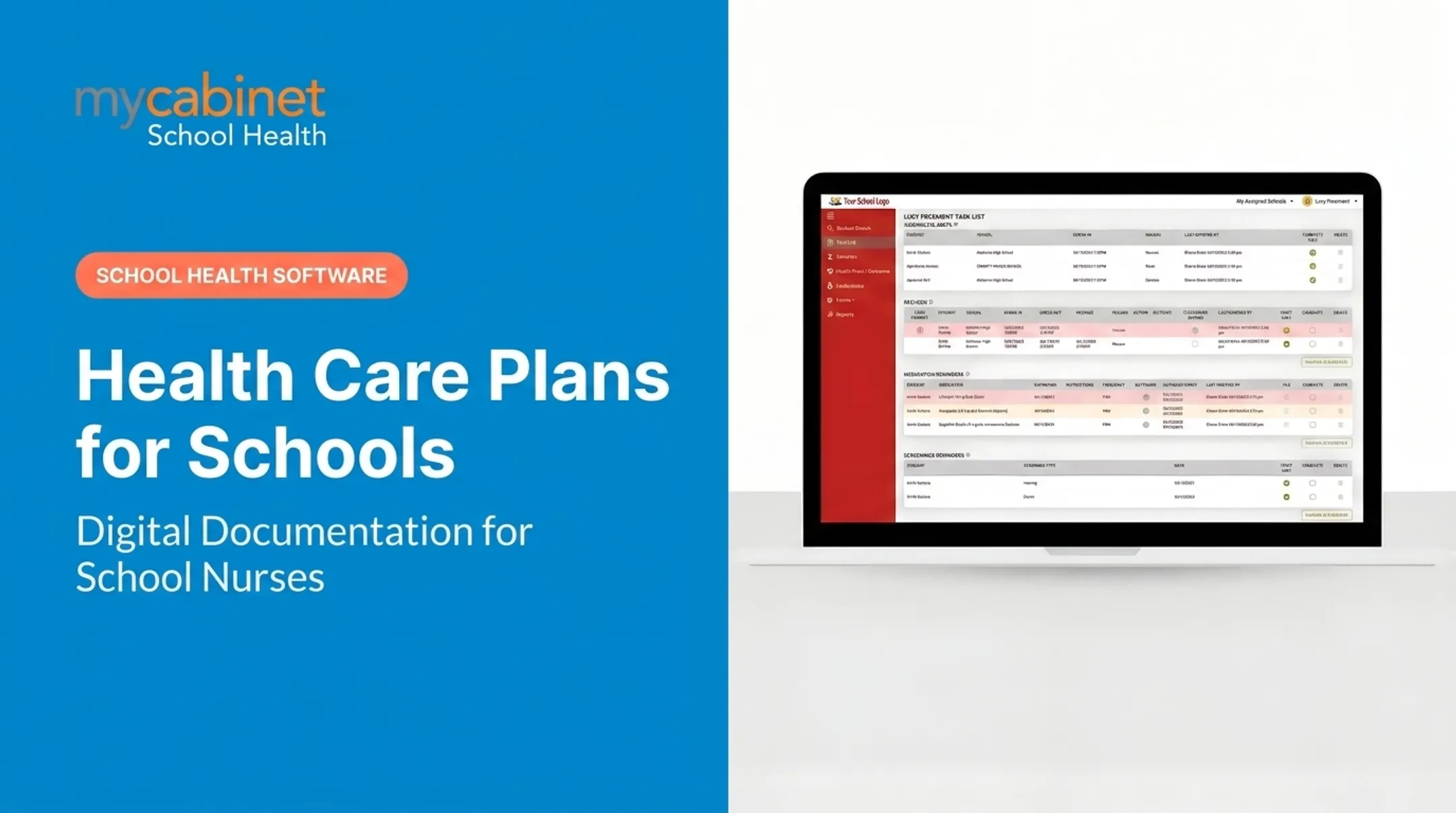
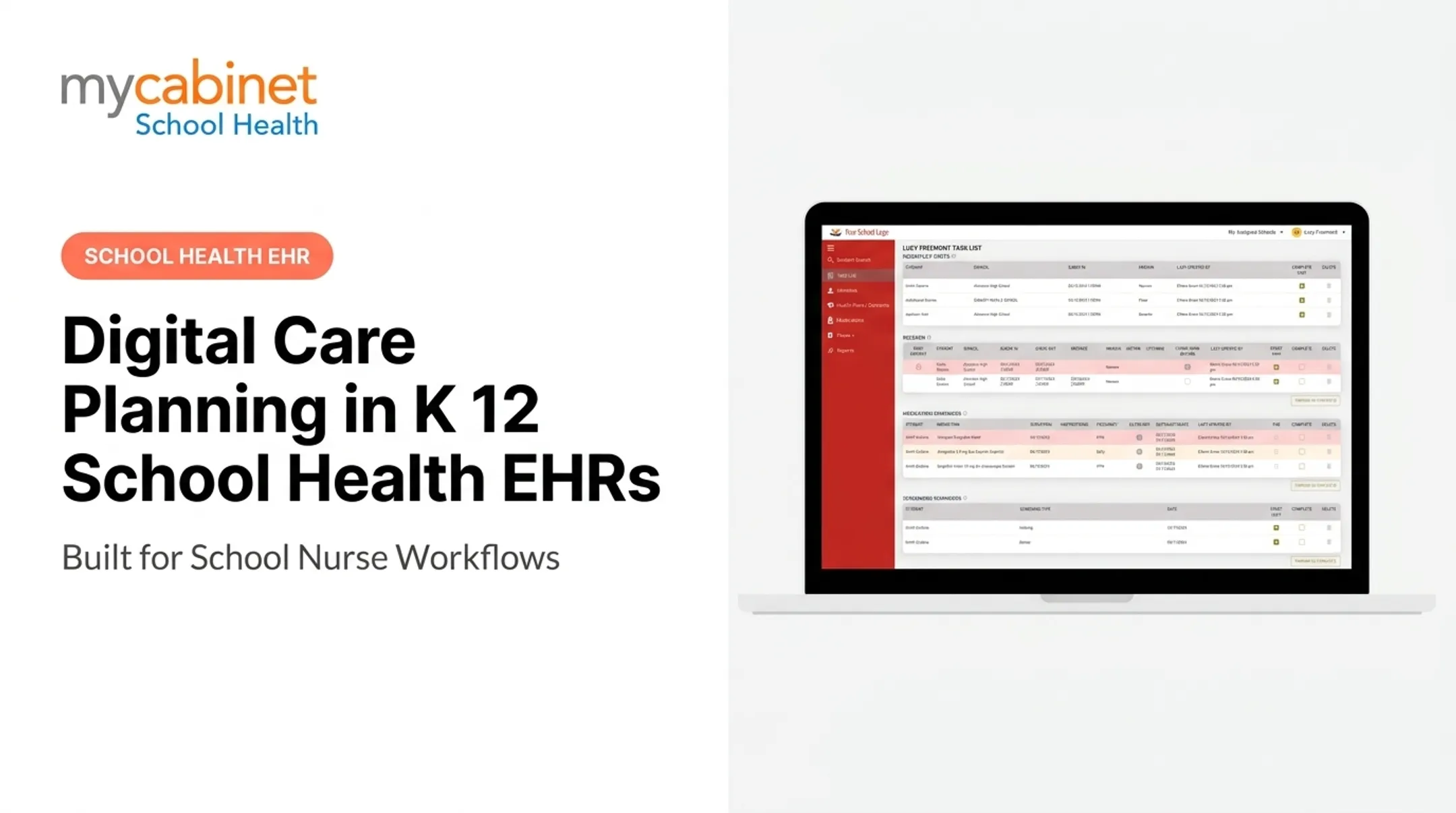
A care plan built on predefined visit and task types produces more consistent documentation than one relying on open-ended notes. MyCabinet School Health, for instance, organizes nurse work into task categories, incomplete visits, recheck visits, medication reminders and expirations, and screening reminders, rather than a blank free-text box.
This structure means nurses spend less time deciding how to document something and more time on the actual care. It also creates a cleaner audit trail: predefined categories are easier to search, filter, and report on than scattered free-text entries.
Electronic Care Plans in Schools: A Growing Application
K-12 schools manage genuinely complex health needs. The CDC estimates that about 3 students in a classroom of 30 have asthma, and 1 in 13 children (8%) are affected by food allergies — roughly two students per classroom. Add diabetes, seizure disorders, and daily medications, and a single school nurse is often coordinating dozens of active health plans.
Yet many schools still rely on paper forms, spreadsheets, and fax machines. A school-specific electronic care plan replaces that patchwork by connecting a nurse portal directly to parent communication.
How It Works in Practice
MyCabinet uses a three-part connected workflow — a Nurse Portal, a Parent App, and a Parent Web Portal:
- Parents submit forms digitally. Required health documentation, immunizations, and medication information get uploaded through the app or browser portal.
- Nurses review and approve. Submissions appear in the Nurse Portal, where staff review them and attach approved documents to the student's record.
- Alerts flow both ways. When a nurse documents a clinic visit or flags an expiring medication, parents get a push notification or email.

Medication Oversight Benefits
Digital care plans give nurses visibility paper logs can't match:
- Expiration tracking with color-coded task-list reminders
- Dosage and frequency visibility tied directly to the student's health profile
- Outreach logging that records contact date, method, and notes — no more relying on sticky notes or memory
A retrospective study in Colorado found that after school nurses gained EHR access, emergency department visits dropped 34% and hospitalizations fell 44% among students with chronic conditions. The study shows association rather than causation, yet the outcome gap is hard to ignore.

Role-based access keeps records secure. Parents see only their own child's information; nurses and approved staff access only what care requires. That model aligns with FERPA, which generally governs student health records rather than HIPAA.
Examples of Digital Care Plans and Care Planning Software
Digital care plans take different shapes depending on the setting.
- Chronic condition plans combine medication schedules, monitoring tasks, and check-in intervals for conditions like hypertension or diabetes
- Nursing care plans follow the ADOPIE format: assessment data, nursing diagnosis, measurable outcomes, interventions, and evaluation notes revisited as the student's condition changes
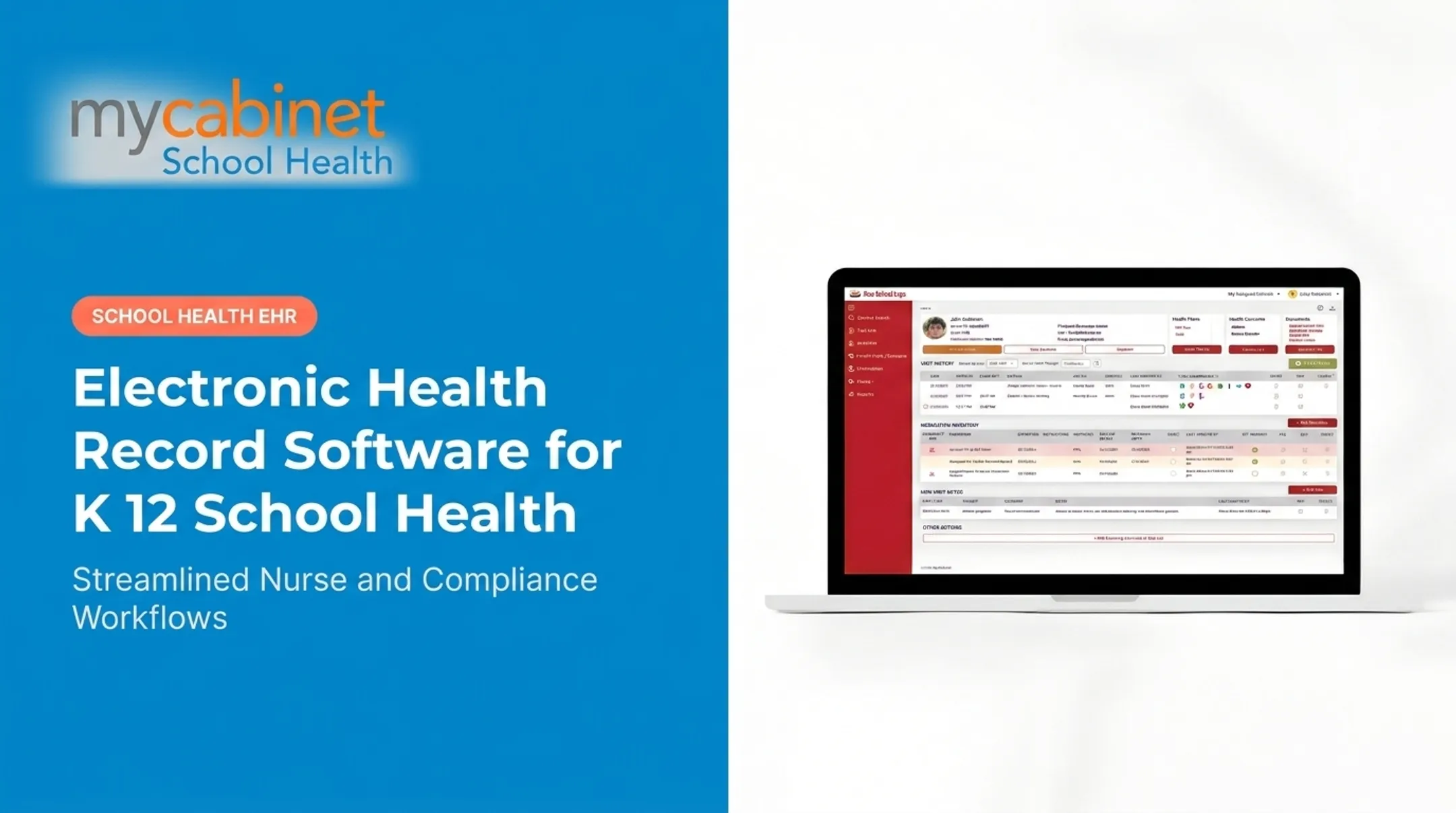
- School health plans digitize records such as asthma action plans. In MyCabinet, a student profile can show Albuterol stored at school, linked to the action plan and clinic log, with approvals and renewals on the nurse's task list
Beyond school and nursing settings, "digital care plan" also covers:
- Health portals that let individuals or parents view records
- eMAR systems (electronic medication administration records) that replace paper medication logs
- Advance care planning apps used mainly in adult healthcare for end-of-life decision documentation
Each serves a different population, but they share one principle: replace static paper with a living, accessible digital record.
Benefits of Moving to Digital Care Planning
The shift away from paper, fax, and spreadsheets pays off in a few concrete ways.
- Cuts folder hunts and duplicate spreadsheet entry with centralized, searchable records
- Flags expiring medications, incomplete visits, and gaps through task lists and full audit trails
- Keeps families informed on clinic visits and medication status with controlled, one-way notifications

Cobb County Superintendent Chris Ragsdale called digitizing school health documentation "a win for the parents and a win for the district," citing electronic paperwork and parents' ability to see when their child was seen and medicated.
Measurable efficiency studies at the school level are still catching up. The NASN's position is already direct: effective electronic systems support workflow, error prevention, and retrieval better than paper ever could.
Frequently Asked Questions
What is an electronic care plan (digital care plan)?
It's a secure, real-time digital record of a person's health needs and care instructions, built to replace paper charts. Authorized care team members can view and update it instantly from any device.
What are the main components of an electronic care plan?
The core elements are an individual profile, assessments, interventions with assigned tasks, and progress tracking. Most also include a communication trail documenting who took what action and when.
What is an example of a care plan?
A common example is a chronic condition management plan, like an asthma action plan, which outlines medication dosages, symptom thresholds, and emergency instructions for caregivers and school staff.
What are some examples of nursing care plans?
Nursing care plans typically follow the ADOPIE structure: assessment, diagnosis, outcomes, planning, implementation, and evaluation. This structure keeps care consistent and measurable over time.
What are examples of digital healthcare tools and electronic care plan systems?
Common examples include health portals, eMAR (electronic medication administration record) systems, and advance care planning apps. School health platforms like MyCabinet also fit this category, connecting nurses, students, and parents through structured digital care plans.